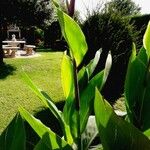
Canna indica
گل اختر · Canna lily · Indian-shot · Canna · African arrowroot
Description
Source: leafsnapCanna indica, commonly known as Indian shot or Canna lily, is a perennial flowering plant belonging to the family Cannaceae. Native to tropical and subtropical regions of the Americas, it has been widely cultivated as an ornamental plant around the world. The plant can grow up to 2 meters tall and features large, spiral-arranged leaves. These leaves, either green or bronze, can reach up to 60 cm in length. The flowers are striking and prominent, with vibrant colors that range from red and orange to yellow and pink. Canna indica thrives in moist soil conditions but, once established, can tolerate some drought. It grows best in full sun or partial shade and prefers well-drained soil. For centuries, indigenous people have utilized Canna indica for various medicinal purposes due to its anti-inflammatory properties. Additionally, it is favored as an ornamental garden plant because of its attractive foliage and stunning flowers. Overall, Canna indica is a beautiful flowering perennial that adds color and texture to any garden setting, while also offering medicinal benefits when used properly.
💡 The Indian Shot plant features lush leaves and vibrant flowers, enhancing landscapes with color and form. It boasts a long blooming period during the hot season, transforming the scenery with its bright blossoms. While its leaves can be easily damaged, they quickly regenerate, allowing the plant to continue thriving. Besides beautifying spaces, Indian Shot also helps purify the environment by absorbing harmful substances such as sulfur dioxide, hydrogen chloride, and carbon dioxide. This makes it an ideal choice for greening, beautifying, and purifying areas.
🌳 The indian shot is more than an ornamental wonder; it has had distinctive historical uses. Its sturdy seeds, called 'Nature's Bullets' because of their density, were once used as ammunition for hunting small creatures. Those same seeds are used in music to make gourd rattles. The indian shot also demonstrates versatility in the textile world, serving as a source of organic dye.
🎭 A secure future, rely on God
Care Guide
💧 Water Every 7 days
Indian shot thrives in high humidity and consistent moisture, needing water approximately every 1-2 weeks. Although it is moderately drought-tolerant, it prefers soil that stays evenly moist. As an herbaceous perennial, Indian shot is best grown outdoors to take advantage of natural rainfall, especially during its active growing season.
When Should I Water My Indian Shot?
Watering your Indian Shot correctly is essential for its health and growth. The key signs that indicate your Indian Shot needs water include soil dryness, wilting leaves, browning or yellowing of leaf edges, a slow rate of growth, or a lack of flowering. It's important to keep the soil slightly moist but never fully saturated or completely dry. Balancing the water supply is critical to avoid the risks of both over and under-watering, which can cause stress, disease, and impact the plant's overall vitality. Observing your plant for these signs will help you maintain the right watering schedule.
How Should I Water My Indian Shot?
Watering your Indian Shot effectively requires maintaining evenly moist soil without over-saturating it. Use overhead watering methods, such as a watering can with a long spout, to direct water to the base of the plant and reach the root zone efficiently. A soaker hose is also beneficial for slow, deep watering. Avoid getting water on the foliage and flowers to prevent fungal diseases and rot. Utilizing a moisture meter can help determine when your plant needs water, ensuring you provide just the right amount without overdoing it.
How Much Water Does Indian Shot Really Need?
The amount of water your Indian Shot needs varies but aims to keep the soil consistently moist, suggesting about 1-2 cups of water for a standard 6-inch pot, with adjustments based on the size of the plant and pot. Look for signs of optimal hydration like green, vibrant leaves and moist but not soggy soil. Avoid both over and under-watering to prevent issues such as root rot, pests, stunted growth, or plant shrinkage. Monitoring and adjusting based on your plant's response and environmental conditions is key to maintaining proper hydration levels.
What Kind of Water is Best for Indian Shot?
Indian Shot thrives best with distilled water due to the absence of harmful impurities or minerals. Rainwater is also excellent, provided it's free from pollution. While tap water is acceptable, keep in mind that Indian Shot is sensitive to chlorine and fluoride, which can stress the plant and cause leaf burn or discoloration. Letting tap water sit out to evaporate chlorine, using distilled water, or employing a reverse osmosis filter can mitigate these risks. Room temperature water is ideal to avoid shocking the plant's system.
How Do Indian Shot's Watering Needs Change with the Seasons?
Indian Shot's watering needs vary with the seasons. In the spring, during its growth phase, ensure the soil is consistently moist to support growth and flower bud formation. Summer might require increased watering due to heat and evaporation. As autumn approaches and growth slows, reduce watering slightly but keep the soil moist. Winter sees the least need for water; water sparingly, only when the soil is dry, as the plant goes dormant. Adjusting your watering schedule with the season ensures your Indian Shot remains healthy year-round.
☀️ Light Full sun
Indian shot does best in locations that get abundant sunlight for most of the day. It can, however, tolerate areas with a modest decrease in sunshine. Too much or too little light can potentially harm its growth and overall health. Its ancestral habitats provided those light conditions, which supported its optimal well‑being.
What are the sunlight requirements for Indian shot?
Indian shot (Canna indica) requires significant exposure to sunlight for the majority of the day to thrive optimally. While it prefers full sun, which is above 6 hours of direct sunlight daily, it can also tolerate partial sun, receiving about 3-6 hours of sunlight. Ensuring the right amount of sunlight is crucial as both excessive and insufficient light can negatively impact the plant's growth and health. It's essential to observe how sunlight moves through your garden to find spots that offer a perfect balance for your Indian shot, thus ensuring its happiness.
How can artificial lighting be used for Indian shot?
For indoor Indian shot plants, where natural sunlight may be lacking, particularly during winter or in less sunny spaces, artificial lighting can be a beneficial solution. LED lights are recommended because they can be customized to provide specific wavelengths of light needed for plant growth. Full sun plants require 30-50W/sq ft of artificial light, partial sun plants need 20-30W/sq ft, and full shade plants need 10-20W/sq ft. The artificial light source should be placed 12-36 inches above the plant to mimic natural sunlight, and the duration should match the natural daylight hours for the species, typically 8-12 hours per day.
What are the symptoms of insufficient or excessive sunlight exposure in Indian shot plants?
Indian shot plants may exhibit several symptoms when exposed to inappropriate light conditions. Insufficient sunlight can lead to small leaves, leggy or sparse growth, faster leaf drop, slower or no new growth, and lighter-colored new leaves. On the other hand, excessive sunlight can cause chlorosis, where leaves lose their green color and turn yellow; sunscald, representing pale or necrotic areas on plant tissue; leaf curling, a defense mechanism against excessive sunlight; wilting, due to increased water loss; and leaf scorching, evidenced by brown, dry, and crispy edges on leaves. Both conditions reflect distress and can significantly impact the plant's health.
What solutions can be applied for Indian shot struggling with light conditions?
For Indian shot plants struggling with inadequate sunlight, gradually increasing their exposure to direct sunlight can be beneficial. For indoor plants, this could mean moving them to a sunnier location each week or using artificial light sources, like desk lamps or professional grow lights, for at least 8 hours daily. Outdoor and ground-planted specimens should be relocated to sunnier spots progressively to avoid shock. Reducing obstructions like overhanging branches can improve sunlight access. Note that while affected parts may not recover, new growth post-adjustment should be healthy. It's crucial to monitor and adjust the plant's exposure gradually to prevent sunburn and ensure optimal growth.
🌡️ Temperature 15–37.8°C
The indian shot needs temperatures ranging from 59 to 100 ℉ (15 to 38 ℃) to grow optimally. Its native growing environment is typically warm and tropical. During colder seasons, it is recommended to set the temperature to 50 to 70 ℉ (10 to 21 ℃) to prevent mortality.
What is the optimal growth temperature for Indian shot?
Indian shot, or Canna indica, thrives in temperatures ranging from 59 to 100°F (15 to 38°C) for optimal growth. Native to warm and tropical environments, it requires an adjustment of temperature to 50 to 70°F (10 to 21°C) during the colder seasons to prevent mortality. Despite its strong cold resistance, precautions should be taken when winter temperatures are expected to drop below -15°C by covering the plant with materials like soil or straw. Additionally, before the first freeze in autumn, watering the plant abundantly to ensure the soil remains moist is recommended to prevent drought and water scarcity during winter and early spring.
How does low temperature affect Indian shot and what are the solutions?
Indian shot is cold-tolerant and thrives best when the temperature is above 15°C. During winter, it should be kept above -10°C. Exposure to temperatures below -15°C may not manifest noticeable changes during winter, but might lead to a decrease in sprouting or even prevent sprouting in spring. The solution for such instances involves removing any parts of the plant that have failed to sprout in the spring.
What should be done if Indian shot is exposed to high temperatures?
During summer, it's crucial to keep Indian shot below 38°C. Should the temperature exceed 43°C, the leaves may become lighter, prone to curling, susceptible to sunburn, and, in severe cases, the whole plant may wilt and dry. To mitigate such damage, trim away the sunburned and dried-up parts of the plant. Moving the plant to a location that provides shade during the midday and afternoon sun, or using a shade cloth to create shade, is advisable. Additionally, watering the plant in the morning and evening to keep the soil moist can help alleviate the stress of high temperatures.
💨 Humidity normal (40-60%)
This plant will thrive in moderate humidity, which is probably the level in your home. However, misting it a few times a week can be very beneficial. Make sure the room has good ventilation.
🪴 Soil 6-6
🌱 Fertilizer
One fertilizer application in spring is generally enough for Indian shot, although multiple feedings can boost growth. Feed about once every month to month and a half. Fertilization improves the leaves' appearance and function, helping maintain consistent color and a healthy texture. It also promotes root growth and nutrient uptake for the plant's long-term health.
Why do I have to add fertilizer to my Indian shot plant?
The leaves of the Indian shot are a major part of its structure. Fertilization plays a big role in making sure these leaves are both attractive and functional. When properly fertilized, the Indian shot will have consistent leaf color and a healthy texture. Fertilization also benefits the plant below the soil's surface by promoting root growth and supporting existing roots. This means that fertilization not only keeps the plant healthy now but also improves its ability to absorb nutrients from the soil in the future.
When should I fertilize my Indian shot plant?
If you grow your Indian shot outdoors each year, it will send new growth shooting out in early spring. This is a sign that it's time to start fertilizing. Usually, one application of fertilizer in the spring is enough for a healthy Indian shot. But, if you want to maximize its growth, you can fertilize it multiple times during the spring and early summer. In this case, feed your Indian shot about once every month to a month and a half.
When is it not a good time to fertilize my Indian shot plant?
During the late fall and winter, your Indian shot goes into a dormant phase and stops growing. It's best to avoid fertilizing it during this time. In spring and summer, if you choose to fertilize, start reducing the amount of fertilizer as summer approaches since the growth rate of your Indian shot will also slow down. It's generally not recommended to fertilize your Indian shot when the weather is unusually hot or when the soil is very dry, as doing so can stress the plant and cause it to die sooner.
What kind of fertilizer does my Indian shot plant need?
Choosing the best fertilizer for an Indian shot plant is actually quite simple. The ideal fertilizer should be a general-purpose garden fertilizer with equal levels of nitrogen, phosphorus, and potassium. A fertilizer with a ratio of 10-10-10 or something similar is highly recommended. Avoid using fertilizers that contain excessive amounts of nitrogen if you're unsure. Granular fertilizers are most commonly preferred for Indian shot plants as they are slow-release and easy to apply to the soil. Additionally, using organic soil amendments like compost can be beneficial for feeding your Indian shot plant.
How can I give my Indian shot plant some fertilizer?
To ensure optimal growth for your Indian shot plant, wait until its first leaves have just emerged in early spring. Once you notice this, you can apply a granular slow-release fertilizer with a balanced formula to the soil surrounding the base of the plant. If desired, you can repeat this process later in the season. When applying fertilizer, make sure to target the soil at the base of the plant rather than the plant itself. In some cases, you may need to gently move aside leaves to access the soil near the roots. Additionally, it is recommended to water the Indian shot plant both before and after feeding it for best results.
🪴 Pot & Repot 2-3 years
When repotting Indian shot, choose a pot 1–2 inches (2.5–5.1 cm) larger with ample drainage. Use a well-draining potting mix. Repot in spring or fall, ensuring that the root ball is slightly lower than the rim of the flower pot. Water thoroughly after repotting and place in a warm spot with indirect sunlight.
✂️ Pruning
Indian shot, a plant that benefits greatly from spring pruning, responds well to having its growth and flowering enhanced through this process. In cooler regions, it's important to remove any damaged stems and cut the plant back to the ground after the last frost. Pruning not only helps maintain the plant's shape, but also encourages more blooms and reduces the risk of disease. For specific timing and techniques suited to your area, consult horticultural resources.
🌿 Propagating
🐛 Diseases & pets
☠️ Toxicity
Canna lily plants are considered not toxic to humans and animals.
Characteristics
- Plant Type
- Herb
- Life Cycle
- Perennial
- Genus
- Canna
- Family
- Cannaceae
- Hardiness Zone
- 7-12
- Mature Height
- 0.4 m to 3.35 m
- Mature Spread
- 10 cm to 91 cm
- Leaf Color
- Green, Purple, Bronze
- Leaf Type
- Deciduous
- Flower Color
- Red, Yellow, Orange
- Flower Size
- 5.08 cm to 15.24 cm
- Bloom Time
- Mid spring, Late spring, Summer, Early fall
- Planting Time
- Spring
- Harvest Time
- Late spring, Summer, Fall
- Native Area
- Belize, Honduras, Guatemala, Peru, Dominican Republic, Trinidad and Tobago, Panama, Jamaica, Uruguay, Colombia, Bahamas, Cuba, Paraguay, Argentina, Haiti, Bolivia, Venezuela, Brazil, Guyana, El Salvador, Nicaragua, Ecuador, Suriname, Costa Rica