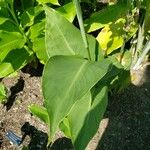
Canna × generalis
Canna lily · Common garden canna · Canna x generalis
Description
Source: leafsnapThis list of Canna cultivars is a gallery of named cultivars of plants in the genus Canna that are representative of the various Canna cultivar groups (i.e., groups of very similar cultivars). Names of cultivars conform to the rules of the International Society for Horticultural Science (ISHS) Commission for Nomenclature and Cultivar Registration, as laid down in the International Code of Nomenclature for Cultivated Plants. They are registered with an International Cultivar Registration Authority (ICRA), which for the genus Canna is the Royal General Bulbgrowers' Association of the Netherlands (KAVB).
🌳 Although canna lily is best known for its showy blooms, few people recognize its potential in the field of bioengineering. Via genetic modification, canna lily has been proposed for phytoremediation — cleaning contaminated soils. Researchers have examined the feasibility of using canna lily as a living tool to take up and sequester heavy metals from polluted environments.
🎭 Recognition, esteem, allure, fervor, thankfulness
Care Guide
💧 Water
The canna lily thrives in moist, tropical environments and benefits from regular watering, although it can handle short periods of dryness. It's best to water the plant every one to two weeks, ensuring the soil never fully dries out. When grown outdoors, the canna lily needs more water during the growing season because of increased sunlight and higher temperatures.
☀️ Light Full sun
Canna lily performs best when it gets sunlight for most of the day. This exposure encourages vigorous growth and healthier flowers. In its natural habitat it is frequently found in locations with plentiful sun. Although it can tolerate some shade, insufficient light can cause weak growth and reduced flowering. Conversely, prolonged intense sunlight can lead to leaf scorch.
🌡️ Temperature 15–37.8°C
The canna lily lily originates from tropical and subtropical areas, so it prefers warm conditions. It thrives in temperatures from 59 to 100 ℉ (15 to 38 ℃) and can be cultivated outdoors in USDA zones 7 to 11. In cooler areas, it can be raised as an annual or kept in containers that are moved indoors for the winter. In summer, provide sufficient moisture, since high temperatures can stress the plant.
💨 Humidity
🪴 Soil 6-7
🌱 Fertilizer
Early spring—when the Canna lily is coming out of dormancy and beginning active growth—is the best time to fertilize it. Fertilizing supplies the essential nutrients needed for healthy growth. Although Canna lilies have relatively low fertilizer requirements, giving them fertilizer once a year can boost their survival and encourage better, longer-lasting flowers.
🪴 Pot & Repot 2-3 years
When repotting a Canna lily, choose a pot 1–2 inches (2.5–5.1 cm) larger with good drainage. Use a well-draining potting mix. Repot in spring or fall, making sure the root ball sits slightly lower than the rim of the flower pot. Water thoroughly after repotting and place it in a warm spot with indirect sunlight.
✂️ Pruning
To ensure your canna lilies thrive, it's important to prune them regularly from early to late spring. Focus on removing any dead or damaged leaves, as well as spent flower spikes. After the flowers have bloomed, cut the stems down to soil level to encourage new growth. Using sharp, sterilized tools will help maintain the plant's health by improving air circulation and reducing the risk of disease.
🌿 Propagating
🐛 Diseases & pets
☠️ Toxicity
Characteristics
- Plant Type
- Herb
- Life Cycle
- Perennial
- Genus
- Canna
- Family
- Cannaceae
- Hardiness Zone
- 7-12
- Mature Height
- 0.91 m to 1.52 m
- Mature Spread
- 30 cm to 46 cm
- Leaf Color
- Green, Yellow, Copper, Variegated, Brown
- Leaf Type
- Deciduous
- Flower Color
- Red, Orange, Yellow
- Flower Size
- 7.62 cm to 15.24 cm
- Bloom Time
- Late spring, Summer
- Planting Time
- Spring
- Harvest Time
- Summer, Early fall