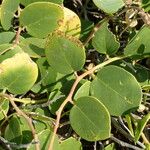
Capparis orientalis
Caper Bush
Description
Source: leafsnapCapparis orientalis is a species of plants in the family Capparaceae.
Care Guide
💧 Water
☀️ Light Full sun
Capparis spinosa subsp. rupestris is native to open habitats, such as sunlit meadows and forest margins, which supply plenty of light. It does best in full sun but can tolerate partial sun, adjusting well to different light conditions.
🌡️ Temperature 15–37.8°C
Capparis spinosa subsp. rupestris shows good temperature adaptability, tolerating high heat and wide temperature fluctuations. In hot weather, attention to irrigation and providing suitable shade is necessary to avoid sunburn. Conversely, Capparis spinosa subsp. rupestris has limited tolerance to low temperatures; while it can endure some cold, very low temperatures can cause frost damage.
💨 Humidity
🪴 Soil 6-8
🌱 Fertilizer
Fertilizing Capparis spinosa subsp. rupestris depends on proper timing. Start feeding in early spring and continue once a month up to early summer. Fertilizer encourages attractive blooms and supplies energy during both dormancy and active growth stages.
🪴 Pot & Repot
✂️ Pruning
🌿 Propagating
🐛 Diseases & pets
☠️ Toxicity
Characteristics
- Plant Type
- Shrub
- Life Cycle
- Perennial
- Genus
- Capparis
- Family
- Capparaceae
- Hardiness Zone
- 8-11
- Mature Height
- 30 cm to 91 cm
- Mature Spread
- 0.49 m to 1.52 m
- Leaf Color
- Green, Dark Green
- Leaf Type
- Semi-evergreen
- Flower Color
- White, Pink
- Flower Size
- 5.08 cm to 7.62 cm
- Bloom Time
- Late spring, Summer
- Planting Time
- Spring, Autumn
- Harvest Time
- Late summer, Fall
- Native Area
- Libya, Egypt, Turkey, Tunisia, Italy, Spain, Albania, Algeria, Greece, Croatia, France