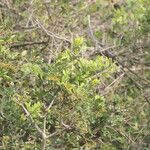
Capparis sepiaria
Indian caper · Wild caper bush · Hedge caper-bush · Hedge Caper · Corymbose caper
Description
Source: leafsnapCapparis sepiaria, commonly known as the Flinders rose or bush caper, is a shrub that belongs to the Capparaceae family. Native to Australia, it thrives in a variety of habitats, including woodlands, forests, and coastal areas. The plant can reach up to 2 meters in height and features a sprawling form with thorny branches. The leaves of Capparis sepiaria are simple, alternately arranged, and oval-shaped, measuring up to 10 cm in length. The flowers are white or pinkish, with four petals that form a star shape when fully open. These blooms appear from spring through summer. The fruit of this plant is an edible caper berry, which has been used in culinary applications for centuries. Its tangy flavor is particularly popular in Mediterranean cuisine. In addition to its culinary uses, Capparis sepiaria has medicinal properties due to its high content of antioxidants and anti-inflammatory compounds, such as flavonoids, alkaloids, tannins, and saponins. Traditionally, it has been used to treat a variety of ailments, including fever, coughs, colds, sore throats, wounds, and skin infections. Overall, the Capparis sepiaria plant holds significant ecological importance by providing habitat and cultural value through its use as food and medicine.
Care Guide
💧 Water Every 7 days
The Indian caper is well-suited to arid environments, displaying excellent drought tolerance. It requires watering every 2-3 weeks. As an evergreen plant, it retains its foliage throughout the year and needs consistent moisture to support its growth cycle.
☀️ Light Full sun
Indian caper is native to open habitats, like sunlit meadows and forest margins, which provide abundant light. It flourishes in Full Sun but can also tolerate Partial Sun, adapting well to different sunlight levels.
What are the sunlight requirements for Indian capers?
Indian capers require a good amount of sunlight to thrive, ideally in open environments similar to sunny meadows and forest edges. They flourish in full sun conditions, which means they need above 6 hours of direct sunlight daily. However, these plants can also tolerate partial sun, managing well with about 3-6 hours of sunlight. It's essential to observe how sunlight moves through your garden to ensure plants receive the optimal balance of light and shade for their health.
How can artificial lighting support Indian caper's growth indoors?
When natural sunlight is insufficient, especially during winter or in less sunny locations, artificial lighting becomes a crucial alternative for Indian caper's growth indoors. LED lights are recommended because they can be customized to emit specific wavelengths needed by the plant. Full sun plants require 30-50W per square foot, partial sun plants 20-30W per square foot, and full shade plants 10-20W per square foot of artificial light. The artificial light source should be positioned 12-36 inches above the plant, simulating natural sunlight as closely as possible, and should be kept on for 8-12 hours per day depending on the species' natural daylight hours requirement.
What are some common signs that an Indian caper is not receiving enough light?
When an Indian caper doesn't get enough light, it may show several symptoms indicating light deficiency. New leaves may grow smaller than usual, and the plant might exhibit leggy growth, with longer spaces between leaves or stems leading to a sparse appearance. Additionally, there might be faster leaf drop, slower or no new growth, and lighter-colored or irregularly patterned new leaves due to insufficient chlorophyll and nutrients. These signs indicate the plant is struggling with the light conditions.
What are the symptoms of too much sunlight on Indian capers, and how can it be managed?
Indian capers can suffer from excessive sunlight exposure, manifesting symptoms such as chlorosis, which is the yellowing of leaves due to chlorophyll breakdown; sunscald, indicated by pale, bleached areas on plant tissue; leaf curling as a defense mechanism against water loss; wilting from turgor pressure loss; and leaf scorching, evident from brown, dry edges on leaves. To manage these issues, it's key to gradually adapt plants to sunlight, avoiding sudden changes in light exposure, and utilize solutions like reducing obstructions, transplanting to sunnier spots, and using artificial light when needed to ensure optimal growth.
How can one address and remedy insufficient light exposure for Indian capers?
To remedy insufficient light for Indian capers, gradually move the plants to sunnier locations, aiming for at least 6 hours of direct sunlight daily, and consider using artificial lights for indoor plants that are large or difficult to move. For outdoor plants, it's critical to make changes in light exposure gradually to prevent sunburn. Affected parts of the plant may not recover, but new growth should be healthy with improved light exposure. Minimizing obstructions like pruning blocking trees and transplanting to brighter locations with good drainage can significantly enhance light availability for optimal plant health.
🌡️ Temperature 20–37.8°C
Indian caper comes from tropical areas, where the climate is usually warm and humid. Consequently, it is adapted to high heat and humidity. It dislikes sudden temperature shifts and prefers a consistent thermal environment, so avoiding indoor temperature fluctuations is important. It typically cannot tolerate cold and needs higher temperatures to grow. If the surrounding temperature falls too low, the plant may stop growing or even die.
💨 Humidity
🪴 Soil 6-7
🌱 Fertilizer
The best time to fertilize an Indian caper is in early spring as it breaks dormancy. This encourages overall growth and supports flower development. Fertilization improves the foliage, stems, and branches, while encouraging larger, more vibrant, and longer-lasting flowers. It helps transport nutrients from the roots to the blooms and enhances the plant's health and disease resistance.
🪴 Pot & Repot
✂️ Pruning
The Indian caper is a hardy shrub known for its fragrant leaves and vibrant flowers. To maintain its shape and health, prune it in late winter. This involves removing dead branches and ensuring good air circulation. Always use clean, sharp tools, making cuts just above the buds to encourage healthy growth and preserve the shrub’s vigor and appearance.
🌿 Propagating
🐛 Diseases & pets
☠️ Toxicity
Characteristics
- Plant Type
- Shrub
- Life Cycle
- Perennial
- Genus
- Capparis
- Family
- Capparaceae
- Hardiness Zone
- 9-11
- Mature Height
- 0.61 m to 3.05 m
- Mature Spread
- 2.13 m to 3.05 m
- Leaf Color
- Green
- Leaf Type
- Evergreen
- Flower Color
- White
- Flower Size
- 0.76 cm to 1.27 cm
- Bloom Time
- Late spring, Summer
- Planting Time
- Spring, Summer, Autumn
- Harvest Time
- Late summer, Fall
- Native Area
- Sri Lanka, Burkina Faso, Somalia, India, Malaysia, Angola, Madagascar, Pakistan, Nigeria, Kenya, Niger, Uganda, Tanzania, Zimbabwe, Mali, Benin, Indonesia, Cambodia, Cameroon, Mozambique, Ethiopia, Botswana, Central African Republic, Nepal, Malawi, South Africa, Zambia, Sudan, Philippines, Bangladesh, Chad, China, Vietnam, Myanmar, Senegal, Eswatini, Côte d'Ivoire, Congo (DRC), Thailand