Capraria biflora
Goatweed · West Indian tea · Wild tea · The Guadeloupe · The pays
Description
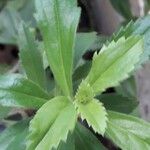
Source: leafsnapCapraria biflora, commonly known as the crested capraria or goatweed, is a perennial herbaceous plant from the Acanthaceae family. It is native to the tropical and subtropical regions of the Americas, including South and Central America. Typically reaching up to 1 meter in height, this plant features a woody stem with numerous branches. Its leaves are simple, opposite, and either ovate or lanceolate in shape, with serrated margins. The small flowers are white or pinkish, with two petals that form a tubular structure. Indigenous communities have traditionally used Capraria biflora for medicinal purposes, treating various ailments such as fever, respiratory tract inflammation, and skin infections. The plant thrives in well-drained soils and prefers full sun or partial shade. It can be propagated through seeds or stem cuttings. Overall, Capraria biflora is a fascinating herbaceous perennial with both ornamental and medicinal value, making it significant for horticulture enthusiasts and traditional medicine practitioners alike.
Care Guide
💧 Water Every 7 days
Goatweed thrives in tropical environments where there is consistent moisture and high humidity. For best results, water it weekly to mimic natural rainfall, and if possible, grow it outdoors. Using rainwater can enhance the health of the foliage and increase the plant's flowering potential, helping it endure short dry spells.
How should I water my Goatweed plant?
To properly water the Goatweed plant, it is important to use filtered water at room temperature or slightly warmer. Tap water should be avoided, as it may contain harmful particles. The Goatweed is accustomed to a warm environment, so cold water should be avoided to prevent shock. It is best to water the plant directly at the soil rather than overhead, as overhead watering can cause issues with the foliage. Make sure to thoroughly soak the soil when watering to provide moisture to the roots and aid in nutrient absorption.
What should I do if I give my Goatweed too much water or not enough water?
Both overwatering and underwatering can harm your Goatweed, but overwatering is more common and has more severe consequences. When the Goatweed receives excessive water, its stems and leaves may wilt and turn yellow. Extended overwatering can also cause diseases like root rot, mold, and mildew, which can be fatal for your plant. Underwatering is less likely to occur as the Goatweed is fairly tolerant to drought. However, it is still a possibility, and when it happens, the leaves of your Goatweed may become brittle and brown. It is crucial to quickly recognize the signs of overwatering when caring for your Goatweed. Some diseases caused by overwatering, such as root rot, cannot be reversed if you wait too long. If you notice early signs of overwatering, reduce your watering immediately. Additionally, check the quality of the soil where your Goatweed is planted. If the soil does not drain well, replace it with a loose and well-draining potting mix. On the other hand, if you observe signs of underwatering, increase your watering frequency until those signs disappear.
How frequently should I water my Goatweed?
If your Goatweed plant is in a pot, the most accurate way to determine if it needs water is to stick your finger into the soil. If the top two to three inches of soil are dry, then it is time to water it. For outdoor Goatweed plants in the ground, you can use a similar method to test the soil. Once again, if the first few inches of soil have dried out, it is time to water it. Typically, during spring and early fall, you will need to water this plant about once a week using this method. However, during extremely hot weather, you may need to increase watering frequency to about twice a week or more. However, it's worth noting that mature, well-established Goatweed plants have a commendable ability to withstand drought.
How much water does my Goatweed plant need?
To properly water your Goatweed, do not hold back on the amount of water you give. Make sure the first two to three inches of soil are dry, and then give the plant a thorough watering. The goal is to completely soak the soil, so add enough water until you see excess water flowing out of the drainage holes in the pot. If you don't see any water draining, you may have underwatered the plant. However, be careful not to let water accumulate inside the soil, as this can harm the plant. If water doesn't drain through the pot easily, it could mean the soil doesn't have good drainage, which is not good for the plant's health. If the plant is outdoors, around an inch of rain per week should be enough.
What is the best way to water my Goatweed plant at different stages of growth?
The water needs of Goatweed can vary depending on its growth stages. When the plant is in the early years of its life or has recently been transplanted, it requires more water than usual. During these stages, the plant focuses on developing new roots that will support future growth. To ensure optimal root performance, it is beneficial to provide slightly more moisture. As the plant matures over a few seasons, its water needs decrease. Additionally, during the blooming period, Goatweed may require additional water as the flower development process utilizes significant moisture.
☀️ Light Full sun
Goatweed is a sun-loving, perennial herbaceous plant that comes from open habitats and is frequently found in meadows and grasslands. It prefers full sun but can also tolerate partial sun.
🌡️ Temperature 20–37.8°C
Goatweed comes from tropical areas, where the climate is usually warm and humid. Consequently, it is well-suited to high temperatures and moisture. It does not tolerate sudden temperature shifts and prefers a consistent thermal environment, so avoiding indoor temperature fluctuations is important. It generally cannot withstand cold and needs warmer temperatures to grow. If the ambient temperature falls too low, the plant may stop growing or even die.
💨 Humidity
🪴 Soil 6-7
🌱 Fertilizer
Goatweed needs the most fertilizer during its active growth period, which takes place mainly in spring, summer, and early fall. Fertilizing supplies essential nutrients that the soil may be missing, supporting healthy root and stem growth and enhancing the plant’s attractive foliage, a key characteristic of this plant.
🪴 Pot & Repot
✂️ Pruning
Goatweed benefits greatly from pruning in the spring, which encourages new growth and improves air circulation. To promote vigorous blooming and maintain the plant's shape, trim any dead stems before the growing season begins. Be sure to use sterilized tools to prevent disease and control its spread, which also helps in keeping the plant from becoming invasive.
🌿 Propagating
🐛 Diseases & pets
☠️ Toxicity
Characteristics
- Plant Type
- Herb, Shrub
- Life Cycle
- Perennial
- Genus
- Capraria
- Family
- Scrophulariaceae
- Hardiness Zone
- 9-11
- Mature Height
- 0.49 m to 1.52 m
- Mature Spread
- 30 cm to 61 cm
- Leaf Color
- Green
- Leaf Type
- Semi-evergreen
- Flower Color
- White
- Flower Size
- 1.02 cm to 1.52 cm
- Bloom Time
- All year round
- Planting Time
- Spring, Summer, Autumn
- Harvest Time
- All year round
- Native Area
- Belize, Honduras, Mexico, Guatemala, Peru, Panama, Jamaica, Colombia, Bahamas, Cuba, Bolivia, Venezuela, Guyana, El Salvador, Nicaragua, Ecuador, Costa Rica