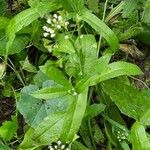
Capsella bursa-pastoris
کیسه کشیش · كيس الراعي · شیرینی شاترە · Shepherd's Purse · Mother's heart
Description
Source: leafsnapCapsella bursa-pastoris, known as shepherd's purse because of its triangular flat fruits, which are purse-like, is a small annual and ruderal flowering plant in the mustard family (Brassicaceae). It is native to eastern Europe and Asia minor, but is naturalized and considered a common weed in many parts of the world, especially in colder climates, including British Isles, where it is regarded as an archaeophyte, North America and China, but also in the Mediterranean and North Africa. C. bursa-pastoris is the second-most prolific wild plant in the world, and is common on cultivated ground and waysides and meadows.Scientists have referred to this species as a 'protocarnivore', since it has been found that its seeds attract and kill nematodes as a means to locally enrich the soil.
💡 Shepherd's purse is a rare protocarnivorous plant, which means it has the ability to kill and absorb nutrients from small invertebrates. In a notable scientific study, researchers placed nematodes in the soil near shepherd's purse seeds and observed that the plant was capable of killing the nematodes. The study found that plants exposed to nematodes grew taller and stronger than those that were not.
🌳 Beyond its well-known medicinal properties, shepherd's purse surprisingly also functions as an indicator of heavy metals in soil. Its capacity to accumulate these metals enables it to reveal pollutants such as zinc and copper, making it an unexpected but useful tool for environmental research. In the culinary sphere, shepherd's purse is not neglected. The leaves may be added to salads fresh or dried for a spicy kick, and the crushed seeds deliver a strong, mustard-like flavor for seasoning dishes.
🎭 I give you my all.
Care Guide
💧 Water Every 7 days
Shepherd's purse, native to temperate regions, thrives with moderate moisture and can tolerate brief dry periods. It benefits from regular weekly watering and adapts well to both indoor and outdoor environments. Ensuring adequate hydration is crucial for its vigorous growth during the growing season.
How should I water my Shepherd's purse plant?
To water Shepherd's purse, you have several options such as using a garden hose with a spray nozzle, a watering can, or any common watering tool. This plant is not too choosy about its water source and can thrive with rainwater, tap water, or filtered water. It's generally advised to avoid watering from above as it can harm the leaves and flowers and possibly cause disease. Setting up a drip irrigation system is often the best approach as it ensures even and direct watering to the soil. If you have Shepherd's purse in a container, you can use a cup, watering can, or tap to water directly into the soil.
What should I do if I give my Shepherd's purse plant too much water or too little water?
To remedy underwatering Shepherd's purse, simply water it more regularly when you notice it lacks moisture. Overwatering, on the other hand, can be more problematic as it can lead to diseases and the plant's decline. To prevent this, choose a suitable location with ample sunlight to dry the soil and good drainage to avoid waterlogging. If you overwater a potted Shepherd's purse, consider changing to a new pot with proper drainage. Ensure loose soils and an efficiently draining pot when repotting the overwatered plant.
How often do I need to water my Shepherd's purse?
Shepherd's purse requires regular watering throughout the growing season. In spring, it should be watered once a week. As the season progresses and temperatures increase, watering may need to be increased to two to three times per week. However, watering in excess can harm the plant. It is important to keep the soil moist but not wet, regardless of the watering frequency. Watering Shepherd's purse in a pot is slightly different. Potted plants tend to dry out faster, so watering frequency should be increased. Typically, container-grown Shepherd's purse should be watered a few times per week, compared to just once per week for plants in the ground.
How much water does my Shepherd's purse plant need?
There are a few ways to decide how much water to give to your Shepherd's purse plant. Some gardeners rely on their intuition and check the soil moisture by feeling it. They suggest watering until the top six inches of soil feel damp. Another option is to use a specific measurement. Generally, you should provide your Shepherd's purse with about two gallons of water per week, depending on the heat and soil dryness. However, be cautious not to overwater if your plant requires less. When growing Shepherd's purse in a container, a different method is needed. You should moisten all the dry soil layers, which can be tested by inserting a finger into the soil. Another sign is when a small amount of excess water drains out of the pot's drainage holes.
How can I know if I'm giving enough water to my Shepherd's purse plant?
Avoiding overwatering your Shepherd's purse can be a bit tricky. These plants have deep roots that need to be watered weekly, but they are also very susceptible to root rot. Overwatering can cause browning and wilting, while underwatering is less likely to occur as these plants can survive without supplemental watering for a while. However, if you wait too long to water them, they will start to wilt and you may see dry leaves.
☀️ Light Full sun
Shepherd's purse grows best in bright, direct sunlight but can withstand slight shading. The plant's development and vigor heavily depend on ample sun, especially during important growth periods. Too much shade can restrict its growth, while excessive sun exposure can result in suntan.
What are the sunlight requirements for Shepherd's purse?
Shepherd's purse thrives best under full sun conditions, which means it requires above 6 hours of sunlight daily. However, it can also survive in partial sun, receiving about 3-6 hours of sunlight. It's essential to watch how sunlight moves through your garden to ensure the spots you choose provide the perfect balance for your plants. This balance is crucial for the plant's growth and health, particularly during its crucial growth stages. Too much shade may hamper its growth, while excessive sunlight can cause issues like sunscald.
How can artificial lighting be used for indoor Shepherd's purse?
Indoor Shepherd's purse requires adequate lighting, especially when natural sunlight is insufficient. Artificial lights, such as LED lights, are beneficial as they can be customized to provide specific wavelengths needed for optimal growth. For plants requiring full sun, 30-50W/sq ft of artificial light is needed; partial sun plants need 20-30W/sq ft, and full shade plants need 10-20W/sq ft. The light source should be placed 12-36 inches above the plant to mimic natural sunlight and should be kept on for 8-12 hours per day to mimic the natural length of daylight.
What are the symptoms of insufficient light in Shepherd's purse?
When Shepherd's purse doesn't receive enough light, it may show several symptoms including smaller new leaves, leggy or sparse growth, faster leaf drop, slower or no new growth, lighter-colored new leaves, chlorosis (leaves turn yellow), sunscald (damaged leaves from intense sunlight), leaf curling (defense mechanism against sunlight), wilting (due to increased water loss), and leaf scorching (brown, dry edges on leaves). These symptoms indicate the plant is under stress due to inadequate sunlight exposure.
What solutions are available for Shepherd's purse suffering from light deficiency?
To combat light deficiency in Shepherd's purse, gradually move the plants to sunnier locations to reach at least 6 hours of direct sunlight daily. If moving the plant isn't feasible, consider using a desk lamp or invest in professional plant grow lights for additional light, keeping them on for at least 8 hours daily. For outdoor plants, avoid sudden changes in light intensity to prevent sunburn. If sunlight is blocked by physical obstructions like trees, consider pruning them. For smaller plants, transplanting during their dormant period to a location with ample sunlight and good drainage can also be beneficial.
🌡️ Temperature 10–35°C
Shepherd's purse is a plant native to temperate regions and requires temperatures of 68 to 95 °F (20 to 35 ℃). It favors warmer conditions. In colder seasons, adjusting the environment to keep temperatures within that optimal range supports its growth.
What are the ideal temperature conditions for growing Shepherd's purse?
Shepherd's purse thrives in temperate environments, with optimal growth temperatures ranging from 68 to 95°F (20 to 35°C). Although it prefers warmer weather, Shepherd's purse has significant cold resistance, allowing it to endure without specific frost protection measures in most winter conditions. However, in extremely cold climates where winter temperatures can drop below -25°C, protective measures like covering the plant with soil or straw are advisable. To ensure the plant enters winter well-hydrated, it's recommended to water it abundantly before the first freeze of autumn, keeping the soil moist to prevent water scarcity during winter and early spring.
How does Shepherd's purse react to temperature extremes?
Shepherd's purse demonstrates notable tolerance to a range of temperatures but has specific responses to extreme conditions. In low temperatures, it maintains its resilience down to -25°C, though temperatures below this can hinder spring sprouting, potentially causing a decrease or absence in this growth phase. The solution for such cases involves removing non-sprouting parts in spring. During high temperatures, especially above 35°C reaching up to 41°C or more, the plant may exhibit signs of stress such as lighter leaf color, curling, susceptibility to sunburn, and in severe instances, wilting or drying out completely. To alleviate these symptoms, damaged parts should be trimmed away, and measures such as relocating the plant to shaded areas or using shade cloth can help, along with watering in the cooler morning and evening hours to retain soil moisture.
💨 Humidity
🪴 Soil 6-7
🌱 Fertilizer
Shepherd's purse benefits from regular, dilute applications of fertilizer to encourage healthy leaf development. You should feed Shepherd's purse about once a month throughout the summer. Nitrogen is essential for foliage, and providing nitrogen-rich sources helps Shepherd's purse flourish.
🪴 Pot & Repot
✂️ Pruning
🌿 Propagating
🐛 Diseases & pets
☠️ Toxicity
Capsella bursa-pastoris purse seems to be safe when taken by mouth or applied to the skin in small amounts. It can cause drowsiness, changes in blood pressure, thyroid function changes, and heart palpitations. An overdose of shepherd's purse might cause paralysis, breathing difficulty, and death.
Characteristics
- Plant Type
- Herb
- Life Cycle
- Annual, Biennial
- Genus
- Capsella
- Family
- Brassicaceae
- Hardiness Zone
- 6-10
- Mature Height
- 6 cm to 49 cm
- Mature Spread
- 10 cm
- Leaf Color
- Green
- Leaf Type
- Deciduous
- Flower Color
- White
- Flower Size
- 0.20 cm to 0.25 cm
- Bloom Time
- Spring, Early summer
- Planting Time
- Autumn, Winter, Spring
- Harvest Time
- Mid spring, Late spring, Early summer, Mid summer
- Native Area
- Sweden, Bulgaria, Poland, Greece, Russia, Lithuania, Norway, Hungary, Germany, Portugal, Italy, Spain, Switzerland, Denmark, Finland, United Kingdom, Romania, Belgium, France