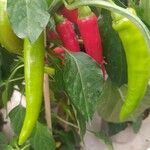
Capsicum frutescens
فلفل · Chilli · Tabasco pepper · Cayenne-pepper · Capsicum
Description
Source: leafsnapCapsicum frutescens, commonly known as the chili pepper, is a species of flowering plant in the nightshade family, Solanaceae. Native to Central and South America, it has been widely cultivated around the globe for its spicy fruit. The plant grows as a small shrub and can reach up to 1 meter in height. Its leaves are dark green and glossy, while the flowers are small and either white or greenish-yellow. The fruit of Capsicum frutescens varies greatly in shape, size, color, and spiciness, depending on the cultivar. It can be round or elongated, with either a smooth or wrinkled surface, and ranges in color from green to yellow to red when ripe. The spiciness of chili peppers is measured on the Scoville scale, with Capsicum frutescens ranging from 30,000 to 50,000 Scoville units. Capsicum frutescens has been used for centuries as a culinary spice due to its pungent flavor and heat-producing properties. It is also used medicinally for its anti-inflammatory properties, which may help alleviate pain associated with arthritis. Beyond its culinary uses, Capsicum frutescens has been studied for potential health benefits, such as reducing blood pressure levels. This is attributed to its high content of capsaicinoids, which may help improve blood flow. Overall, Capsicum frutescens is an important plant species that plays a significant role both culturally through cuisine and potentially medically through ongoing research into the health benefits associated with the consumption of this spicy pepper variety.
💡 The fruits of the Capsicum annuum var. conoides plant are both exquisite and diverse. They grow above the leaves, making them quite striking. When Columbus discovered the Americas in 1492, this variety of capsicum was brought back to Spain. It was introduced to Central Europe approximately a century later, and it reached China through the Western Regions during the late Ming Dynasty.
🌳 Beyond its use in cooking, the tabasco pepper is noted for its potential as a natural pesticide. Because it contains capsaicinoids—the compounds that make peppers hot—the tabasco pepper can, when used as an organic repellent, discourage pests such as insects and mammals from eating crops. This property provides an environmentally friendly alternative to chemical pesticides and supports sustainable agricultural practices.
Care Guide
💧 Water Every 7 days
Tabasco peppers thrive in tropical conditions, needing a consistent supply of moisture and high humidity. To maintain balanced soil moisture, it is essential to water them regularly—at least once a week. When growing these peppers outdoors, take into account the amount of rainfall they receive, especially during the peak growing season, as it can contribute to their overall watering needs.
How should I water my Tabasco pepper plant?
The Tabasco pepper has specific water preferences and how you water it matters. Improper watering techniques can harm your tomatoes, so it's important to follow the correct method. The best approach is to slowly and gently apply water directly to the soil. Avoid pouring all the water at once or doing overhead watering for your Tabasco pepper. While watering slowly, make sure to water deeply to ensure the entire soil where your Tabasco pepper grows is adequately moist.
What should I do if I give my Tabasco pepper too much water or not enough water?
If you have overwatered your Tabasco pepper and are worried about disease, take immediate action. The best approach is to remove the plant from its current location and let the roots dry before replanting it in a well-drained soil. If you are growing in pots, consider transferring the plant to a pot with better drainage. On the other hand, if you have underwatered your plant, simply water it more frequently.
How many times should I water my Tabasco pepper plant?
The Tabasco pepper plant needs a lot of water as it grows. It is best to water it frequently, especially during the spring and summer months. In the beginning of the growing season, water the plant once or twice per week. As the season continues, increase the frequency of watering, potentially even up to twice per day or more during the summer, depending on the weather. Once the plant has gone through its main growth stages, reduce the frequency to about once per week until the end of the growing season.
How much water does my Tabasco pepper require?
Tabasco peppers are highly popular, and many gardeners, both professional and amateur, have successfully grown them. With this widespread experience, we now have a clear understanding of how to care for these plants, including knowledge about their specific watering needs. Typically, an average Tabasco pepper plant should receive about 1 - 1.5 inches of water per week. It is important to evenly distribute this volume during your weekly watering. As the weather becomes warmer, you may need to increase the amount of water, but two inches per week is generally considered a good baseline amount.
How do I know if I'm giving enough water to my Tabasco pepper plant?
When taking care of your Tabasco pepper plant, both underwatering and overwatering can be issues that you may encounter. Interestingly, these problems can produce similar symptoms. For instance, whether you underwater or overwater, you may notice that the leaves of your Tabasco pepper change color and become droopy. Initially, if the plant is underwatered, its leaves will curl and droop. Additionally, you may observe that several leaves become less vibrant. Since both the flowers and the entire plant require a significant amount of water, underwatering may result in stunted growth and overall poor development. Conversely, overwatering is more likely to cause disease, such as rot, and can produce unpleasant smells from the soil. It is important to note that symptoms of underwatering tend to appear sooner compared to overwatering. To determine if overwatering is occurring, pay attention to the condition of the soil. If you see stagnant water or waterlogged soil, it is likely that overwatering is the problem.
☀️ Light Full sun
Tabasco pepper needs abundant sunlight for best growth, though it has a limited tolerance for less brightly lit conditions. Its native habitat gets extensive sun exposure, so ample sunlight is an important factor in its healthy development. Both excessive and insufficient sunlight can impede its growth.
What are the sunlight requirements for Tabasco pepper plants?
Tabasco pepper plants flourish when exposed to full sun, that is, more than 6 hours of sunlight daily, but they can also tolerate partial sun, or about 3-6 hours of daily sunlight. It's crucial to observe the movement of sunlight through your garden to find the ideal spots that offer a mix of light and shade, ensuring the optimal growth of your plants. In its natural habitat, the Tabasco pepper benefits significantly from extensive sun exposure, which is vital for its development. Both excessive and insufficient sunlight can negatively impact the plant's growth.
How can artificial lighting be used for Tabasco pepper plants?
When natural sunlight is inadequate, especially during winter or in less sunny locations, artificial lighting serves as an essential solution for growing indoor Tabasco pepper plants. The optimal strategy includes selecting LED lights, which can be customized to emit specific light wavelengths needed by the plants. Full sun plants require 30-50W/sq ft, partial sun plants need 20-30W/sq ft, and full shade plants should have 10-20W/sq ft of artificial light. The light source should be placed 12-36 inches above the plants to emulate the natural sunlight effect, and the lights should be kept on for 8-12 hours per day to simulate the natural daylight duration.
What are some common symptoms of inadequate light in Tabasco pepper plants?
Indoor Tabasco pepper plants with insufficient light may exhibit several symptoms, such as smaller new leaves compared to older ones, leggy growth with increased space between leaves or stems, premature leaf drop to conserve resources, delayed growth or a complete halt in new leaf production, and pale or irregularly colored new leaves indicating a lack of chlorophyll. Other symptoms include chlorosis, or yellowing of leaves due to excessive sunlight; sunscald, which manifests as pale or necrotic spots on leaves or stems; leaf curling as a defense against overexposure; wilting from excessive water loss; and leaf scorching, visible as brown, dry patches on leaves because of intense sunlight exposure.
How can I address light-related issues with my Tabasco pepper plants?
To mitigate light-related issues, you can incrementally move your plants to sunnier spots, aiming for at least 6 hours of direct sunlight daily. For indoor plants, consider using a south-facing window and keep curtains open. If necessary, use artificial lighting, such as desk lamps or professional grow lights, for a minimum of 8 hours a day. For outdoor plants, ensure a gradual transition to avoid sunburn. Address obstructions by pruning or moving plants to sunnier locations. Note that damages from insufficient light might be irreversible, but new growth will be healthy post-adjustment.
🌡️ Temperature 15–37.8°C
The Tabasco pepper comes from a climate with temperatures between 68 and 100 °F (20 to 38 ℃). It does best in warm conditions and can adapt to seasonal temperature shifts, provided the temperature doesn't fall below its comfort zone.
What is the ideal climate for growing Tabasco pepper?
Tabasco pepper, scientifically known as Capsicum frutescens, thrives in climates where temperatures range between 68 to 100°F (20 to 38°C). It prefers warmer temperatures for optimal growth and can adjust to seasonal temperature changes as long as temperatures remain above its critical minimum. During winter cultivation, ensuring that the temperatures stay above 20°C is beneficial, and it's crucial to protect the plant from freezing by keeping the temperature above the freezing point. In regions where outdoor temperatures may drop to -5°C (25°F), it's advisable to bring the plants indoors or provide protection through a temporary greenhouse or by wrapping the plant with materials like plastic film or fabric.
How does low temperature affect Tabasco pepper and what can be done about it?
Tabasco pepper has a moderate tolerance to low temperatures, thriving best between 20°C and 38°C. When temperatures dip below 0°C, it's advisable to take measures to protect the plant. Exposure to temperatures below -10°C can lead to the darkening of leaves, water-soaked necrosis, wilting, and eventual browning of the leaves as part of frost damage. To address this, frost-damaged parts should be trimmed away, and the plant should be immediately moved to a warmer environment indoors or covered with a makeshift greenhouse. Placement near a south-facing window will ensure ample sunlight, and if light is insufficient, supplemental lighting may be used.
What should be done if a Tabasco pepper experiences high temperature?
To prevent stress and damage from high temperatures, it's important to keep the Tabasco pepper plant below 38°C during summer. Temperatures above 43°C can slow the plant's growth, lighten the color of its leaves, and increase susceptibility to sunburn. In such cases, sunburned and dried parts should be trimmed away. The plant should be moved to a shaded location, especially away from the harsh afternoon sun, and watered in the morning and evening to maintain soil moisture and help cool the plant.
💨 Humidity high (>60%)
This plant needs special care because it loves high humidity levels of 60-80% or more. The best way to achieve this is by placing a humidifier near the plant. Daily misting is also essential! Make sure the room has good ventilation.
🪴 Soil 6-6
🌱 Fertilizer
To feed Tabasco peppers, apply natural or commercial fertilizer high in nitrogen for leaf growth, phosphorus for root and flower development, and potassium for photosynthesis and maximum fruit production. Plant in spring, enrich the soil with compost or manure, and fertilize seedlings when they reach a height of 2–4 inches (5.1–10.2 cm). Insufficient macronutrients cause slow growth, wilting, and problems with fruit quality.
Why should I put fertilizer on my Tabasco pepper?
When growing Tabasco peppers for their fruit, it is important to supplement the soil with additional nutrients to promote optimal harvest. Each type of nutrient plays a unique role in supporting plant growth. Phosphorus is particularly important as it stimulates the formation of flowers and fruit. However, it is also crucial to provide enough nutrients for the root system and leaves, which are essential for absorbing sunlight. Without sufficient macronutrients, plants become weak, grow slowly, and may even wilt. Since flowering and fruiting require a significant amount of energy, a deficiency in these key components will affect the quality of the resulting fruits.
When should I fertilize my Tabasco pepper for it to grow well?
Tabasco pepper is a summer crop that should be planted in the spring to produce fruits during the summer months. To grow high-quality produce, it requires rich, fertile soil. Before planting, it's recommended to mix a 2 inch layer of compost or well-rotted manure into the soil. This will provide nutrients and improve soil drainage. Transplants can be fertilized right after planting, but for seedlings, it's best to wait until they reach a height of 2 to 4 inches before fertilizing them for the first time. Once the plants are established, feed them every 3 to 4 weeks throughout the growing season, until the first frost or when the plant stops producing. Make sure to check the specific fertilizer type and the variety of Tabasco pepper you're growing to customize your fertilization schedule accordingly. If you're uncertain, it's better to fertilize less.
When is it not a good idea to add fertilizer to my Tabasco pepper plant?
To ensure optimal growth of Tabasco pepper, it is important to avoid using a fertilizer that is high in nitrogen. Although it may cause an abundance of leaves, it may hinder the development of blooms and fruits. Instead, opt for a fertilizer that has a lower level of nitrogen in comparison to other nutrients. It is also advisable to refrain from fertilizing during periods of high temperatures or dry conditions. This is because the fertilizer can easily wash away through the soil without being absorbed. Additionally, plants have reduced ability to absorb nutrients in hot weather, which can result in the fertilizer remaining in the soil and hindering the plants' ability to uptake water. Such circumstances can be particularly hazardous for the plants during droughts or heatwaves.
What kind of fertilizer should I use for my Tabasco pepper plant?
To determine the best fertilizer for your Tabasco pepper, start by assessing the nutrients already present in your soil and identify any deficiencies. Conducting a soil test can provide this information, but some people rely on trial and error to successfully grow Tabasco peppers. While you can find specific fertilizers for Tabasco peppers, there's no need to buy a different fertilizer for each vegetable you grow. By understanding the basic needs of your plants and the existing nutrient content in your soil, you can use the same fertilizer for multiple plants. Many growers prefer high-phosphorus fertilizers that promote flower and fruit growth, such as those with an NPK ratio like 8-32-16 or 10-30-10. However, some people opt for a balanced fertilizer like 10-10-10 to simplify their gardening routine.
How should I add plant food to my Tabasco pepper?
To properly fertilize your garden, it's important to follow the specific instructions provided with each type of fertilizer. Some may need to be diluted, while others must be measured carefully. It is crucial to avoid over-fertilizing your garden, so make sure to do your research. If you have Tabasco peppers planted in a row, you can use a technique called side-dressing. This involves mixing the fertilizer into the soil on both sides of the row, about 3 to 4 inches away from the plant's base. This allows the fertilizer to reach the roots without touching the plant itself. The nutrients will then be washed into the soil and down to the roots when watered. If side-dressing isn't suitable for your garden layout, you can apply the fertilizer around the plant at a distance of 3 to 4 inches. Granular fertilizers can be scattered onto the soil and then lightly mixed in. After applying dry fertilizers, water thoroughly. For liquid fertilizers, mix them into a watering can and use this mixture to water and fertilize your plants simultaneously. Alternatively, for foliar feeding, you can spray the leaves with a specialized fertilizer mix instead of applying nutrients to the soil.
🪴 Pot & Repot 2-3 years
Repot Tabasco peppers every 2 to 3 years in the spring, using a pot that is 1 to 2 inches wider than the current one. After repotting, make sure the plant receives bright light and maintains even moisture, being careful not to overwater. Regular repotting encourages vigorous growth and increases pepper yields.
✂️ Pruning
The Tabasco pepper is a bushy perennial plant known for producing fiery fruits. To encourage bushiness and boost fruit production, prune the plant in mid-spring. Focus on removing dead branches and overly long stems. Regular pruning improves air circulation, prevents diseases, and increases yield. Always use clean cuts with sterilized tools.
🌿 Propagating
🐛 Diseases & pets
☠️ Toxicity
Characteristics
- Plant Type
- Herb
- Life Cycle
- Perennial, Annual
- Genus
- Capsicum
- Family
- Solanaceae
- Hardiness Zone
- 8-11
- Mature Height
- 61 cm
- Mature Spread
- 40 cm
- Leaf Color
- Green
- Leaf Type
- Evergreen
- Flower Color
- White
- Flower Size
- 1.02 cm to 1.52 cm
- Bloom Time
- Late spring, Summer
- Planting Time
- Spring, Summer
- Harvest Time
- Mid summer, Late summer, Fall
- Native Area
- Colombia, Belize, Cuba, Honduras, Mexico, Guatemala, Bolivia, Venezuela, Guyana, El Salvador, Nicaragua, Ecuador, Costa Rica, Panama, Jamaica