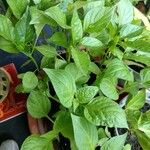
Capsicum pubescens
Apple chile · Horse chili · Rocoto · Chile · Chamburoto
Description
Source: leafsnapCapsicum pubescens, commonly known as the Rocoto pepper, is a species of chili pepper native to South America. This perennial plant can grow up to 2 meters tall and features hairy leaves and stems. The Rocoto pepper has a distinctive bell shape with thick walls, and its color can range from green to red or yellow when ripe. The Rocoto pepper stands out for its unique flavor profile, which combines sweetness with heat. It has been a staple in traditional South American cuisine for centuries, particularly in Peru, where it is considered one of the country's national treasures. Beyond its culinary uses, Capsicum pubescens also boasts medicinal properties. The plant contains capsaicin, which can help alleviate pain and inflammation when applied topically or consumed orally. Overall, Capsicum pubescens holds significant cultural and medicinal value in South America. Its unique flavor profile makes it a popular ingredient in many dishes, while its medicinal properties have been utilized for centuries by indigenous communities.
💡 The fruits of Capsicum annuum var. conoides are exquisite and diverse. They grow above the leaves, creating a striking appearance. When Columbus discovered the Americas in 1493, this variety was brought back to Spain. It reached Central Europe approximately a century later and was introduced to China through the Western Regions during the late Ming Dynasty.
🌳 Aji peanut pepper plays an interesting ecological role beyond its culinary applications. Studies indicate that its growth patterns can signal the presence of particular minerals in the soil, making it a useful bioindicator for agricultural and ecological assessments.
🎭 Satirical Musings
Care Guide
💧 Water Every 7 days
Tree pepper originates from the humid highlands of South America and flourishes in consistently moist conditions. While it can withstand brief dry periods, weekly watering is essential to support its lush growth. Being an evergreen, the tree pepper requires careful watering during the growing season to ensure continuous leaf production.
How should I water my Tree pepper plant?
The Tree pepper has specific water preferences and it is also important to consider how you water it. Improper watering techniques can harm your tomatoes. The best method is to water the Tree pepper by applying the water directly to the soil in a slow and gentle manner. Avoid pouring all of the water into the soil at once and refrain from overhead watering. It is important to water slowly, but also ensure that the soil is sufficiently moist by watering deeply.
What should I do if I give my Tree pepper too much or too little water?
If you have overwatered your Tree pepper and are worried about disease, take immediate action. The best solution is to remove the plant from its current spot. Let the roots dry a bit before replanting in an area with well-draining soil. If you grow in pots, consider moving the plant to a pot with better drainage. In the case of underwatering, simply water the plant more frequently.
How often do I need to water my Tree pepper plant?
Tree pepper requires a lot of water during the entire growing season. In order to meet this high water requirement, it is necessary to water the plants regularly and frequently from spring to summer. In the beginning of the growing season, watering once or twice a week is sufficient. However, as the season progresses, the frequency of watering should be increased. In summer, depending on the weather, it may be necessary to water the plants twice a day or even more. Once the Tree pepper plants have reached their peak growth, the watering frequency can be reduced to about once a week until the end of the growing season.
How much water does my Tree pepper plant require?
Tree peppers are a popular plant and many gardeners, both professional and amateur, have found success in growing them. As a result, we have a good understanding of how to care for these plants, including the amount of water they need. On average, a Tree pepper plant will require about 1 - 1.5 inches of water per week, which should be evenly distributed during your weekly watering. In warmer weather, you may need to increase the amount of water, but generally, providing two inches per week is a good starting point.
How can I know if I'm giving enough water to my Tree pepper plant?
Problems with underwatering and overwatering can both affect your Tree pepper plant, and they can have similar symptoms. For instance, if you overwater or underwater your plant, you may notice discoloration and wilting of the foliage. When your Tree pepper is underwatered, the leaves will initially curl and droop, and you will also see a decrease in their vitality. Underwatering can also inhibit the plant's growth and overall development, as this particular species requires a high amount of water. On the other hand, overwatering is more likely to cause diseases such as rot, and you may also notice unpleasant smells coming from the soil. The signs of underwatering appear more quickly than those of overwatering, and you can also identify overwatering by observing the soil conditions. If you see excessive standing water or waterlogged soil, it's likely that overwatering is the issue.
☀️ Light Full sun
The aji peanut pepper prefers abundant exposure to sunlight. Sunlight is essential for its health and optimal growth. Its place of origin provided a sunlit environment in which it thrives. Too much or too little sun exposure may hinder its growth and development.
What are the sunlight requirements for Tree Pepper plants?
Tree Pepper plants thrive when exposed to ample sunlight. They require full sun, which is above 6 hours of direct sunlight daily, or partial sun, about 3-6 hours of sunlight daily. Observing how sunlight moves through your garden is essential to choose locations that provide the ideal balance of light and shade, ensuring the health and happiness of your plants.
What essentials do Tree Pepper plants need to grow healthily?
Tree Pepper plants demand a substantial amount of sunlight for healthy growth, originating from regions with high solar radiation. While growth stages may vary in light needs, typically both too much and too little sunlight can harm the plant. Additionally, indoor plants might require artificial lighting to grow optimally, especially in locations with insufficient natural sunlight. LED lights are recommended for indoor Tree Pepper plants, needing specific wattage based on their sunlight requirements: 30-50W/sq ft for full sun, 20-30W/sq ft for partial sun, and 10-20W/sq ft for full shade plants. The artificial light should be placed 12-36 inches above the plant and operated for 8-12 hours daily to mimic natural light conditions.
What symptoms indicate improper light exposure in Tree Pepper plants?
Tree Pepper plants show several symptoms when they receive inadequate light. These include the development of smaller leaves than those previously grown, leggy or sparse growth, premature leaf drop, slower or halted new growth, leaves turning lighter or showing irregular color patterns, and conditions like chlorosis, sunscald, leaf curling, wilting, and leaf scorching. These symptoms can result from either too little or too much light exposure and highlight the necessity of providing the correct amount of sunlight.
How can I address sunlight exposure issues for Tree Pepper plants?
To resolve sunlight exposure problems in Tree Pepper plants, gradually adjust the plant's location to receive the required sunlight, moving it closer to a light source weekly until it gets at least 6 hours of direct sunlight each day. For indoor plants, consider using artificial lighting if relocating the plant isn't feasible, keeping a light source on for 8 hours daily or employing professional grow lights. For outdoor plants, moving them to sunnier spots carefully to avoid sunburn is key. Addressing obstructions by pruning or transplanting can also help increase sunlight exposure. It's important to note that parts of the plant that have suffered due to lack of light may not recover, but new growth should be healthy with improved lighting.
🌡️ Temperature 15–37.8°C
Aji peanut pepper is a plant that grows best in temperatures from 59 to 100 °F (15 to 38 °C). Native to regions with moderate to high temperatures, the aji peanut pepper has particular temperature preferences for optimal growth. As seasons change, it may need temperature adjustments to mimic its native climate conditions.
What is the ideal temperature range for growing Tree pepper?
Tree pepper, or Capsicum pubescens, is best suited to climates where temperatures range from 59°F to 100.4°F (15°C to 38°C). It thrives in warm climates and requires some temperature management during the colder months to ensure it remains within this preferred temperature range. Keeping the plant in temperatures above 15°C during the winter is crucial for its growth. It is important to protect the Tree pepper from freezing temperatures by keeping it above freezing point and moving it indoors or providing extra protection when outdoor temperatures drop to -5°C (25°F).
How does Tree pepper respond to low temperatures and what measures should be taken?
Tree pepper has a moderate tolerance to low temperatures, performing best between 15°C and 38°C. When temperatures fall below -5°C, precautions should be taken to avoid damage. Exposure to temperatures below -10°C can cause the leaves to darken, and in severe cases, result in water-soaked necrosis, wilting, and browning of the leaves. To mitigate frost damage, trim away affected parts and move the plant to a warmer indoors spot or set up a temporary greenhouse. Placing the plant near a south-facing window or using supplemental lighting can ensure it gets enough sunlight.
What steps should be taken if Tree pepper experiences high temperatures?
During the summer months, the temperature around Tree pepper should be maintained below 38°C to prevent heat stress. If temperatures rise above 43°C, the plant may exhibit slowed growth, lighter leaf color, and increased susceptibility to sunburn. To counteract the effects of high temperatures, trim away sunburned or dry sections and relocate the plant to a shaded area, particularly away from the harsh afternoon sun. Additionally, watering the plant in the morning and evening can help keep the soil suitably moist and mitigate heat stress.
💨 Humidity
🪴 Soil 5-6
🌱 Fertilizer
To feed Aji peanut pepper, apply natural or commercial fertilizer high in nitrogen for leaf growth, phosphorus for roots and blossoms, and potassium for photosynthesis and maximum fruit production. Plant in spring, enrich the soil with compost or manure, and fertilize seedlings when they reach a height of 2–4 inches (5.1–10.2 cm). Insufficient macronutrients result in slow growth, wilting, and problems with fruit quality.
Why should I put fertilizer on my Tree pepper?
When growing Tree pepper for its fruit, it is important to supplement the soil with additional nutrients to ensure a good harvest. Each main macronutrient plays a unique role in supporting plant growth. Phosphorus is particularly important for promoting flower and fruit formation. Additionally, a strong root system and healthy leaves are essential for absorbing sunlight, so nutrients that support these parts of the plant are also necessary. Insufficient macronutrients can lead to weak plant vitality, slower growth, and potential wilting. Since plants require significant energy to flower and fruit, deficiencies in these key components will be reflected in the resulting fruits.
When should I fertilize my Tree pepper plant?
To successfully grow tree pepper, it is important to follow certain steps. Firstly, determine the appropriate planting time based on the specific variety. Generally, planting in spring will ensure fruit production during the summer. Additionally, enriching the soil with compost or well-rotted manure, about a 2-inch layer, before planting is crucial. This will provide necessary nutrients for tree pepper growth and improve soil drainage. For transplants, fertilization can begin immediately after planting, whereas seedlings should be at least 2 to 4 inches tall before their first fertilization. Throughout the growing season, established plants should be fed every 3 to 4 weeks, until either the first frost or the plant stops producing. It is important to check the specific type of fertilizer and variety of tree pepper to customize the fertilization schedule accordingly. If unsure, it is better to use less fertilizer.
When should I not apply fertilizer to my Tree pepper plant?
To ensure optimal growth and fruit production in Tree pepper, it is important to be cautious with nitrogen-rich fertilizers. Excessive nitrogen can result in excessive foliage growth at the expense of blooms and fruits. Instead, opt for a fertilizer that is relatively low in nitrogen compared to other nutrients. Additionally, avoid fertilizing Tree pepper during periods of high temperatures or dry conditions. This is because the fertilizer may easily wash away without being absorbed by the soil, and plants have reduced ability to take in nutrients during hot weather. This can be especially problematic during droughts or heatwaves, potentially harming the plants.
What kind of fertilizer should I use for my Tree pepper?
To determine the right fertilizer for your Tree pepper, start by assessing your soil's existing nutrients and deficiencies. A soil test can provide helpful insights into its composition, but some people successfully grow Tree pepper without one through trial and error. Instead of purchasing a separate fertilizer for each vegetable, understanding the basic needs of your plants and the nutrients already in your soil will allow you to use the same fertilizer for multiple plants. Many growers prefer high-phosphorus fertilizers for promoting flower and fruit growth, which have an NPK ratio with the highest middle number, like 8-32-16 or 10-30-10. However, some opt for a balanced fertilizer like 10-10-10 to simplify their gardening routine.
How should I give fertilizer to my Tree pepper plant?
Different types of fertilizer come with specific instructions, which may include dilution or careful measurement. To avoid over fertilizing your garden, it is important to follow these instructions and conduct thorough research. If you have Tree pepper plants in a row, you can use the side-dressing method to ensure that the fertilizer reaches the roots without touching the plant itself. This involves mixing the fertilizer into the soil along the rows, about 3 to 4 inches away from the plant's base. When you water the plants, the nutrients will be washed into the soil and down to the roots. If the side-dressing method is not suitable for your garden configuration, you can apply the fertilizer to the soil around the plant, again staying about 3 to 4 inches away. For granular fertilizers, scatter them onto the soil and lightly mix them in to ensure they are incorporated where desired. After applying dry fertilizers, make sure to water thoroughly. Liquid fertilizers can be mixed into a watering can and used to water and fertilize plants simultaneously. Alternatively, foliar feeding involves spraying the leaves with a specialized fertilizer mix instead of adding nutrients to the soil.
🪴 Pot & Repot Every 12 months
For tree pepper to thrive, it is crucial that the pots have excellent drainage.
✂️ Pruning
Tree pepper, with its hairy leaves, thrives in cooler climates. Pruning in mid-spring encourages healthy growth and boosts fruit production by removing dead branches and thinning the canopy. This process enhances light penetration, reduces the risk of disease, and stimulates new growth, ultimately leading to improved productivity.
🌿 Propagating
🐛 Diseases & pets
☠️ Toxicity
Characteristics
- Plant Type
- Herb
- Life Cycle
- Perennial
- Genus
- Capsicum
- Family
- Solanaceae
- Hardiness Zone
- 8-11
- Mature Height
- 2.13 m to 4.57 m
- Mature Spread
- 91 cm
- Leaf Color
- Green
- Leaf Type
- Evergreen
- Flower Color
- White
- Flower Size
- 0.76 cm to 1.02 cm
- Bloom Time
- Late spring, Early summer, Mid summer
- Planting Time
- Spring, Summer
- Harvest Time
- Mid summer, Late summer, Early fall
- Native Area
- Colombia, Paraguay, Argentina, Bolivia, Venezuela, Peru, Brazil, Ecuador