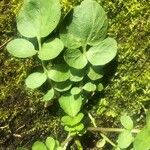
Cardamine amara
Large Bittercress · Large Bitter-cress · Large-flowered bittercress · Common bittercress · Larger Bittercress
Description
Source: leafsnapCardamine amara, commonly known as bittercress or cuckoo flower, is a perennial herbaceous plant in the Brassicaceae family. Native to Europe and Asia, it thrives in damp meadows, marshes, and along riverbanks. This plant can grow up to 60 cm tall and features a basal rosette of leaves divided into small leaflets. From April to June, it produces clusters of small white or pink flowers at the tops of its stems. Bittercress has been valued for its medicinal properties for centuries, thanks to its high content of vitamin C and minerals such as calcium and iron. It has been traditionally used as a diuretic, expectorant, antiscorbutic (to prevent scurvy), antirheumatic (to relieve rheumatism), antiseptic (to prevent infection), and tonic (to improve overall health), among other uses. The leaves have a bitter taste due to their high glucosinolate content, which is responsible for their medicinal benefits but also makes them unpalatable to some animals, such as rabbits and deer. Overall, Cardamine amara is an intriguing plant with notable medicinal properties and ecological significance. It supports wetland habitats and serves as a valuable food source for insects like bees and butterflies.
Care Guide
💧 Water
☀️ Light Partial sun
🌡️ Temperature 5–32.2°C
💨 Humidity
🪴 Soil 6-7
🌱 Fertilizer
🪴 Pot & Repot
✂️ Pruning
🌿 Propagating
🐛 Diseases & pets
☠️ Toxicity
Characteristics
- Plant Type
- Herb
- Life Cycle
- Perennial
- Genus
- Cardamine
- Family
- Brassicaceae
- Hardiness Zone
- 4-8
- Mature Height
- 61 cm
- Mature Spread
- 20 cm to 40 cm
- Leaf Color
- Green, Blue
- Leaf Type
- Deciduous
- Flower Color
- White
- Flower Size
- 1.52 cm
- Bloom Time
- Early spring, Mid spring
- Planting Time
- Spring, Summer, Autumn
- Harvest Time
- Late spring, Early summer
- Native Area
- Europe to W. Siberia and Turkey