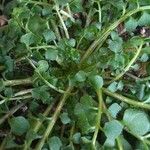
Cardamine hirsuta
Common bittercress · Hairy bittercress · Bittercress · Hairy Bitter-cress · Hoary Bittercress
Description
Source: leafsnapCardamine hirsuta, commonly called hairy bittercress, is an annual or biennial species of plant in the family Brassicaceae, and is edible as a salad green. It is common in moist areas around the world.
💡 Hairy bittercress uses a fascinating and unique method to disperse its seeds. The seeds develop inside tall, slender capsules called siliques. When these capsules are brushed against or disturbed, they burst open, flinging the seeds in all directions. The seeds can travel as far as 91 centimeters from the plant. This explosive seed dispersal mechanism is known as ballochory.
🌳 Hairy bittercress employs a distinctive defense and dispersal method through its explosive seed pods. When ripe, these pods can burst from a light touch, hurling seeds up to one meter away. This "explosive dehiscence" renders the plant both remarkable and a nuisance to gardeners. However, scientists recognize potential in the mechanism, considering it for self-planting crops, biomedical innovation, and inspiration for space technology.
🎭 Passion, Parental Passion; Paternal Mistake
Care Guide
💧 Water
Hairy bittercress thrives in moist conditions and requires regular watering to grow well. Although it can tolerate dry spells to some extent, it needs weekly watering to mimic its natural environment. The plant's growth is closely linked to the availability of water, and it shows peak vitality during periods of abundant rainfall.
When Should I Water My Hairy Bittercress?
Determining the right time to water hairy bittercress is crucial. Check the soil's moisture by probing the top inch with your finger; if it feels dry, it's time to water. Signs that your plant needs water include soil dryness, wilting or drooping leaves, and leaves that start turning a dull green or yellow. Beware of the risks associated with watering too early or too late - early watering can cause root rot from waterlogging, and too late can lead to dehydration issues. Maintaining a balance is key to the health of your hairy bittercress.
How Should I Water My Hairy Bittercress?
Watering your hairy bittercress correctly involves keeping the soil consistently moist without overwatering. Techniques like using a watering can are commonly employed, but bottom-watering can provide optimal hydration without risking too much moisture. Utilize tools like a moisture meter to assess the soil's moisture level. When watering, focus on the base to avoid disease in the foliage. Always ensure you're not overdoing it - too much water can harm the plant. Removing excess water from the saucer beneath the pot is essential if it isn't absorbed in a few hours.
How Much Water Does Hairy Bittercress Really Need?
Hairy bittercress's water requirement varies with its size and the pot's size. Observing natural indications like soil moisture, leaf health, and overall plant vitality is crucial. A guideline suggestion is about 1 inch per week for smaller plants, increasing to 2-3 inches for larger plants to maintain moist soil conditions. Ensure the soil is not waterlogged to prevent root rot and other issues. Using well-draining soil and monitoring weather conditions like rainfall will also aid in determining the amount of water your hairy bittercress needs.
What Kind of Water is Best for Hairy Bittercress?
Hairy bittercress flourishes with particular types of water. Rainwater is the best for its needs due to its natural purity and balanced pH level. Distilled and filtered water serve as good alternatives, offering contaminant-free options. If relying on tap water, ensure it's left to sit for 24 hours to evaporate chlorine or consider filtering to remove other impurities. Mind the plant's sensitivity to contaminants such as fluoride and excessive minerals. Room temperature water is ideal to avoid shocking the plant's system.
How Do Hairy Bittercress's Watering Needs Change with the Seasons?
Seasonal changes impact how you should water hairy bittercress. In spring, check the soil regularly and water when the top layer dries out. Summer demands consistently moist soil due to higher temperatures and active growth, while autumn sees a reduction in water needs as the plant slows down. Winter watering should be minimal, only as needed during dry spells, to avoid root damage from freezing. Adapting your watering practices to match these seasonal needs will promote the health and vitality of your hairy bittercress.
☀️ Light Full sun
Hairy bittercress performs best in areas with plentiful sunlight, though it can tolerate locations with reduced sun exposure. In its native setting it is exposed to the sun for long periods. Nevertheless, either too much or too little light can hinder the plant's growth and make the leaves wilt or turn yellow.
What are the sunlight requirements for hairy bittercress?
Hairy bittercress thrives in conditions where it can receive copious sunlight, akin to its natural environment where it basks extensively in the sun's rays. It demands full sun, which means above 6 hours of sunlight daily, though it can also adapt to partial sun, requiring about 3-6 hours of sunlight. However, too much or too little sunlight can adversely affect the plant's growth, causing the leaves to wilt or turn yellow. It's crucial to observe the movement of sunlight through your garden to find the best spots that provide a harmonious balance of light and shade, ensuring the plants' optimal growth and happiness.
How can artificial lighting support hairy bittercress growth indoors?
When natural sunlight is insufficient, especially during winter or in less sunny spaces, indoor plants like hairy bittercress can benefit immensely from artificial lighting. Artificial lights can mimic natural sunlight conditions and are crucial for promoting faster and healthier plant growth. It's recommended to choose LED lights as they can be tailored to provide specific light wavelengths needed by plants. Full sun plants should receive 30-50W/sq ft of artificial light, partial sun plants 20-30W/sq ft, and full shade plants 10-20W/sq ft. Position the light source 12-36 inches above the plant and ensure it receives 8-12 hours of light per day to mimic natural daylight hours.
What symptoms indicate insufficient sunlight in hairy bittercress?
Insufficient sunlight can lead to various symptoms in hairy bittercress, indicating the plant's struggle. Symptoms include smaller new leaves, leggy or sparse growth, faster leaf drop, slower or ceased new growth, lighter-colored new leaves, and conditions like chlorosis where leaves lose their green color and turn yellow, attributing to a breakdown of chlorophyll. Additionally, sunscald, leaf curling, wilting, and leaf scorching may occur due to inappropriate light levels, either excessive or deficient, impacting the plant's ability to carry out photosynthesis efficiently, and thus its overall health.
What are some solutions to light-related issues in hairy bittercress, both indoors and outdoors?
To combat light-related issues in hairy bittercress, a gradual adaptation strategy is advised. For indoor plants, gradually increase sunlight exposure each week until the plant receives at least 6 hours of direct sunlight through a south-facing window, and consider using artificial lights for at least 8 hours daily for plants that are large or not easily movable. Outdoors, carefully move your plants to sunnier spots over several weeks to prevent shock. Additionally, reducing obstructions like pruning trees that cast shade can improve sunlight access. If necessary, transplant smaller plants during their dormant period to better-lit areas with ample sunlight and good drainage. Note, parts of the plant already affected by insufficient sunlight may not recover, but new growth should flourish under improved lighting conditions.
🌡️ Temperature 5–32.2°C
Hairy bittercress comes from temperate regions and grows best at 68 to 95 °F (20 to 35 °C). To mimic its ideal environment, keep temperatures within that range. In colder months, raise indoor temperatures or use a greenhouse.
What is the optimal temperature for growing Hairy bittercress?
Hairy bittercress thrives best in temperate environments, with an optimal temperature range between 68 to 95 °F (20 to 35 °C). To ensure the plant grows well, maintaining this temperature range is essential. This involves raising indoor temperatures or utilizing a greenhouse during colder seasons to replicate its preferred habitat effectively.
How does Hairy bittercress handle cold weather, and what are the recommended cold protection measures?
Hairy bittercress possesses strong cold resistance, generally not requiring special frost protection measures during the winter. However, if temperatures are expected to drop below -30°C, providing cold protection is important. This can include covering the plant with soil or straw. Additionally, abundantly watering the plant before the first freeze in autumn helps keep the soil moist and prevents drought and water scarcity during winter and early spring.
What should be done if Hairy bittercress experiences low temperatures?
Although Hairy bittercress is cold-tolerant and can thrive above 20°C, it should ideally be kept above 0°C during winter. If temperatures fall below -30°C, you might not notice changes during winter, but there could be a reduction in sprouting or no sprouting in spring. In such cases, it's recommended to remove any parts of the plant that have failed to sprout during spring.
How should Hairy bittercress be cared for during high temperatures?
In summer, it's crucial to keep Hairy bittercress below 35°C, as exceeding 38°C can cause the leaves to lighten in color, curl, become prone to sunburn, and, in severe cases, lead to the wilting and drying of the entire plant. To mitigate this, trim away sunburned and dried parts of the plant, move it to a location protected from midday and afternoon sun, or use a shade cloth. Also, water the plant in the morning and evening to maintain soil moisture.
💨 Humidity normal (40-60%)
This plant will thrive in moderate humidity, which is probably the level in your home. However, misting it a few times a week can be very beneficial. Make sure the room has good ventilation.
🪴 Soil 6-7
🌱 Fertilizer
Hairy bittercress does well with regular, weak fertilizer applications to encourage healthy leaf development. Fertilize it about once a month during the summer months. Nitrogen is important for foliage, and using nitrogen-rich sources helps hairy bittercress thrive.
🪴 Pot & Repot
✂️ Pruning
🌿 Propagating
🐛 Diseases & pets
☠️ Toxicity
Hairy Bittercress is not toxic according to many sources, but it's always a good idea to consult a wellness expert or foraging guide in natural areas where the plant is often crowded. It can be displaced by garlic mustard (Alliaria petiolata), which is toxic to some animals and to insects such as butterflies that make the mistake of nesting on it.
Characteristics
- Plant Type
- Herb
- Life Cycle
- Annual, Biennial
- Genus
- Cardamine
- Family
- Brassicaceae
- Hardiness Zone
- 4-8
- Mature Height
- 6 cm to 30 cm
- Mature Spread
- 40 cm
- Leaf Color
- Green
- Leaf Type
- Deciduous
- Flower Color
- White
- Flower Size
- 0.51 cm
- Bloom Time
- Spring
- Planting Time
- Winter, Spring
- Harvest Time
- Mid spring, Late spring, Early summer
- Native Area
- Sri Lanka, Libya, Turkey, Sweden, India, Slovakia, Montenegro, Pakistan, Slovenia, Morocco, Croatia, Uganda, Tanzania, Belarus, Germany, Indonesia, Cameroon, Ethiopia, Romania, Belgium, Portugal, Netherlands, Saudi Arabia, Tunisia, Philippines, Cyprus, Bulgaria, Laos, Bangladesh, Turkmenistan, Ukraine, Lebanon, China, Syria, Italy, Finland, Iran, Azerbaijan, Congo (DRC), Somalia, Malaysia, Austria, Eritrea, Kenya, Russia, Iraq, Iceland, Estonia, France, Congo, Czech Republic, Armenia, Poland, Greece, Serbia, Lithuania, Norway, Spain, Switzerland, Vietnam, Myanmar, Denmark, Albania, Ireland, United Kingdom, Hungary, Algeria, Thailand, Gabon