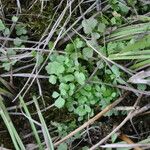
Cardamine oligosperma
Little western bittercress · Idaho bittercress · Few-seed bittercress · Lesser-seeded bittercress · Little bittercress
Description
Source: leafsnapCardamine oligosperma, commonly known as few-seeded bittercress, is a small annual or biennial herbaceous plant that belongs to the Brassicaceae family. Native to North America, it thrives in wet meadows, stream banks, and other moist habitats. The plant can grow up to 30 cm tall with a basal rosette of leaves that are pinnately divided into 3 to 7 leaflets. The stem leaves are alternate and smaller than the basal leaves. Its flowers are small, featuring four white petals arranged in a cross shape, which is characteristic of the Brassicaceae family, and six stamens. The fruit is an elongated capsule containing several seeds, which give the plant its common name "few-seeded bittercress." These seeds can be dispersed by water or animals. Native Americans have used Cardamine oligosperma for medicinal purposes, treating various ailments such as coughs, colds, and fever blisters. However, one should not consume it without proper guidance from an expert. Overall, Cardamine oligosperma is an interesting herbaceous plant that adds beauty to wet meadows and offers medicinal benefits when used properly under expert supervision.
Care Guide
💧 Water Every 7 days
Little bittercress thrives with moderate watering, mirroring its native habitat where rainfall is consistent. For optimal growth, it benefits from weekly watering, showing resilience to both wet and dry conditions. As an herbaceous plant, little bittercress flourishes outdoors and adapts well to different moisture levels.
How should I water my Little bittercress plant?
To water Little bittercress, you have several options such as using a garden hose with a spray nozzle, a watering can, or any other common watering tool. Little bittercress is not too picky about the type of water it receives and can survive with rainwater, tap water, or filtered water. However, it is important to avoid watering this plant from above as it can harm the leaves, flowers, and potentially cause diseases. A recommended method for watering is to set up a drip irrigation system, which evenly and directly applies water to the soil. If you have a container-grown Little bittercress, you can use a different approach by using a cup, watering can, or your tap to water the plant directly at the soil level.
What should I do if I give my Little bittercress plant too much or too little water?
If you notice that your Little bittercress lacks moisture, the solution is to water it more regularly. Overwatering is a more serious issue, as it can lead to diseases and the eventual death of your plant. To prevent this, choose a growing location with plenty of sunlight and good drainage. If your Little bittercress is in a pot and it is overwatered, you may need to consider changing pots. Make sure the new pot has good drainage and use loose soil when repotting.
How frequently do I need to water my Little bittercress?
Little bittercress requires regular watering throughout the growing season. In spring, water it once a week. As the season progresses and temperatures rise, increase watering to two or three times per week. However, be cautious not to exceed this rate as it can harm the plant. Regardless of watering frequency, ensure the soil remains moist but not wet. Watering potted little bittercress differs slightly. In general, you'll need to water potted plants more frequently as the soil in pots dries out faster. Plan to water container-grown little bittercress a few times per week, compared to just once per week for plants in the ground.
How much water does my Little bittercress plant need?
When determining how much water to give your Little bittercress, there are a few different approaches you can take. Some gardeners prefer to gauge the soil's moisture level by feeling it, and they suggest watering until the top six inches of soil feel moist. Another option is to use a specific measurement, like two gallons per week, taking into account factors such as temperature and soil dryness. However, following strict guidelines might lead to overwatering if your plant needs less water. For container-grown Little bittercress, you'll need to use a different method. In this case, water enough to moisten all dry soil layers, which can be determined by sticking your finger in the soil or noticing a slight trickle of excess water from the pot's drainage holes.
How do I know if I am giving enough water to my Little bittercress plant?
Avoiding overwatering for your Little bittercress can be tricky due to conflicting factors. While these plants have deep roots that need weekly soil moisture, they are also highly prone to root rot and browning when overwatered. Underwatering is not as big of a concern, as Little bittercress can survive for some time without additional watering. However, if you neglect to water this plant for too long, it may start to wilt and exhibit dry leaves.
☀️ Light Partial sun
Little bittercress is native to areas with dappled light, such as forest understories or rocky sites that provide natural shade. It prefers partial sun but can also adapt to full-sun conditions.
🌡️ Temperature 5–32.2°C
Little bittercress is naturally suited to temperate conditions and generally grows best when temperatures range from 68 to 95 °F (20 to 35 °C). Making seasonal adjustments to keep temperatures within this range is advisable for optimal growth.
What is the optimal temperature range for the growth of Little bittercress?
Little bittercress, or Cardamine oligosperma, thrives best within a temperate environment, specifically within a temperature range of 68 to 95 °F (20 to 35 °C). To ensure optimal growth, it is recommended to adjust the conditions seasonally to maintain these temperature ranges.
How does Little bittercress handle winter conditions?
Little bittercress is highly cold-tolerant and does not require specialized frost protection measures during the winter months. However, it is advisable to water the plant generously before the first freeze in autumn. This practice helps ensure the soil remains moist and enters a frozen state properly, thereby preventing drought and water scarcity for the plant during the winter and early spring periods.
What should be done if Little bittercress experiences temperatures below -30°C?
Although Little bittercress is extremely cold-tolerant, it's important to keep winter temperatures above -30°C to prevent adverse effects. Should the temperature drop below this threshold, the plant may display no noticeable changes during winter but could experience diminished sprouting or fail to sprout in the spring. To address this, it is advisable to remove any parts of the plant that have failed to sprout in the spring.
How does Little bittercress react to high temperatures and what are the recommended solutions?
Little bittercress does not tolerate high temperatures well and will cease to grow if temperatures exceed 35°C, becoming more prone to rot. To mitigate high temperature stress, it is recommended to trim away sunburned and dried-up parts of the plant. Moving the plant to a shadier location or using a shade cloth to protect it from midday and afternoon sun can help. Additionally, watering the plant in the morning and evening to maintain soil moisture is beneficial.
💨 Humidity
🪴 Soil 6-7
🌱 Fertilizer
Little bittercress does well with regular, dilute applications of fertilizer to encourage healthy leaf growth. Fertilize Little bittercress about once a month during the summer. Since foliage relies on nitrogen, adding nitrogen-rich fertilizer helps Little bittercress thrive.
🪴 Pot & Repot
✂️ Pruning
Little bittercress is a small, herbaceous plant featuring delicate white flowers. To control its spread, it is best to prune this plant from early to late spring. By removing dead stems and shaping the plant, you promote a healthier appearance and help reduce seed dispersal, which aids in weed management.
🌿 Propagating
🐛 Diseases & pets
☠️ Toxicity
Characteristics
- Plant Type
- Herb
- Life Cycle
- Annual, Biennial, Perennial
- Genus
- Cardamine
- Family
- Brassicaceae
- Hardiness Zone
- 4
- Mature Height
- 10 cm to 20 cm
- Mature Spread
- 10 cm to 20 cm
- Leaf Color
- Green, Dark Green
- Leaf Type
- Deciduous
- Flower Color
- White
- Flower Size
- 0.51 cm to 0.76 cm
- Bloom Time
- Spring
- Planting Time
- Spring
- Harvest Time
- Late spring, Early summer, Mid summer
- Native Area
- Mexico