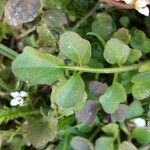
Cardamine parviflora
Small-flower Bittercress · Sand Bittercress · Small-flowered Bittercress · Small Bittercress · Small-flowered bitter-cress
Description
Source: leafsnapCardamine parviflora, commonly known as small-flowered bittercress, is a herbaceous plant in the Brassicaceae family. Native to North America, it thrives in wetlands, meadows, and along stream banks. The plant can grow up to 30 cm tall and features small white flowers that bloom from April to June. Its leaves are pinnately compound with toothed leaflets. Small-flowered bittercress serves as an important food source for many insects, including bees and butterflies. Additionally, it has been used in traditional medicine for its anti-inflammatory properties. However, the plant can be invasive in some areas due to its rapid spread. Its explosive pods can disperse seeds up to 3 meters away when disturbed, facilitating its proliferation.
Care Guide
💧 Water Every 3 days
Sand bittercress thrives in environments that are moderately moist, requiring a careful balance between hydration and drainage. It should be watered weekly because it does not tolerate drought well. As primarily an outdoor plant, sand bittercress grows best during rainy seasons, reflecting its natural preference for cycles of abundant water.
How should I water my Sand bittercress plant?
To water Sand bittercress, you have various options such as using a garden hose with a spray nozzle, a watering can, or any other common watering tool. This plant is not too particular about the type of water it receives, as it can thrive with rainwater, tap water, or filtered water. However, it's generally advisable not to water Sand bittercress from overhead as it may harm the leaves and flowers and potentially cause diseases. Installing a drip irrigation system is often the best way to water this plant, as it provides even and direct water supply to the soil. When dealing with a Sand bittercress in a container, you can apply a similar watering approach with a cup, watering can, or tap to water the soil directly.
What should I do if I give my Sand bittercress too much or too little water?
To remedy underwatering Sand bittercress, simply water it more regularly when you notice it lacks moisture. Overwatering, on the other hand, can be a serious issue that may lead to disease and even death if not caught early. To prevent this, choose a sunny spot with good drainage for planting, allowing excess water to drain instead of pooling. If you overwater Sand bittercress in a pot, consider changing to a new pot with better drainage, adding loose soil and ensuring efficient drainage during repotting.
How frequently do I need to water my Sand bittercress?
Sand bittercress requires regular watering throughout the growing season. In the spring, watering once a week is sufficient. However, as the season progresses and temperatures rise, you may need to water two to three times a week. It's important not to exceed this watering rate, as it can harm the plant. Additionally, make sure the soil remains moderately moist, but not overly wet, regardless of how often you need to water. Watering Sand bittercress in a pot is slightly different. Due to the soil heating up and drying out faster in a container, you should generally water a potted Sand bittercress a few times a week, compared to once a week for an in-ground plant.
How much water does my Sand bittercress plant need?
Determining how much water to give to your Sand bittercress can be approached in a few different ways. Some gardeners prefer to assess the moisture level of the soil by feeling it, and they recommend watering until the top six inches of soil feel moist. Alternatively, you can use a specific measurement to guide your watering. On average, about two gallons of water per week should be sufficient for your Sand bittercress, but this can vary depending on factors like temperature and soil drying speed. It's important to note that strictly following these guidelines may result in overwatering if your plant requires less water. When growing Sand bittercress in a container, a different method should be considered. You can water the plant until all layers of dry soil are moistened, which can be checked by inserting your finger into the soil. Another indicator is if you notice excess water trickling out of the drainage holes of your pot.
How do I know if I'm giving enough water to my Sand bittercress?
Watering Sand bittercress can be challenging. While they need weekly watering to keep their deep roots moist, they are prone to root rot and browning if overwatered. Underwatering is less of a concern as these plants can survive without supplemental watering for some time, but if left without water for too long, they will wilt and develop dry leaves.
☀️ Light Full sun
The sand bittercress plant does best with a full day's sunshine but can also thrive in spots where sunlight is intermittent during the day. Its native habitat, combined with its adaptive traits, allows it to maintain healthy growth under these light conditions. Both excessive and insufficient sunlight can potentially affect its growth.
What are the sunlight requirements for Sand bittercress?
Sand bittercress thrives in environments that offer full sun exposure for more than 6 hours daily but can also grow well in partial sun conditions, receiving about 3-6 hours of sunlight. It's essential to observe how sunlight traverses your garden to ensure you place your plants in areas that provide a harmonious mixture of light and shade, optimizing their growth and well-being.
Can Sand bittercress grow under artificial lighting?
Yes, Sand bittercress can grow under artificial lighting, which is a beneficial solution when natural sunlight is insufficient, especially in winter or for indoor settings lacking in sunlight. LED lights are recommended due to their ability to be tailored to provide specific light wavelengths needed by the plants. Full sun plants require 30-50W per square foot, partial sun plants 20-30W per square foot, and full shade plants 10-20W per square foot of artificial light. The light source should be placed 12-36 inches above the plant to simulate natural sunlight conditions, and the lighting duration should mimic the natural daylight hours particular to the plant species, typically between 8-12 hours daily.
What symptoms indicate Sand bittercress is getting insufficient light?
Symptoms of insufficient light in Sand bittercress include smaller new leaves compared to mature ones, leggy or sparse growth, early leaf drop to conserve resources, slower or ceased new growth, and lighter-colored or chlorotic new leaves. These symptoms suggest the plant's struggle with light deficiency, affecting its growth and overall health.
What issues arise from excessive sunlight exposure in Sand bittercress?
Excessive sunlight can cause several problems for Sand bittercress, including chlorosis (leaves turning yellow due to chlorophyll breakdown), sunscald (damaged leaves or stems from intense sunlight), leaf curling (a defense mechanism to minimize water loss), wilting (loss of turgor pressure causing drooping), and leaf scorching (brown, dry, crispy edges on leaves). These symptoms indicate that the plant is experiencing stress from overexposure to sunlight.
How can you care for Sand bittercress to ensure it receives adequate sunlight?
To ensure Sand bittercress receives adequate sunlight, gradually transition it to brighter locations until it achieves at least 6 hours of direct sunlight daily. For indoor plants, use a south-facing window or artificial lights to supplement sunlight exposure. For outdoor plants, move them progressively to sunnier spots, avoiding sudden changes that might cause sunburn. If obstructions block sunlight, consider pruning or relocating the plant for better light exposure. Note that parts of the plant already affected by poor lighting might not recover, but new growth should flourish with improved light conditions.
🌡️ Temperature 15–32.2°C
Sand bittercress is a plant that does well in warmer regions, flourishing at temperatures from 68 to 95°F (20 to 35°C). In its native habitats it copes with a range of summer temperatures. In colder seasons, adjustments may be necessary to maintain optimal growth.
What is Sand Bittercress and in which climates does it thrive?
Sand Bittercress (Cardamine parviflora) is a plant that thrives in warm climates, particularly in temperatures between 68°F to 95°F (20°C to 35°C). This plant is well-adjusted to a variety of summer temperatures in its native environments, and it can adapt to colder seasons with some care to ensure optimal growth. Sand Bittercress possesses strong cold resistance, meaning special frost protection measures aren't usually necessary. However, if winter temperatures are anticipated to fall below -10°C, providing cold protection by covering the plant with materials such as soil or straw is advised. To further help the plant during winter, it's recommended to water it abundantly before the first freeze in autumn, ensuring the soil is moist and enters a frozen state, which helps prevent drought and water scarcity.
How does low temperature affect Sand Bittercress and what are the solutions?
Sand Bittercress is cold-tolerant, ideal temperatures for the plant are above 20°C. During the winter months, it's important to keep the plant's surroundings above 0°C. If temperatures drop below -10°C, while there may not be noticeable effects during the winter, it could lead to a reduction in sprouting, or even a complete lack of sprouting, in the following spring. The solution for any parts of the plant that fail to sprout in spring due to cold temperatures is to remove those parts to encourage new growth.
What are the effects of high temperature on Sand Bittercress and how can they be mitigated?
During the summer, it's crucial to keep Sand Bittercress below 35°C. Temperatures exceeding 38°C may cause the plant's leaves to lighten in color, become prone to curling, susceptible to sunburn, and in severe cases, cause the entire plant to wilt and dry up. To mitigate these effects, it's advisable to trim away any sunburned or dried-up parts of the plant. Moving the plant to a location that provides shade during the midday and afternoon sun, or using a shade cloth, can protect it from excessive heat. Additionally, watering the plant in the morning and evening can help keep the soil moist and reduce heat stress.
💨 Humidity
🪴 Soil 6-7
🌱 Fertilizer
Sand bittercress responds well to regular, mild fertilizer applications to encourage vigorous leaf development. You should feed Sand bittercress about once a month during the summer. Nitrogen is important for foliage, and supplying nitrogen-rich sources helps Sand bittercress thrive.
🪴 Pot & Repot
✂️ Pruning
For sand bittercress, it’s best to prune in early to late spring. This helps encourage growth and maintain the plant's shape. Be sure to remove any spent flowers and damaged stems to promote overall health and control the spread of seeds. Regular pruning supports robust growth, prevents overgrowth, and keeps the plant manageable.
🌿 Propagating
🐛 Diseases & pets
☠️ Toxicity
Characteristics
- Plant Type
- Herb
- Life Cycle
- Annual
- Genus
- Cardamine
- Family
- Brassicaceae
- Hardiness Zone
- 8
- Mature Height
- 10 cm to 30 cm
- Mature Spread
- 30 cm
- Leaf Color
- Green
- Leaf Type
- Deciduous
- Flower Color
- White
- Flower Size
- 0.25 cm
- Bloom Time
- Early spring, Mid spring
- Planting Time
- Spring, Autumn
- Harvest Time
- Late spring, Early summer
- Native Area
- Sweden, Austria, Czech Republic, Slovakia, Romania, Bulgaria, Poland, Croatia, Belarus, Ukraine, China, Russia, Hungary, Germany, Portugal, Italy, Kazakhstan, Spain, Japan, Mongolia, Finland, Koppen, Iran, Azerbaijan, Algeria, South Korea, Belgium, France