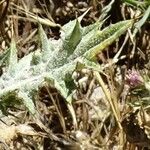
Carduus pycnocephalus
Slender thistle · Slender winged thistle · Slender-flower thistle · Sheep thistle · Plymouth thistle
Description
Source: leafsnapCarduus pycnocephalus, commonly known as the Italian thistle, is a species of thistle native to the Mediterranean region. This biennial or perennial plant can grow up to 1.5 meters tall and features spiny leaves and stems. Its flowers are pink-purple and arranged in clusters at the top of the stem. The Italian thistle is considered an invasive species in some areas outside its native range, as it can quickly spread and outcompete native plants for resources. However, it has also been used in traditional medicine to treat various ailments, such as liver problems. The plant prefers dry soils and can be found growing along roadsides, fields, meadows, and disturbed areas like abandoned lots or construction sites. It is also known for its ability to tolerate drought conditions. Overall, Carduus pycnocephalus plays both positive and negative roles depending on its location, but it remains an interesting plant with unique characteristics that distinguish it from other species within its range.
🎭 Power, Defense, Removing Hexes
Care Guide
💧 Water Every 7 days
Italian thistle is well-suited for arid environments due to its strong drought tolerance. It needs balanced watering only once a week. This plant is typically grown outdoors in temperate climates and goes dormant during the rainy season to conserve water.
How should I water my Italian thistle?
There are various ways to water Italian thistle such as using a garden hose with a spray nozzle, a watering can, or any other common watering tool. This plant is not too particular about the type of water it receives, whether it's rainwater, tap water, or filtered water. It's generally recommended to avoid watering this plant from above to prevent harm to its leaves and flowers and to minimize the risk of disease. For the most effective watering method, consider setting up a drip irrigation system that delivers water evenly and directly to the soil. When watering Italian thistle that is grown in a container, you can use a cup, watering can, or tap to apply water directly to the soil.
What should I do if I give my Italian thistle too much or too little water?
The solution for underwatering Italian thistle is simple: when you see that your plant lacks moisture, just start watering it more often. Overwatering, on the other hand, can be a bigger problem if not detected early. If your Italian thistle is overwatered, it can get sick and eventually die. To prevent this, choose a suitable spot for growing the plant – one with ample sunlight to dry the soil and good drainage to prevent water accumulation. If your potted Italian thistle is overwatered, you might need to change pots. Your previous container may not have had proper drainage or enough drainage holes. While repotting, use loose soil and a pot that drains effectively.
How many times should I water my Italian thistle?
Italian thistle requires regular watering throughout the growing season. Ideally, water once a week in the spring and increase to two to three times a week as the weather gets warmer. Be careful not to overwater, as this can be harmful. Keep the soil relatively moist but not wet. If you have Italian thistle in a pot, you'll need to water more frequently, as the soil tends to dry out faster. Generally, watering a container-grown plant a few times per week is recommended, compared to just once per week for a plant in the ground.
How much water does my Italian thistle require?
Determining how much water to give your Italian thistle can be done in a few different ways. Some gardeners prefer to assess the moisture level in the soil by feeling it. This method suggests watering until the top six inches of soil feel moist. Alternatively, you can use a specific measurement as a guide. On average, Italian thistle requires about two gallons of water per week, depending on temperature and how quickly the soil dries out. However, it's important to avoid overwatering if your plant needs less than two gallons per week. When growing Italian thistle in a container, you'll need a different approach. You should water until all the dry layers of soil are moistened. You can test the moisture level by sticking your finger in the soil or allowing a small amount of excess water to drain from the pot.
How do I know if I'm giving enough water to my Italian thistle?
Avoiding overwatering your Italian thistle can be a bit challenging due to conflicting factors. On one hand, the plants have deep roots that require weekly soil moistening. However, Italian thistle is highly prone to root rot, which can cause browning of the plant. Underwatering is less of a concern as these plants can survive without additional watering for a while. But prolonged water deprivation can lead to wilting and dry leaves.
☀️ Light Full sun
The Italian thistle does best with continuous strong sunlight and can still thrive when light is moderate. In its original habitat it was grown under uninterrupted sun. Too little or too much sun will affect its vigor: insufficient light leads to weaker development, while excessive sun can cause some mild stress.
What are the sunlight requirements for Italian thistle?
Italian thistle thrives best under relentless sun exposure, requiring above 6 hours of sunlight for full sun conditions and can still flourish with about 3-6 hours in partial sun conditions. It's essential to watch how sunlight moves through your garden to provide your plants with the perfect balance of light and shade, ensuring their growth and happiness.
Can artificial lighting be used for Italian thistle, and how?
Yes, artificial lighting can be used for Italian thistle, especially when natural sunlight is insufficient. Indoor plants benefit greatly from LED lights, which can be customized to provide specific wavelengths needed for optimal growth. For plants requiring full sun, 30-50W/sq ft of artificial light is needed; for partial sun plants, 20-30W/sq ft; and for full shade plants, 10-20W/sq ft. The light source should be placed 12-36 inches above the plant to mimic natural sunlight, and most plants need 8-12 hours of light per day.
What are the symptoms of inadequate light in Italian thistle?
When Italian thistle does not receive enough light, it may show symptoms such as smaller new leaves, leggy or sparse growth, faster leaf drop, slower or no new growth, lighter-colored new leaves, chlorosis (leaf yellowing), sunscald (damage from intense sunlight), leaf curling, wilting, and leaf scorching. These symptoms indicate the plant's struggle with light deficiency and its effects on growth and health.
How can you provide optimal light conditions for Italian thistle both indoors and outdoors?
To ensure optimal growth for Italian thistle, gradually move plants to sunnier locations each week, aiming for at least 6 hours of direct sunlight daily. Indoors, use a south-facing window or artificial light if the plant is too large to move easily, keeping lights on for at least 8 hours daily. Outdoors, avoid sudden changes in light intensity by gradually moving plants to sunnier spots. If sunlight is blocked by obstructions like trees, consider pruning them or transplanting smaller plants to areas with better sunlight and drainage during their dormant period. It's important to note that parts of the plant affected by insufficient sunlight may not recover, but new growth will be healthy with increased light exposure.
🌡️ Temperature 0–35°C
Italian thistle is a plant that does well in its native temperate climate, where temperatures generally range from 68 to 95 °F (20 to 35 °C). It is advisable to alter site conditions to replicate this temperature range for optimal growth.
What is Italian thistle and what are its ideal growing temperatures?
Italian thistle, botanically known as Carduus pycnocephalus, is a plant that flourishes in its native temperate climate. The ideal temperatures for its growth typically range from 68 to 95 °F (20 to 35 °C). For optimal growth, it is recommended to adjust the site condition to closely mimic this temperature range. Additionally, Italian thistle possesses strong cold resistance, indicating that special frost protection measures are generally unnecessary. However, during winter, if temperatures are expected to plummet below -35°C, it becomes crucial to provide cold protection, which can be done by covering the plant with insulating materials such as soil or straw. It's also advisable to water the plant abundantly before the first freeze in autumn to ensure the soil remains moist and enters a frozen state, helping to prevent drought and water scarcity for the plant during the colder seasons.
How does low temperature affect Italian thistle and what are the solutions?
Italian thistle is notably cold-tolerant, showing a preference for temperatures above 20°C. During winter, it is important to maintain the temperature above 0°C. If the temperature falls below -35°C, the plant may not exhibit any noticeable changes during the winter; however, there could be a reduction in sprouting or even a complete lack of sprouting during the spring. To manage these effects, in spring, it is suggested to remove any parts of the plant that have failed to sprout. This helps in maintaining the health and promoting the growth of the Italian thistle.
How does high temperature affect Italian thistle and what solutions can be implemented?
During the summer months, it's crucial to ensure that the Italian thistle's environment does not exceed 35°C. When temperatures soar above 41°C, the plant may experience several stress symptoms: its leaves can become lighter in color, curl, become susceptible to sunburn, and in severe cases, the entire plant may wilt and dry out. To mitigate these issues, it's recommended to trim away any sunburned and dried-up parts of the plant. Relocating the plant to a shaded area or utilizing a shade cloth to protect it from the midday and afternoon sun can also be beneficial. Additionally, watering the plant in the morning and evening will help keep the soil moist, further protecting it from the stress of high temperatures.
💨 Humidity
🪴 Soil 6-7
🌱 Fertilizer
Italian thistle benefits from regular, light applications of fertilizer to encourage healthy leaf development. You should fertilize Italian thistle about once a month during the summer. Nitrogen is important for foliage, and adding nitrogen-rich sources helps Italian thistle thrive.
🪴 Pot & Repot
✂️ Pruning
🌿 Propagating
🐛 Diseases & pets
☠️ Toxicity
Characteristics
- Plant Type
- Herb
- Life Cycle
- Annual, Biennial
- Genus
- Carduus
- Family
- Asteraceae
- Hardiness Zone
- 3-10
- Mature Height
- 0.2 m to 2.13 m
- Mature Spread
- 25 cm to 37 cm
- Leaf Color
- Green, Light Green
- Leaf Type
- Semi-evergreen
- Flower Color
- Pink
- Flower Size
- 2.54 cm to 7.62 cm
- Bloom Time
- Late spring, Early summer, Mid summer
- Planting Time
- Spring, Summer, Autumn
- Harvest Time
- Mid summer
- Native Area
- Libya, Egypt, Turkey, India, Tunisia, Montenegro, Bulgaria, Armenia, Greece, Croatia, Slovenia, Morocco, North Macedonia, Ukraine, Afghanistan, Iraq, Syria, Jordan, Italy, Spain, Switzerland, Bosnia and Herzegovina, Israel, Albania, Azerbaijan, Algeria, Moldova, France