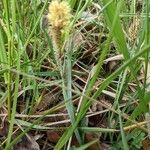
Carex acutiformis
Lesser pond sedge · Lesser Pondsedge · Marsh Sedge · European lake sedge · Swamp sedge
Description
Source: leafsnapCarex acutiformis, commonly known as the lesser pond sedge, is a perennial plant species in the Cyperaceae family. Native to Europe and Asia, it thrives in wetlands, marshes, pond edges, and other damp areas. This plant exhibits a clumping growth habit with long, narrow, green leaves and can produce stems up to 1 meter tall. During the summer months, small brown flowers appear on spikes. The lesser pond sedge is crucial for wildlife, offering habitat for numerous insect and bird species. Additionally, it plays a vital role in stabilizing soil along waterways, helping to prevent erosion. Carex acutiformis thrives in moist soil conditions but can tolerate some drought once established. It prefers full sun or partial shade but can also grow in shaded areas. Historically, indigenous people have used this plant for medicinal purposes, such as treating wounds and skin irritations, due to its anti-inflammatory properties. Overall, Carex acutiformis is an attractive ornamental grass that adds texture and interest to wetland gardens or water features. It provides significant ecological benefits, such as erosion control and wildlife habitat support.
💡 In 1754, Lin Nai established the genus known as "true sedge." This plant is a significant component of China's flora and is the dominant grass species in the lowest layer of many forests. In some areas, true sedge makes up most of the lower vegetation.
Care Guide
💧 Water Every 3 days
Lesser pond sedge naturally grows in marshy environments and thrives in consistently moist soil. It can tolerate waterlogged conditions, making weekly watering essential to mimic its native habitat. This plant is best cultivated outdoors, where it can benefit from natural rainfall, which supports robust growth during its active growing season.
What should I do if I give my Lesser pond sedge plant too much or too little water?
Proper watering is essential for the performance of this beautiful ornamental grass. In the ground, watering issues can be solved easily. However, in a container, too much or too little water can quickly kill Lesser pond sedge. Incorrect water levels can cause the grass to stop growing or exhibit yellow leaves with brown tips (from overwatering) or drooping leaves, weak seed head production, and browned leaves (from underwatering). If you suspect improper watering, first determine if there is too much or too little water. If there is too much water, immediately stop watering and wait for the soil to dry out. Once new growth appears, test the soil moisture and decide whether to provide more water. If there is too little water, simply give the grass a nice, deep drink to see if it perks up. Remember, long, deep watering is better than frequent shallow waterings. Deep watering encourages grass to grow deep roots, making them more resilient to drought and watering issues.
How often should I water my Lesser pond sedge plant?
The watering needs of Lesser pond sedge depend on its location. Generally, it should be watered every week. In hot climates, watering once or twice a week in the summer may be necessary. In moderate climates, watering once every seven days or more may be sufficient. Grass in containers typically require more frequent watering than grasses in the ground. However, the species' ability to thrive in full sun or part shade also affects its water requirements. Shaded grasses need less frequent watering than those in the ground. Lesser pond sedge should only be watered when the soil is dry. To determine if the soil is dry, you can press your finger a couple of inches into it. For potted grass, you can weigh the grass or feel the pot to see if it is light due to lack of water. Insufficient water may cause the blades to appear folded along their centers and thinner than usual. Despite its drought tolerance, regular, deep waterings will result in a beautiful color. In its natural habitat, Lesser pond sedge grows in open scrubland exposed to extreme heat, bright sun, and intermittent rain. Although it is drought-resistant, it still requires care and attention. Consistent watering is beneficial for this hardy grass. When newly planted, Lesser pond sedge needs more frequent watering until it establishes deep roots. Potted grasses dry out quickly, especially if exposed to hot, direct sun. Test the soil every 3 to 4 days and water only when it feels dry. In-ground Lesser pond sedge generally requires less watering, but it depends on the soil type. Heavy clay soil may feel dry on the surface but retain moisture below ground. Sandy soils that drain quickly will need more frequent watering.
What do I need to watch out for when watering my Lesser pond sedge in different seasons, climates, or during different stages of growth?
To determine if you are watering your grass enough, observe the rate of growth. Lesser pond sedge, for example, tends to double in size during the hottest months. If the weather is hot but the grass is not growing well, you may need to adjust your watering schedule. During winter, you can probably water only once a month, but you should still check the soil for moisture. In the warmest months, the grass will require more water than usual, but during winter and cooler months, the water needs will significantly decrease. Remember that the soil for Lesser pond sedge should always be allowed to completely dry out before adding water.
☀️ Light Full sun
Lesser pond sedge prefers places where it gets full sun throughout the day, though it can tolerate spots with only partial sunlight. An environment with plenty of light ensures optimal growth. Too little or too much sunlight can harm the plant's health.
What are the sunlight requirements for Lesser Pond Sedge?
Lesser Pond Sedge flourishes under full sunlight, needing above 6 hours of sunlight daily to thrive optimally. However, it can also tolerate partial sun conditions, which involve about 3-6 hours of sunlight. Observing how sunlight moves through your garden and selecting locations that offer a harmonious balance of light and shade is crucial for the plant's wellbeing. These conditions ensure the plant's happiness by providing it with the necessary amount of light for healthy growth.
How does sunlight affect the growth of Lesser Pond Sedge?
Lesser Pond Sedge favors areas where it can be exposed to the sun's rays throughout the day but is resilient enough to grow in locations that don’t have full sunlight exposure. An environment with abundant light promotes optimal growth. A deficiency or excess in sunlight can adversely affect the plant's health, indicating the importance of finding just the right amount of sunlight for the plant to flourish.
How can artificial lighting be used for Lesser Pond Sedge?
Indoor plants like Lesser Pond Sedge require adequate lighting for optimal growth, especially when natural sunlight is insufficient, like in winter or less sunny spaces. Artificial lights, particularly LED lights that can provide specific wavelengths necessary for plant growth, are a viable solution. For full sun plants, 30-50W per square foot is recommended; partial sun plants need 20-30W per square foot; full shade plants should get 10-20W per square foot. The artificial light source should be placed 12-36 inches above the plant to mimic natural sunlight. Mimic the natural daylight hours most plants need, which is about 8-12 hours of light per day.
What are the symptoms of light deficiency in Lesser Pond Sedge?
When Lesser Pond Sedge does not receive adequate sunlight, it may exhibit several symptoms: new leaves may grow smaller; the plant’s growth becomes leggy or sparse; there's a faster drop of older leaves; a halt or significant reduction in new growth; the development of lighter-colored or chlorotic new leaves. These symptoms indicate light deficiency, impacting the plant's overall health and ability to photosynthesize effectively.
What are the effects of excessive sunlight on Lesser Pond Sedge?
Excessive sunlight can be detrimental to Lesser Pond Sedge, causing conditions such as sunscald, which damages plant tissue, leaf curling as a means to minimize water loss, wilting due to increased transpiration, and leaf scorching characterized by brown, dry edges on leaves. These symptoms reflect the negative impact of overexposure to sunlight on the plant's health by impairing its photosynthetic capacity and hydration.
🌡️ Temperature 5–32.2°C
Lesser pond sedge can tolerate a wide range of temperatures, but its distribution may still be restricted by different combinations of moisture and heat. It does best in warm summer conditions with sufficient rainfall or watering. Extended periods of cloudy, rainy weather or prolonged high temperatures can raise the chance of Lesser pond sedge dying. In winter, protecting it from cold can increase the plant’s survival rate.
What is the Lesser Pond Sedge?
The Lesser Pond Sedge is known botanically as Carex acutiformis. However, the provided information does not include details about its characteristics, symptoms it might induce, or essential aspects related to it.
💨 Humidity
🪴 Soil
🌱 Fertilizer
To care for the lesser pond sedge, a semi-aquatic perennial, apply a thin layer of mulch or aged compost around its base each spring. This practice enriches the soil with nutrients and supports healthy roots. Be sure to spread the mulch evenly, avoiding direct contact with the stems to prevent any potential damage. Opt for well-decomposed organic matter, as it encourages beneficial microbial activity.
🪴 Pot & Repot
✂️ Pruning
Lesser pond sedge flourishes in wetland environments, characterized by its tall, arching stems. To encourage growth and prevent disease, prune it in early spring by removing any dead foliage. Regular thinning helps improve air circulation, deters pests, and maintains the shape and health of the lesser pond sedge, as well as the surrounding plants.
🌿 Propagating
🐛 Diseases & pets
☠️ Toxicity
Characteristics
- Plant Type
- Grass
- Life Cycle
- Perennial
- Genus
- Carex
- Family
- Cyperaceae
- Hardiness Zone
- 4-8
- Mature Height
- 1.22 m
- Mature Spread
- 1.22 m
- Leaf Color
- Green, Gray, Red, Silver, Brown
- Leaf Type
- Deciduous
- Flower Color
- Green, Brown
- Flower Size
- 0.20 cm to 0.25 cm
- Bloom Time
- Late spring, Early summer
- Planting Time
- Spring, Summer, Autumn
- Harvest Time
- Mid summer, Late summer
- Native Area
- Lesotho, India, Austria, Turkey, Sweden, Slovakia, Montenegro, Eritrea, Pakistan, Croatia, Slovenia, Morocco, Belarus, Uganda, Tanzania, Uzbekistan, Russia, Iraq, Germany, Estonia, Ethiopia, Romania, Latvia, Belgium, Netherlands, France, Tajikistan, Czech Republic, South Africa, Bulgaria, Armenia, Poland, Greece, Ukraine, Serbia, Lebanon, Lithuania, Norway, Afghanistan, Kyrgyzstan, Kazakhstan, Italy, Spain, Switzerland, Denmark, Finland, Iran, Albania, Ireland, United Kingdom, Hungary, Algeria, Azerbaijan, Turkmenistan