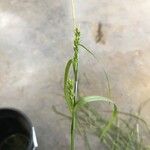
Carex blanda
Eastern Woodland Sedge · Woodland Sedge · Bland Sedge · Common Woodland Sedge
Description
Source: leafsnapCarex blanda, the common woodland sedge or eastern woodland sedge, is a sedge native to a wide variety of habitats in the eastern and central United States and Canada.Its leaves are 1–10 mm (0.039–0.394 inches) wide and 14–36 mm (9⁄16–1+7⁄16 inches) long. The stem usually has a staminate (male) spike at the tip, two pistillate (female) spikes closely clustered near it, as well as another pistillate spike lower down. The pistillate spikes have 4 to 36 perigynia each, which develop into seeds (achenes).Carex blanda is rather common in its native range, and tends to spread aggressively, particularly in disturbed soils.
💡 In 1754, Lin Nai established the genus known as "true sedge." This plant is a significant component of China's flora and is the dominant grass species in the lowest layer of many forests. In some areas, true sedge makes up most of the lower vegetation.
🌳 Although eastern woodland sedge isn't well known for exotic applications, it serves as a keystone species in certain ecosystems by providing a critical habitat for the frosted elfin butterfly, an insect that plays an important role in pollination. This mutual relationship highlights the often-overlooked importance of native groundcovers in sustaining biodiversity.
Care Guide
💧 Water
Eastern woodland sedge flourishes in the moist, well-drained soils of temperate forests, where it prefers a consistently damp environment. For optimal growth, it needs to be watered weekly. Typically found in shaded areas, this plant benefits from mulching, which helps retain soil moisture and mimics the leaf litter of its natural habitat.
☀️ Light Partial sun
Eastern woodland sedge requires moderate sunlight for best growth but is hardy enough to endure strong sun. Native to forests, it typically grows in the shade of taller trees yet can adjust to the sunlit conditions of open fields. Too much or too little light can impede its growth.
What are the sunlight requirements for Eastern woodland sedge?
Eastern woodland sedge requires moderate levels of solar exposure for optimal growth, but it can also tolerate intense sun conditions due to its origins in forest areas where it grew under the shades of taller trees. However, it adapts well to open field solar conditions. The plant will flourish with about 3-6 hours of sunlight, categorizing it between partial to full sun exposure. It is essential to watch how sunlight moves through your garden and choose spots that offer a good balance of light and shade for your plants, ensuring their well-being.
How does artificial lighting support plant growth indoors?
Artificial lighting plays a crucial role for indoor plants, especially when natural sunlight is insufficient, such as during winter or in less sunny spaces. It promotes faster and healthier growth by providing the necessary wavelengths of light. LED lights are a popular and efficient choice because they can be customized to cater to the specific light requirements of your plants. Depending on the plants' exposure needs, full sun plants need 30-50W/sq ft, partial sun plants require 20-30W/sq ft, and full shade plants need 10-20W/sq ft of artificial light. The light source should be placed 12-36 inches above the plant to mimic natural sunlight, and most plants thrive with 8-12 hours of artificial light per day.
What are the symptoms of inappropriate lighting conditions for Eastern woodland sedge?
Eastern woodland sedge displays various symptoms when grown under insufficient or excessive light conditions. Insufficient light may cause new leaves to be smaller, leggy or sparse growth, faster leaf drop, slower or halted growth, and pale or lighter-colored new leaves which indicate a lack of chlorophyll. Excessive sunlight can lead to chlorosis, where leaves turn yellow due to chlorophyll breakdown; sunscald, marked by pale or necrotic areas on the plant tissue; leaf curling as a defense mechanism to minimize water loss; wilting due to increased transpiration; and leaf scorching, characterized by brown, dry patches on leaves. These symptoms not only indicate the plant's struggle with current lighting conditions but also highlight the importance of providing the optimal light exposure for healthy growth.
How can you manage and rectify lighting conditions for Eastern woodland sedge?
To optimize Eastern woodland sedge's growth in response to lighting conditions, gradual adaptation is key. For indoor plants, incrementally shifting them to sunnier spots each week until achieving 3-6 hours of direct sunlight daily can help. If moving the plant is not feasible due to its size, consider using artificial light sources, like desk or ceiling lamps, or invest in professional plant grow lights, ensuring they are on for at least 8 hours daily. Outdoor plants should also be gradually moved to sunnier locations to prevent sunburn, noting that parts of the plant damaged by previous light conditions may not recover, but new growth will be healthy. Minimizing obstructions such as pruning trees can improve sunlight access, and transplanting smaller plants during their dormant period to sunnier spots can also enhance light exposure.
🌡️ Temperature 0–35°C
Eastern woodland sedge naturally occurs in environments with temperatures between 32 to 95 °F (0 to 35 ℃). It is well able to adapt to varying seasonal temperatures. Adjustments may be necessary only at extremely low or extremely high temperatures.
What temperature conditions are essential for the growth of Eastern woodland sedge?
Eastern woodland sedge thrives in temperatures ranging from 32 to 95 °F (0 to 35 °C). It has a remarkable ability to adapt to different seasonal temperatures without requiring many adjustments, except in extreme temperatures beyond its native growing conditions. This plant is notably resistant to cold and does not generally need special frost protection measures. However, in extremely cold conditions where temperatures are expected to drop below -35°C, it is crucial to provide cold protection by covering the plant with soil or straw and ensuring the soil is moist before the first freeze of autumn to prevent drought and water scarcity during winter and early spring.
How does Eastern woodland sedge react to low temperatures, and what are the recommended solutions?
Eastern woodland sedge is cold-tolerant and functions best in temperatures above 0°C. During the winter, it's vital to ensure that the temperature remains above -30°C to maintain its health. Should the temperature plummet below -35°C, the plant might not show immediate harm, but you might notice a decrease in sprouting or even a complete lack of sprouting when spring arrives. The recommended solution for any parts of the plant that failed to sprout in spring is to remove them to encourage new growth.
What should be done if Eastern woodland sedge is exposed to high temperatures?
In the warmer months, Eastern woodland sedge should ideally be kept in conditions below 35°C. Exposure to temperatures above 38°C can lead to a variety of stress indicators, such as leaves turning lighter in color, curling, becoming prone to sunburn, and in extreme cases, the plant may wilt and dry out completely. To mitigate these symptoms, it is advised to trim away any sunburned or dried parts, relocate the plant to a shadier location, or use a shade cloth to protect it from the midday and afternoon sun. Additionally, watering the plant in the morning and evening can help maintain soil moisture and prevent further stress.
💨 Humidity
🪴 Soil 5-7
🌱 Fertilizer
One fertilizer application in spring is generally enough for Eastern woodland sedge, although repeated feedings can maximize growth. Feed once every month to a month and a half. Fertilization improves the leaves’ appearance and function, encouraging uniform color and a healthy texture. It also promotes root development and nutrient uptake, supporting the plant’s long-term health.
🪴 Pot & Repot 2-3 years
When repotting Eastern woodland sedge, select a flower pot 1–2 inches (2.5–5 cm) larger with ample drainage. Use a well-draining potting mix. Repot in spring or fall, ensuring the root ball sits slightly lower than the rim of the flower pot. Water thoroughly after repotting and place in a warm spot with indirect sunlight.
✂️ Pruning
Eastern woodland sedge is a durable perennial known for its fine texture and adaptability. To maintain its health and appearance, prune it from early to late spring. If the clumps become overcrowded, divide them to improve air circulation. Regular pruning encourages vigorous growth and enhances the landscape's appeal.
🌿 Propagating
🐛 Diseases & pets
☠️ Toxicity
Characteristics
- Plant Type
- Herb
- Life Cycle
- Perennial
- Genus
- Carex
- Family
- Cyperaceae
- Hardiness Zone
- 3-9
- Mature Height
- 15 cm to 52 cm
- Mature Spread
- 61 cm
- Leaf Color
- Green, Blue
- Leaf Type
- Evergreen
- Flower Color
- Green, Yellow
- Flower Size
- 0.20 cm to 0.51 cm
- Bloom Time
- Mid spring, Late spring, Early summer
- Planting Time
- Spring, Summer, Autumn
- Harvest Time
- Early summer, Mid summer