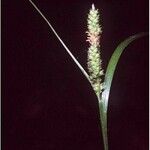
Carex bushii
Bush's Sedge
Description
Source: wikipedia (CC BY-SA)Carex bushii, Bush's sedge, is a species of sedge in the genus Carex. It native to the eastern United States where it is found in areas of natural grassland.
💡 In 1754, Lin Nai established the genus known as "true sedge." This plant is a significant component of China's flora and is the dominant grass species in the lowest layer of many forests. In some areas, true sedge makes up most of the lower vegetation.
Care Guide
💧 Water
Bush's sedge flourishes in moist environments and prefers consistently damp soil, although it can tolerate moderate drought. Watering it weekly helps replicate its natural habitat and promotes its health. As an outdoor plant in temperate zones, it thrives in cooler temperatures and benefits from natural rainfall, which enhances its resilience during wetter seasons.
☀️ Light Full sun
Bush's sedge does best when it receives the full solar spectrum all day long. Its native habitat typically has abundant sunlight. Still, when light is filtered or diffused it can adapt and maintain healthy growth. Very strong or very weak sunlight, however, can adversely affect its development.
What are the sunlight requirements for Bush's sedge?
Bush's sedge requires full sun exposure, which means it thrives in conditions where it receives more than 6 hours of sunlight daily. It can also adapt to partial sun, with about 3-6 hours of sunlight. It's important to monitor the movement of sunlight through your garden to ensure your plants are in spots that provide a good balance of light and shade, ensuring their well-being.
How essential is sunlight for the health of Bush's sedge?
Sunlight is crucial for the optimal growth of Bush's sedge, as it thrives when exposed to the full solar spectrum throughout the day. Its native environment is characterized by abundant sunlight, but it can also adapt to environments where the sunlight is filtered or diffused. Both excessive and very weak sunlight can adversely affect its growth. In scenarios where natural sunlight is insufficient, especially during winter or in less sunny spaces, artificial lighting can be a vital solution. Adequate artificial lighting promotes faster, healthier growth, with recommendations for the type, distance, and duration of artificial light varying based on the plants' needs.
What are the symptoms of light deficiency in Bush's sedge?
Bush's sedge shows several symptoms when suffering from light deficiency, including small leaves, leggy or sparse growth, faster leaf drop, slower or no new growth, lighter-colored new leaves, chlorosis, sunscald, leaf curling, wilting, and leaf scorching. These symptoms indicate that the plant is not receiving adequate sunlight, leading to a variety of health issues.
How can I address light deficiency issues in Bush's sedge?
To address light deficiency issues in Bush's sedge, consider gradually moving the plants to sunnier locations to ensure they receive at least 6 hours of direct sunlight daily. For indoor plants, use south-facing windows or artificial grow lights to provide sufficient light. For outdoor plants, it's crucial to adapt them gradually to sunnier spots to avoid sunburn. Minimizing obstructions like trees that block sunlight or transplanting smaller plants to more suitable locations can also help increase sunlight exposure. Note that parts of the plant affected by insufficient sunlight may not recover, but new growth should be healthy with increased light exposure.
🌡️ Temperature 5–32.2°C
Bush's sedge is native to temperate regions and prefers temperatures between 41 and 90 °F (5 to 32 ℃). Cultivating it within this temperature span can recreate its ideal native conditions, with adjustments made for seasonal fluctuations.
What is the ideal temperature range for Bush's sedge?
Bush's sedge thrives in a temperate climate with temperatures ranging from 41 to 90 °F (5 to 32 °C). Cultivation in this temperature range mimics its native conditions well. It's crucial to adjust for seasonal changes to maintain these ideal conditions for the plant.
How should Bush's sedge be protected in winter?
Bush's sedge has significant resistance to cold, making special frost protection measures generally unnecessary. However, if temperatures are anticipated to drop below -25°C, it's important to protect the plant from cold. Covering with soil or straw can offer protection. Additionally, watering the plant abundantly before the first freeze in autumn helps the soil retain moisture and aids in preventing drought and water scarcity during winter and early spring.
What are the symptoms and solutions for Bush's sedge in low temperatures?
In low temperatures, Bush's sedge shows remarkable cold tolerance, performing best when the temperature remains above 5°C. However, during winter, temperatures should not fall below -20°C. Should temperatures plunge below -25°C, the plant may exhibit decreased sprouting or fail to sprout in spring, with no noticeable changes during winter. The remedy for spring includes removing any parts of the plant that have failed to sprout.
How does high temperature affect Bush's sedge and what are the solutions?
During summer, it is essential to ensure Bush's sedge's temperature does not exceed 32°C. Should temperatures soar above 35°C, the plant's leaves may lighten in color, curl, suffer from sunburn, and in extreme cases, the plant may wilt and dry out completely. To mitigate these effects, trim away the sunburned and dried parts, relocate the plant to a shaded area or use a shade cloth to protect it from the midday and afternoon sun. Keep the soil moist by watering in the morning and evening.
💨 Humidity
🪴 Soil 5-6
🌱 Fertilizer
Bush's sedge benefits from extra nutrients to encourage healthy new growth. In spring, spreading some compost around the plant's base will effectively supply the needed nutrition. Fertilizing supports vigorous growth and helps the plant withstand diseases and pests.
🪴 Pot & Repot
✂️ Pruning
Bush's sedge is a perennial plant resembling grass, typically found in moist environments. To encourage growth, enhance air circulation, and minimize the risk of disease, prune any dead foliage in early spring using clean tools. For specific care instructions, consult reputable horticultural sources focused on bush's sedge.
🌿 Propagating
🐛 Diseases & pets
☠️ Toxicity
Characteristics
- Plant Type
- Grass
- Life Cycle
- Perennial
- Genus
- Carex
- Family
- Cyperaceae
- Hardiness Zone
- 5-8
- Mature Height
- 30 cm to 91 cm
- Mature Spread
- 30 cm to 61 cm
- Leaf Color
- Green
- Leaf Type
- Semi-evergreen
- Flower Color
- Yellow, Brown
- Flower Size
- 0.25 cm to 0.51 cm
- Bloom Time
- Mid spring, Late spring
- Planting Time
- Spring, Summer, Autumn
- Harvest Time
- Early summer, Mid summer