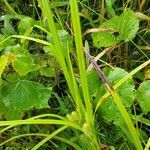
Carex comosa
Bearded Sedge · Longhair sedge · Bristly sedge · Bottlebrush Sedge · Long-haired Sedge
Description
Source: leafsnapCarex comosa is a species of sedge known as longhair sedge and bristly sedge. It is native to North America, where it grows in western and eastern regions of Canada and the United States, and parts of Mexico. It grows in wet places, including meadows and many types of wetlands. Tolerates deeper water than most common species and is good for retention basins. This sedge produces clumps of triangular stems up to 100 or 120 centimeters tall from short rhizomes. The inflorescence is up to 35 centimeters long and has a long bract which is longer than the spikes. It is a cluster of several cylindrical spikes. The scales over the fruits taper into long, thin awns.
💡 In 1754, Lin Nai established the genus known as "true sedge." This plant is a significant component of China's flora and is the dominant grass species in the lowest layer of many forests. In some areas, true sedge makes up most of the lower vegetation.
Care Guide
💧 Water
Longhair sedge thrives in wetland areas and prefers environments with high moisture levels and consistent hydration. For a lush appearance, it benefits from weekly watering. Although longhair sedge is resilient and can adapt to different water conditions, it flourishes best when the soil is both damp and well-drained.
How should I water my Longhair sedge plant?
To properly water the Longhair sedge, use filtered water at room temperature. This is important because tap water can contain harmful particles. Since the Longhair sedge is accustomed to warm environments, it is best to avoid using cold water as it can shock the plant. Instead of overhead watering, simply apply filtered room temperature water to the soil until it is completely soaked. This method benefits the plant by moistening the roots and aiding in the spread of nutrients through the soil.
What should I do if I give too much or too little water to my Longhair sedge?
Taking care of your Longhair sedge requires avoiding both overwatering and underwatering. However, overwatering tends to be a more common issue. When overwatered, the plant's stems and leaves can wilt and turn yellow. Over time, overwatering can lead to diseases like root rot, mold, and mildew, which can be fatal for your plant. Underwatering is less likely, as the Longhair sedge has good drought tolerance. But when it happens, the leaves may become brittle and brown. To prevent damage caused by overwatering, it is important to identify the signs early and reduce watering immediately. Additionally, assess the soil's drainage quality and replace it if it drains poorly. If the signs indicate underwatering, simply increase your watering schedule until the signs disappear.
How much should I water my Longhair sedge plant?
If your Longhair sedge is in a pot, the most precise way to determine if it needs water is by checking the soil. Simply insert your finger into the soil and if the top two to three inches are dry, then it's time to water. Similarly, if you have the Longhair sedge planted in the ground outdoors, you can use the same method to test the soil moisture. Once again, if the first few inches of soil have become dry, it's time to give it some water. In the spring and early fall, this method will usually result in watering the plant about once a week. However, during extremely hot weather, you may need to increase the watering frequency to twice or more per week. It's worth noting that mature, well-established Longhair sedges have a remarkable ability to resist drought.
How much water does my Longhair sedge require?
When watering your Longhair sedge, don't be afraid to give it plenty of water. Make sure the top few inches of soil are dry before watering and then thoroughly water until the soil is completely soaked. Make sure to add enough water so that it drains out of the bottom of the pot. If you don't see any water draining, you may not have given enough water. However, be careful not to let water accumulate in the soil as this can harm the plant. If water isn't draining properly, it could be due to poorly draining soil, which is not good for the plant's health. If the plant is outdoors, about an inch of rain per week is enough.
How should I water my Longhair sedge as it grows?
The water needs of the Longhair sedge can vary depending on its growth stages. When the Longhair sedge is young or has been recently transplanted, it requires more water compared to other times. During these stages, the focus of the plant is on developing new roots to support future growth. These roots perform best with slightly higher moisture levels. However, as the Longhair sedge matures over a few seasons, its water needs decrease. Another growth stage that may require increased water is during the bloom period. The development of flowers in the Longhair sedge uses up a significant amount of moisture, making it necessary to water it more during this time.
☀️ Light Full sun
Longhair sedge does best with plenty of sunlight and can tolerate moderate sun. Coming from habitats with abundant light, the plant depends on sunlight for its health and growth. Both too little and too much sun can disrupt its normal development and vigor. Therefore, suitable sun exposure is essential for it to prosper.
What are the sunlight requirements for Longhair Sedge (Carex comosa)?
Longhair Sedge thrives in conditions where it can receive ample sun exposure, typically flourishing best in full sun, which means above 6 hours of sunlight daily. It can also sustain moderate sunlight, indicating it can do well in partial sun, about 3-6 hours of sunlight. Observing how sunlight moves through your garden and choosing spots that offer a perfect balance of light and shade are crucial for ensuring the plant's happiness and health.
What essentials should be considered for the growth of Longhair Sedge?
The growth and health of Longhair Sedge are heavily reliant on sufficient sunlight, as it originates from environments where sunlight is abundant. Both insufficient and excessive sunlight can negatively impact its normal development and vitality. For indoor plants, when natural sunlight is insufficient, artificial lighting becomes vital. LED lights are recommended because they can be customized to provide specific wavelengths needed by plants. Full sun plants need 30-50W/sq ft, partial sun plants 20-30W/sq ft, and full shade plants 10-20W/sq ft of artificial light. The appropriate distance for the light source is 12-36 inches above the plant, and most plants require 8-12 hours of light per day to mimic natural sunlight conditions.
What are the symptoms of inadequate sunlight for Longhair Sedge?
Symptoms of inadequate sunlight in Longhair Sedge include smaller new leaves, leggy or sparse growth, faster leaf drop, slower or no new growth, lighter-colored new leaves, chlorosis, sunscald, leaf curling, wilting, and leaf scorching. These symptoms indicate that the plant is not receiving the optimal amount of sunlight needed for its health and growth.
What solutions are available for Longhair Sedge experiencing sunlight-related issues?
To address sunlight-related issues in Longhair Sedge, gradual changes in sunlight exposure are recommended. For indoor plants, gradually increase the duration of direct sunlight to at least 6 hours daily or use artificial lighting, such as professional plant grow lights or a desk/ceiling lamp, for a minimum of 8 hours a day. Outdoors, plants should be moved to sunnier locations gradually to prevent sunburn. Reducing obstructions and transplanting smaller plants during their dormant period to locations with ample sunlight and good drainage can also help. However, parts of the plant affected by previous insufficient sunlight might not recover, but with increased light, new growth will be healthy.
🌡️ Temperature 10–35°C
Longhair sedge is native to habitats with temperatures ranging from 50 to 95 °F (10 to 35 ℃). It grows best in moderate climates and favors temperate regions. Seasonal temperature adjustments may be necessary to ensure its survival.
What is the ideal temperature range for growing Longhair sedge?
Longhair sedge, or Carex comosa, naturally thrives in temperatures ranging from 50 to 95°F (10 to 35°C). It demonstrates a preference for temperate climates, performing best within these moderate conditions. Adaptations to seasonal temperature variations might be necessary to ensure the plant's health and survival.
How does Longhair sedge handle cold weather?
Longhair sedge possesses significant resistance to cold, typically obviating the need for frost protection measures during winter months. However, in regions where winter temperatures are poised to fall below -25°C, it becomes imperative to enact cold protection strategies. This can include covering the plant with insulating materials like soil or straw. Prior to the onset of the first freeze in autumn, a thorough watering is advisable, encouraging the soil to retain moisture and enter a frozen state. This practice helps avert drought and water shortage issues throughout the winter and into early spring.
What should I do if the temperature drops below -25°C?
In instances where temperatures plummet below -25°C, Longhair sedge may not show immediate symptoms of distress during the winter, but you might observe a reduced sprouting activity or lack thereof come spring. In such scenarios, one recommended action is to remove any parts of the plant that fail to sprout as the weather warms in spring.
How should Longhair sedge be cared for in high temperatures?
During the warmer summer months, it's crucial to ensure that Longhair sedge remains in conditions not exceeding 35°C. Exposure to temperatures above 41°C can lead to discolored leaves, susceptibility to curling, sunburn, and, in extreme cases, wilting and drying out of the entire plant. To mitigate this, affected parts should be trimmed away. Relocating the plant to a shaded area or employing a shade cloth can provide protection from the intense midday and afternoon sun. Additionally, watering in the early morning or late evening will help maintain soil moisture.
💨 Humidity
🪴 Soil 5-7
🌱 Fertilizer
Generally, a single fertilizer application in spring is adequate for Longhair sedge, though additional feedings can enhance growth. Fertilize every month to a month and a half. Feeding improves leaf appearance and performance, helping maintain uniform color and a healthy texture. It also encourages root development and nutrient uptake, supporting long-term plant health.
🪴 Pot & Repot
✂️ Pruning
Longhair sedge has a tufted appearance with long bristles and requires minimal pruning, ideally from early to late spring. To promote better air circulation and growth, remove any dead foliage, but be careful not to cut too much. Pruning helps prevent overcrowding and enhances both the plant’s vigor and appearance.
🌿 Propagating
🐛 Diseases & pets
☠️ Toxicity
Characteristics
- Plant Type
- Herb
- Life Cycle
- Perennial
- Genus
- Carex
- Family
- Cyperaceae
- Hardiness Zone
- 6-10
- Mature Height
- 0.61 m to 1.22 m
- Mature Spread
- 30 cm to 61 cm
- Leaf Color
- Green
- Leaf Type
- Evergreen
- Flower Color
- Green
- Bloom Time
- Late spring, Early summer
- Planting Time
- Spring, Autumn
- Harvest Time
- Mid summer, Late summer
- Native Area
- Mexico