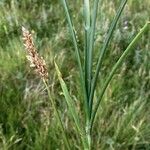
Carex diandra
Lesser tussock sedge · Bog Panicled Sedge · Two-ridged Sedge · Two-stamened Sedge · Lesser panicled sedge
Description
Source: leafsnapCarex diandra is a species of sedge known by the common names lesser tussock-sedge and lesser panicled sedge.
💡 In 1754, Lin Nai established the genus known as "true sedge." This plant is a significant component of China's flora and is the dominant grass species in the lowest layer of many forests. In some areas, true sedge makes up most of the lower vegetation.
Care Guide
💧 Water
Lesser panicled sedge thrives in consistently moist soil and high humidity and is well-suited to wetland habitats. Although it is moderately drought-tolerant, it requires weekly watering for optimal growth. Commonly grown outdoors, this plant is an excellent choice for rain gardens or areas with fluctuating moisture levels, thanks to its adaptability to varying water availability.
What should I do if I give too much or too little water to my Lesser panicled sedge plant?
Proper watering is essential for this beautiful ornamental grass. If it is planted in the ground, any watering issues can be resolved. However, in a container, both overwatering and underwatering can quickly lead to the demise of Lesser panicled sedge. Insufficient water can cause the grass to stop growing, resulting in drooping leaves, weak seed head production, and browned leaves. On the other hand, overwatering can cause yellow leaves with brown tips. If you suspect your Lesser panicled sedge has been improperly watered, the first step is to identify whether it is being watered too much or too little. In the case of overwatering, stop watering immediately and give the heavy soil time to dry out. When new growth appears, test the soil for moisture and determine if additional watering is necessary. If the grass is receiving too little water, simply give it a deep drink and observe if it perks up. Overall, it is important to remember that a long, deep watering is better than frequent shallow waterings. This helps the grass develop deep roots, making it more resilient to drought and water-related issues.
How often should I give water to my Lesser panicled sedge plant?
The watering needs of Lesser panicled sedge depend on where it is planted. In general, it should be watered once a week. However, in hot climates, it may need to be watered once or twice a week during the summer. In moderate climates, watering once every seven days or more may be enough. Grass in containers will typically need more frequent watering compared to grass in the ground. The grass's location also matters, with shaded grass needing less water compared to in-ground grass. Water the Lesser panicled sedge only when the soil is dry. You can check the soil's moisture level by pressing your finger a couple of inches into it or by weighing the potted grass with a portable scale. The grass may exhibit signs of insufficient water, such as folded blades and thinner appearance. Despite being drought tolerant, regular and deep waterings will maintain its beautiful color. In the wild, Lesser panicled sedge grows in open scrubland, experiencing extreme heat, bright sun, and intermittent rain. Although it is drought resistant, it still requires care and attention. Consistent watering is beneficial for this hardy grass even though it can handle dry conditions. When first planted, it needs more frequent water until it establishes deep roots. Potted Lesser panicled sedge, especially when exposed to hot, direct sun, may dry out quickly and should be checked every 3 to 4 days. In-ground grass generally needs less watering but it depends on the soil type. Clay soil may appear dry at the surface while retaining moisture below, while sandy soil that drains quickly will require more frequent watering.
What do I need to be cautious about when watering my Lesser panicled sedge in different seasons, climates, or during different stages of growth?
To determine if you are watering enough, pay attention to how quickly your grasses are growing. Lesser panicled sedge, for example, can double in size within a year during the hottest months. If it's hot outside and your grass isn't growing vigorously, you may need to adjust your watering schedule. In the winter, you may be able to water just once a month, but check the soil for moisture before doing so. During the warmest months, the grass will require more water, while during winter and colder months, the need for water will decrease significantly. Remember that with Lesser panicled sedge, it's important to let the soil dry out completely before watering.
☀️ Light Full sun
Lesser panicled sedge does best with prolonged exposure to sunlight, though it can tolerate reduced light or complete shade. Both too much and too little sun harm it, changing its growth. The light-rich conditions of its native habitat shape its preference for sunlight.
What are the sunlight requirements for Lesser Panicled Sedge?
Lesser Panicled Sedge thrives best under full sun exposure, which means it requires more than 6 hours of sunlight daily. However, it can also tolerate partial sun to full shade conditions, where it gets about 3-6 hours of sunlight. It's important to observe how sunlight moves through your garden to find spots that offer the right balance of light and shade to ensure the well-being of your plants.
How does sunlight affect the growth of Lesser Panicled Sedge?
Continuous exposure to sun rays is essential for the optimal growth of Lesser Panicled Sedge, although it can survive in less light or fully shaded areas. Both an abundance and a deficiency of sunlight can negatively impact the plant, altering its growth. The plant's natural habitat, which is rich in light, plays a significant role in determining its preference for sun exposure.
What should I do if natural sunlight is insufficient for my indoor plants?
When natural sunlight is insufficient, especially during winter or in less sunny spaces, artificial lighting becomes a critical solution for indoor plants. LED lights are favorable because they can be customized to provide the specific wavelengths of light that plants need. Full sun plants require 30-50W/sq ft, partial sun plants need 20-30W/sq ft, and full shade plants need 10-20W/sq ft of artificial light. The light source should be placed 12-36 inches above the plant and kept on for 8-12 hours per day to mimic natural daylight hours, promoting faster and healthier growth.
What are the symptoms of inadequate light for Lesser Panicled Sedge?
When Lesser Panicled Sedge is deprived of adequate light, it may exhibit symptoms such as new leaves growing smaller, leggy or sparse growth, faster leaf drop, slower or no new growth, and leaves that may appear lighter in color or develop irregular color patterns indicating a lack of chlorophyll. Conditions like chlorosis, sunscald, leaf curling, wilting, and leaf scorching can occur due to either excessive sunlight or insufficient exposure affecting the plant's ability to photosynthesize and maintain overall health.
How can I ensure optimal sunlight for my plants both indoors and outdoors?
To optimize sunlight for your plants, gradually increase their exposure to direct sunlight until they receive at least 6 hours daily, using a south-facing window for indoor plants. If natural light is insufficient, consider using artificial light sources for at least 8 hours daily. Outdoors, gradually move your plants to sunnier locations to prevent sunburn. For plants affected by obstructions like trees, pruning branches can improve sunlight access. Transplanting smaller plants during their dormant period can also be effective for ensuring adequate sunlight and good drainage.
🌡️ Temperature 0–32.2°C
Lesser panicled sedge can tolerate a wide range of temperatures, though its distribution may still be constrained by different combinations of moisture and heat. It performs best in warm summers with adequate rainfall or watering. Extended periods of cloudy, rainy weather or prolonged high temperatures can raise the likelihood of the plant dying. In winter, proper protection from cold can increase its chances of survival.
What is the name of the plant?
The name of the plant is Lesser panicled sedge.
What is the botanical name of the Lesser panicled sedge?
The botanical name of the Lesser panicled sedge is Carex diandra.
💨 Humidity
🪴 Soil 5-7
🌱 Fertilizer
Lesser panicled sedge benefits from extra nutrients to encourage healthy new growth. In spring, applying compost around the base of the plant will effectively supply the nutrition it needs. Fertilizing supports vigorous growth and helps the plant fend off diseases and pests.
🪴 Pot & Repot
✂️ Pruning
Lesser panicled sedge is a clumping plant characterized by its narrow leaves. To maintain its health and appearance, it's best to prune it in early spring. Properly cutting back old stems encourages fresh growth and helps keep the plant dense and tidy. This practice also minimizes the risk of disease, ensuring robust growth throughout the season.
🌿 Propagating
🐛 Diseases & pets
☠️ Toxicity
Characteristics
- Plant Type
- Grass
- Life Cycle
- Perennial
- Genus
- Carex
- Family
- Cyperaceae
- Hardiness Zone
- 3-7
- Mature Height
- 30 cm to 91 cm
- Mature Spread
- 20 cm to 40 cm
- Leaf Color
- Green, Dark Green
- Leaf Type
- Evergreen
- Flower Color
- White, Yellow, Green, Brown
- Flower Size
- 0.20 cm to 0.51 cm
- Bloom Time
- Mid spring, Late spring
- Planting Time
- Spring, Summer, Autumn
- Harvest Time
- Early summer, Mid summer
- Native Area
- Turkey, Sweden, India, Austria, Slovakia, Slovenia, Croatia, Belarus, Uzbekistan, Russia, Germany, Iceland, Estonia, Romania, Latvia, Belgium, Netherlands, France, Tajikistan, Czech Republic, Armenia, Poland, Ukraine, New Zealand, Serbia, China, Lithuania, Norway, Kyrgyzstan, Kazakhstan, Italy, Spain, Switzerland, Denmark, Japan, Mongolia, Finland, Bhutan, Ireland, United Kingdom, Hungary, Azerbaijan, Turkmenistan