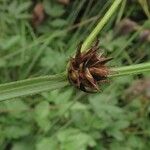
Carex disticha
Two-ranked Sedge · Tworank sedge · Brown sedge
Description
Source: leafsnapCarex disticha is a Eurasian species of sedge known as the brown sedge or, in North America, tworank sedge.
💡 In 1754, Lin Nai established the genus known as "true sedge." This plant is a significant component of China's flora and is the dominant grass species in the lowest layer of many forests. In some areas, true sedge makes up most of the lower vegetation.
Care Guide
💧 Water
☀️ Light Partial sun
Brown sedge is native to habitats like forest understories and rocky areas, where it grows in natural shade. It prefers partial sun but can tolerate full sun or full shade, reflecting its hardy and adaptable nature.
What are the sunlight requirements for Brown Sedge (Carex disticha)?
Brown sedge (Carex disticha) thrives in various sunlight conditions. For full sun exposure, it requires above 6 hours of sunlight daily, ensuring it gets plenty of light for optimal growth. In contrast, partial sun areas, offering about 3-6 hours of sunlight, are also suitable for this plant. However, it's crucial to observe how sunlight moves through your garden. Finding spots that provide the perfect balance of light and shade is essential to ensure the happiness and health of your brown sedge, taking into account the warning to watch how sunlight gracefully moves through your garden and choose spots accordingly.
🌡️ Temperature 5–35°C
Brown sedge can tolerate a wide range of temperatures, but its occurrence may still be restricted by different mixes of moisture and heat. It performs best in warm summer conditions with sufficient rainfall or irrigation. Extended spells of cloudy, rainy weather, as well as prolonged high temperatures, can raise the chance of Brown sedge dying. In winter, adequate protection from cold can increase the plant's survival.
💨 Humidity
🪴 Soil 6-7
🌱 Fertilizer
Brown sedge benefits from extra nutrients to encourage healthy new growth. In spring, spreading compost around the plant’s base is an effective way to supply the nutrition it needs. Fertilizing helps support vigorous growth and improves the plant’s resistance to diseases and pests.
🪴 Pot & Repot
✂️ Pruning
Brown sedge is a tufted perennial ornamental grass that benefits greatly from pruning in early spring. Pruning removes dead foliage and encourages new growth. Be sure to use sharp tools for a clean cut, taking care not to damage the emerging shoots. Regular pruning not only improves the plant's appearance but also prevents overcrowding.
🌿 Propagating
🐛 Diseases & pets
☠️ Toxicity
Characteristics
- Plant Type
- Grass
- Life Cycle
- Perennial
- Genus
- Carex
- Family
- Cyperaceae
- Hardiness Zone
- 4-9
- Mature Height
- 30 cm to 76 cm
- Mature Spread
- 20 cm to 40 cm
- Leaf Color
- Dark Green
- Leaf Type
- Semi-evergreen
- Flower Size
- 0.25 cm to 0.51 cm
- Bloom Time
- Late spring, Early summer
- Planting Time
- Spring, Summer, Autumn
- Harvest Time
- Mid summer, Late summer
- Native Area
- Turkey, Austria, Sweden, Slovakia, Montenegro, Croatia, Slovenia, Belarus, Russia, Germany, Estonia, Romania, Latvia, Belgium, France, Netherlands, Czech Republic, Bulgaria, Armenia, Poland, Ukraine, Serbia, Lithuania, Norway, Italy, Kazakhstan, Spain, Switzerland, Denmark, Finland, Ireland, United Kingdom, Hungary, Azerbaijan