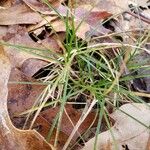
Carex eburnea
Bristle-Leaf Sedge · Bristleleaf sedge · Bristle-leaved Sedge · Ebony Sedge
Description
Source: leafsnapCarex eburnea, commonly known as ivory sedge, is a perennial plant in the Cyperaceae family. Native to North America, it thrives in wetlands, bogs, and other moist habitats. This clump-forming plant can grow up to 30 cm in height. The leaves of Carex eburnea are narrow, grass-like, and exhibit a bluish-green color. Its slender stems bear small, inconspicuous flowers that bloom from May to July and produce seeds that ripen between July and August. Ivory sedge prefers moist soil conditions but can tolerate some drought once established. It is an excellent choice for wetland restoration projects and can also serve as an ornamental grass in gardens or landscapes. In summary, Carex eburnea is an attractive plant with unique foliage that adds texture and interest to any garden or natural area. Additionally, it provides important ecological benefits for wildlife habitats.
💡 In 1754, Lin Nai established the genus known as "true sedge." This plant is a significant component of China's flora and is the dominant grass species in the lowest layer of many forests. In some areas, true sedge makes up most of the lower vegetation.
Care Guide
💧 Water Every 7 days
Bristleleaf sedge is best suited for consistently moist soil, reflecting its natural habitat in North American forests. To maintain this moisture, it's important to water the plant weekly. Ideally grown outdoors, bristleleaf sedge thrives with the seasonal changes in temperature and humidity, which help it stay healthy as an evergreen plant.
☀️ Light Partial sun
Bristleleaf sedge mainly grows best where it receives a moderate amount of sunlight. However, it is quite adaptable and can stay healthy in places with lower light. In its natural habitat, it is often found in locations sheltered from excessive light. Too much sun can scorch its leaves, while too little sun can impede its growth.
What are the sunlight requirements for Bristleleaf sedge?
Bristleleaf sedge thrives best in conditions with moderate sunlight exposure but is adaptable to lower sunlight areas as well. In its natural habitat, it is often found in locations that are not exposed to overly abundant light. The plant can sustain health in partial sun, receiving about 3-6 hours of sunlight, and can also manage in full shade conditions, where sunlight exposure is less than 3 hours. Observing the movement of sunlight through your garden and choosing locations that offer a good balance of light and shade will help ensure the wellbeing of your Bristleleaf sedge.
How should artificial lighting be used for Bristleleaf sedge indoors?
Indoor Bristleleaf sedge plants require adequate lighting for optimal growth, especially in situations where natural sunlight is insufficient, such as in winter or in less sunny spaces. Artificial lights are a beneficial solution, providing the necessary light spectrum for healthy plant growth. LED lights are recommended due to their ability to offer specific wavelengths needed by plants. For full sun plants, 30-50W per square foot is ideal; partial sun plants should have 20-30W per square foot, and full shade plants need 10-20W per square foot. Place the light source 12-36 inches above the plant to mimic natural sunlight, and ensure the plants receive 8-12 hours of light per day.
What are the symptoms of improper lighting conditions for Bristleleaf sedge?
Bristleleaf sedge shows various symptoms when exposed to improper lighting, either too much or too little. Minimal light leads to smaller new leaves, leggy or sparse growth, faster leaf drop, halted growth or no new growth, and lighter-colored or irregularly colored new leaves indicating a lack of chlorophyll and essential nutrients. Excessive sunlight can cause chlorosis (yellowing leaves), sunscald, curling leaves as a defense mechanism to reduce exposed surface area, wilting from increased water loss, and leaf scorching with brown, dry, or crispy leaf edges or patches.
What solutions are recommended for Bristleleaf sedge experiencing improper lighting conditions?
To counteract improper lighting conditions for Bristleleaf sedge, gradually adapt the plant to optimal light conditions by shifting it towards sunnier spots each week, aiming for 3-6 hours of direct sunlight daily. If the plant is large or not easily movable, consider using artificial light. Keep a desk or ceiling lamp on for at least 8 hours daily or opt for professional plant grow lights. For outdoor plants, move them to sunnier locations gradually to avoid sunburn. For ground plants, minimize obstructions like tree branches blocking sunlight or consider transplanting smaller plants during their dormant period to a location with ample sunlight and good drainage. It's important to note that parts of the plant affected by insufficient sunlight may not recover, but new growth will be healthy after adjusting light exposure.
🌡️ Temperature 0–32.2°C
Bristleleaf sedge originates from regions where temperature is the dominant factor, with temperatures ranging from 32 to 90 °F (0 to 32 °C). Because it prefers cooler conditions, adjusting temperatures during extreme seasons is recommended to ensure its growth.
What is the native climate for Bristleleaf sedge?
Bristleleaf sedge, botanically known as Carex eburnea, thrives in temperature-dominated regions. It prefers temperatures ranging from 32 to 90 °F (0 to 32 °C), indicating its preference for cooler climates. Despite its sturdy cold resistance, adjustments may be necessary during extremely hot or cold seasons to promote healthy growth.
How should Bristleleaf sedge be protected in winter?
Bristleleaf sedge is well-equipped to withstand cold climate conditions without special frost protection in most cases. However, in regions where temperatures are expected to plummet below -40°C, it is crucial to provide additional cold protection. This can be done by covering the plant with insulating materials such as soil or straw. Additionally, watering the plant abundantly before the first freeze of autumn helps ensure the soil remains moist and enters a frozen state, which is beneficial for preventing drought and water scarcity during the winter and early spring months.
What are the critical temperatures for Bristleleaf sedge, and how should the plant be cared for at these temperatures?
Bristleleaf sedge demonstrates significant tolerance to cold, optimally growing at temperatures above 0°C and surviving winter conditions above -35°C. However, temperatures below -40°C can impede its ability to sprout in the spring, without noticeable changes during the winter. In such cases, removing parts that fail to sprout in the spring is advisable. Conversely, during summer, the plant is best kept under 32°C, as exceeding 35°C may result in lighter colored leaves, curling, susceptibility to sunburn, and possibly wilting and drying of the entire plant. To combat high temperature stress, sunburned and dried parts should be trimmed away, and the plant should be moved to a shaded location or provided with shade cloth. Ensuring the soil remains moist through watering in the morning and evening is also recommended.
💨 Humidity
🪴 Soil 5-6
🌱 Fertilizer
Bristleleaf sedge needs extra nutrients to encourage healthy new growth. In spring, spreading some compost around the plant’s base can properly supply the nutrition it requires. Fertilizing helps promote vigorous growth and improves the plant’s resistance to diseases and pests.
🪴 Pot & Repot
✂️ Pruning
Bristleleaf sedge has fine-textured, arching foliage and grows in clumps. To encourage growth, prune it in early spring by removing any dead or damaged leaves. Light trimming helps maintain its shape and vigor. Additionally, ensuring good airflow helps reduce the risk of disease and promotes the plant's overall health.
🌿 Propagating
🐛 Diseases & pets
☠️ Toxicity
Characteristics
- Plant Type
- Grass
- Life Cycle
- Perennial
- Genus
- Carex
- Family
- Cyperaceae
- Hardiness Zone
- 2-8
- Mature Height
- 15 cm to 30 cm
- Mature Spread
- 30 cm
- Leaf Color
- Green
- Leaf Type
- Evergreen
- Flower Color
- Yellow, Green
- Flower Size
- 2.54 cm
- Bloom Time
- Mid spring, Late spring
- Planting Time
- Spring, Summer
- Harvest Time
- Early summer, Mid summer
- Native Area
- Eastern and central North America