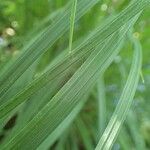
Carex elata
Tufted sedge · Tussock sedge
Description
Source: leafsnapCarex elata, commonly known as tall sedge or tufted sedge, is a perennial plant in the Cyperaceae family. Native to Europe and Asia, it thrives in wetlands, marshes, and along riverbanks. The plant can reach heights of 1 to 2 meters and has long, narrow, dark green leaves. From May to July, Carex elata produces small, brownish-green flowers that grow on spikes emerging from its stem. The seeds of this species are small nutlets, which are dispersed by wind or water. This species plays a crucial role in wetland ecosystems by providing habitat for a variety of wildlife, including birds, insects, amphibians, and reptiles. Additionally, it helps prevent soil erosion by stabilizing riverbanks with its extensive root system. Carex elata thrives in moist soil conditions but can tolerate some drought once established. It prefers full sun but can also grow in partial shade. In summary, Carex elata is a tall, perennial sedge native to Europe and Asia. It grows along riverbanks and in wetlands, offering essential habitats for wildlife and stabilizing soil to prevent erosion. The plant requires moist soil for optimal growth and thrives in full sun, though it can tolerate partial shade and some drought once established.
💡 In 1754, Lin Nai established the genus known as "true sedge." This plant is a significant component of China's flora and is the dominant grass species in the lowest layer of many forests. In some areas, true sedge makes up most of the lower vegetation.
Care Guide
💧 Water Every 7 days
Tufted sedge flourishes in marshy areas where the soil remains consistently moist and the humidity is high. Ideally, it should be watered twice a week, as it does not tolerate drought conditions well. When its natural moisture needs are met, particularly near water bodies, it produces lush foliage.
How can I water my Tufted sedge plant in the best way?
To properly water the Tufted sedge, it is recommended to use filtered water at room temperature or slightly warmer. Tap water may contain harmful particles. The Tufted sedge prefers warm environments, so cold water should be avoided as it can be a shock. Additionally, overhead watering should be avoided to prevent foliage issues. Instead, water the plant by applying filtered room temperature water to the soil until it is completely soaked. This method helps moisten the roots and enables them to spread and absorb necessary nutrients from the soil.
What should I do if I give my Tufted sedge plant too much or too little water?
Overwatering is a more common issue with the Tufted sedge, which can cause wilted and yellow leaves, as well as diseases like root rot, mold, and mildew. Underwatering is less common, but can result in brittle and brown leaves. It is important to notice signs of overwatering early and reduce watering immediately. Checking the soil drainage and replacing it if necessary can also help. For underwatering, simply increase watering until signs of dryness have improved.
How much should I water my Tufted sedge?
If your Tufted sedge plant is in a pot, the most accurate way to determine if it needs water is by checking the soil with your finger. If the top two to three inches of soil feel dry, it's time to water it. If you have your Tufted sedge plant planted in the ground outside, you can use the same method to test the soil. Once again, if the top few inches of soil are dry, it's time to give it water. Typically, during the spring and early fall, you'll need to water this plant once a week using this method. However, in extremely hot weather, you may need to increase your watering frequency to two or more times per week. It's important to note that mature, well-established Tufted sedges have a remarkable ability to tolerate drought.
How much water does my Tufted sedge plant need?
To properly water your Tufted sedge, don't hold back on the amount of water you give it. Make sure the top two to three inches of soil are dry before watering, and then give it a generous and thorough watering. You want to completely saturate the soil, and you'll know you've added enough water when it starts to drain out of the bottom of the pot. If you don't see any excess water draining, it's likely that you haven't given enough water. However, be careful not to let water accumulate in the soil, as this can be harmful to the plant. On the other hand, if you notice that there's no water draining from the pot, it could mean that the soil doesn't drain well, and this is not good for the plant's health. If the plant is outside, receiving about 1 inch of rain per week should be enough.
How should I water my Tufted sedge at different times as it grows?
The water needs of the Tufted sedge can vary depending on its growth stages. In the first few years or after being transplanted to a new location, you'll need to provide more water than usual. During this time, the Tufted sedge is focused on growing new roots that will support future growth. These roots require extra moisture compared to a more mature phase. As the plant matures, it will require less water overall. Another stage when the Tufted sedge may need more water is during the bloom period when the development of flowers requires a significant amount of moisture.
☀️ Light Partial sun
Tufted sedge is native to habitats like forest understories and rocky areas, where it occurs in natural shade. It favors partial sun but can tolerate full sun or full shade, showing its versatility and hardiness.
What are the sunlight requirements for plants?
Plants have different sunlight requirements to thrive. Partial sun plants require about 3-6 hours of sunlight daily, while full sun plants need more than 6 hours of sunlight. It's important to observe your garden's sunlight patterns and choose locations that provide the right balance of light and shade for your plants, ensuring their optimal growth and happiness.
What are the essentials of tufted sedge care?
Tufted sedge, a native to environments like forest understories or rocky areas, prefers partial sun but can also tolerate full shade, making it a flexible choice for various garden spots. For indoor plants, when natural sunlight is insufficient, artificial lighting becomes crucial. LED lights are recommended due to their ability to meet specific plant light wavelength needs. Full sun plants generally require 30-50 watts of artificial light per square foot, partial sun plants 20-30 watts, and full shade plants 10-20 watts. Ensuring the correct distance and light duration, usually 8-12 hours per day, is key to mimicking the natural conditions for optimal plant growth.
What symptoms might indicate light deficiency or excess in tufted sedge?
Tufted sedge displays several symptoms in response to inadequate or excessive light. Light deficiency can lead to smaller new leaves, leggy growth, faster leaf drop, paler new leaves, or even a complete stop in growth, indicating the plant has entered survival mode. Conversely, too much sunlight can cause chlorosis, sunscald, leaf curling, wilting, or leaf scorching, signs of overexposure harming the plant's ability to photosynthesize and maintain health.
What solutions can address light-related issues in tufted sedge?
Addressing light-related issues in tufted sedge involves optimizing sunlight exposure. Indoor plants can adapt to changes by shifting them to sunnier spots each week until they get 3-6 hours of direct light daily or by using artificial light if they're not easily moved. For outdoor plants, gradually move them to better spots, avoiding sudden exposure changes that can cause sunburn. Minimize obstructions by pruning or moving plants to locations with more sunlight and better drainage, focusing on the season's dormant period for small, transplantable plants. Note that while parts of the plant that have suffered might not recover, new growth can flourish under improved conditions.
🌡️ Temperature 5–35°C
Tufted sedge can tolerate a broad range of temperature conditions, but its distribution can still be restricted by different combinations of moisture and heat. It performs best in warm summer climates with sufficient rainfall or watering. Extended periods of cloudy, rainy weather, as well as prolonged high temperatures, can increase the chance of Tufted sedge dying. In winter, appropriate protection from cold can raise the plant's survival rate.
What is the Tufted sedge?
Tufted sedge, scientifically known as Carex elata, is a species of plant. It does not have any essential information, symptoms, or additional details provided.
💨 Humidity
🪴 Soil 6-7
🌱 Fertilizer
A single fertilizer application in spring is generally enough for Tufted sedge, though repeated feedings can boost growth to its fullest. Apply fertilizer about every month to month and a half. Fertilization improves leaf appearance and function, helping maintain uniform color and a healthy texture. It also promotes root development and nutrient uptake for sustained plant health.
Why should I use fertilizer on my Tufted sedge?
The Tufted sedge primarily consists of leaves, which can be enhanced through fertilization. Fertilizing the plant will improve leaf color and texture, contributing to a healthy appearance. Additionally, proper fertilization supports root development and upkeep, enabling the Tufted sedge to absorb soil nutrients more effectively both now and in the future.
What is the best time to add fertilizer to my Tufted sedge?
If you grow your Tufted sedge outdoors each year, it will send new growth shooting out in early spring. This is a sign that it's time to start fertilizing. Typically, a single application of fertilizer in the spring is sufficient for a Tufted sedge to thrive. However, if you want to maximize its growth, you can feed it multiple times throughout the spring and early summer. In this case, you can fertilize your Tufted sedge approximately once every month to a month and a half.
When should I not put fertilizer on my Tufted sedge?
During late fall and winter, your Tufted sedge goes into a dormant phase and stops producing new growth. Therefore, it's best to avoid fertilizing it during this time. In spring and summer, if you do choose to fertilize, start reducing the rate as summer approaches because your Tufted sedge's growth rate slows down too. It is generally not recommended to fertilize your Tufted sedge when the weather is unseasonably hot or the soil is extremely dry, as this can cause stress and premature death.
What kind of fertilizer does my Tufted sedge require?
Choosing the best fertilizer for a Tufted sedge is actually quite straightforward. These plants do well with a general-purpose garden fertilizer that has equal parts nitrogen, phosphorus, and potassium. Look for a fertilizer with a 10-10-10 ratio or something similar, as this will be effective. It's best to avoid fertilizers with high nitrogen content if you're unsure. Most suitable fertilizers for Tufted sedge come in a granular form. These slow-release fertilizers are easy to apply to the soil. Additionally, using an organic soil amendment like compost can be beneficial for feeding your Tufted sedge.
How can I give nutrients to my Tufted sedge plant?
To care for your Tufted sedge, wait until its first leaves emerge in early spring. Then, apply a granular slow-release fertilizer with a balanced formula to the soil around the base of the plant. You can repeat this process later in the season if desired. When reapplying fertilizer, focus on the soil rather than the plant itself. This may involve moving some leaves to access the soil near the roots. Additionally, it's beneficial to water your Tufted sedge before and after fertilizing.
🪴 Pot & Repot
✂️ Pruning
Tufted sedge is a tall, perennial plant characterized by its arching leaves and delicate flowers. To maintain its appearance, it is important to prune the plant. In early spring, cut back the old foliage, and later, remove any dead stems. Pruning the plant down to ground level not only creates a tidy look but also encourages robust new growth, aligning with the natural growth cycle of the tufted sedge.
🌿 Propagating
🐛 Diseases & pets
☠️ Toxicity
Characteristics
- Plant Type
- Herb
- Life Cycle
- Perennial
- Genus
- Carex
- Family
- Cyperaceae
- Hardiness Zone
- 4-9
- Mature Height
- 30 cm to 91 cm
- Mature Spread
- 30 cm to 91 cm
- Leaf Color
- Green, Yellow, Gold
- Leaf Type
- Evergreen, Deciduous
- Flower Color
- Green, Brown, Yellow, Black
- Flower Size
- 0.20 cm to 0.51 cm
- Bloom Time
- Mid spring, Late spring
- Planting Time
- Spring, Summer, Autumn
- Harvest Time
- Early summer, Mid summer