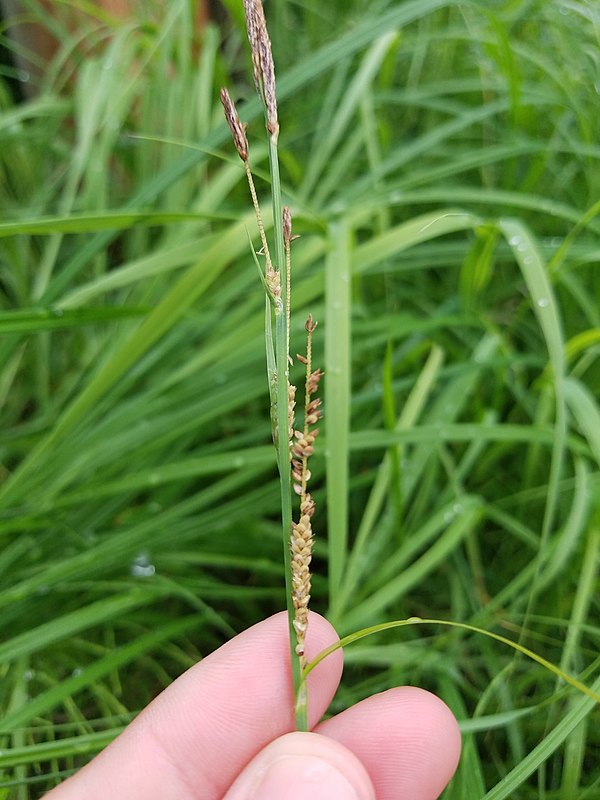
Carex emoryi
Emory's Sedge · Riverbank Sedge · Emory’s sedge
Description
Source: leafsnapCarex emoryi, commonly known as Emory's sedge, is a perennial plant species in the family Cyperaceae. Native to North America, it thrives in diverse habitats such as wetlands, meadows, and forests. The plant forms clumps of narrow, green leaves that can reach up to 60 cm in height. Its flowers are small and inconspicuous, forming brownish-green spikes that appear from May to July. Emory's sedge is crucial for wildlife, offering food for birds, small mammals, and insects. Additionally, its extensive root system helps stabilize soil and prevent erosion. For cultivation, Carex emoryi prefers moist soil but can tolerate some drought once established. It grows best in full sun or partial shade and can also thrive in full shade. Overall, Carex emoryi is a versatile plant that provides ecological benefits and enhances landscapes and naturalized areas with its aesthetic appeal.
💡 In 1754, Lin Nai established the genus known as "true sedge." This plant is a significant component of China's flora and is the dominant grass species in the lowest layer of many forests. In some areas, true sedge makes up most of the lower vegetation.
Care Guide
💧 Water Every 7 days
☀️ Light Full sun
Emory's sedge is a sun-loving perennial herbaceous plant that originates in open habitats and often thrives in meadows and grasslands. It prefers full sun but can also tolerate partial sun.
What are the sunlight requirements for Emory's sedge (Carex emoryi)?
Emory's sedge (Carex emoryi) thrives in various sunlight conditions. For full sun exposure, it requires above 6 hours of sunlight daily. In contrast, partial sun conditions mean about 3-6 hours of sunlight per day. It's important to observe how sunlight moves through your garden throughout the day. Selecting locations that offer the ideal balance of light and shade will ensure your Emory's sedge plants are happy and healthy.
🌡️ Temperature 0–35°C
Emory's sedge can adjust to a broad range of temperatures, but its distribution may still be constrained by various combinations of moisture and heat. It does best in warm summer conditions with sufficient rainfall or watering. Extended stretches of cloudy, rainy weather and sustained high temperatures can raise the chance of Emory's sedge dying. In winter, adequate protection from cold can increase the plant's likelihood of survival.
💨 Humidity
🪴 Soil 6-7
🌱 Fertilizer
Emory's sedge needs extra nutrients to encourage healthy new growth. In spring, applying compost around the plant's base can effectively supply the nutrition it requires. Fertilizing supports vigorous growth and helps the plant resist diseases and pests.
🪴 Pot & Repot
✂️ Pruning
To ensure Emory's sedge thrives, it's important to prune it in early spring. Removing old foliage not only encourages new growth but also improves the plant's overall appearance. Clearing away dead leaves enhances the plant's health by promoting better air circulation. Always use clean tools to prevent contamination. Regular pruning helps maintain the plant's vigor, making it both more attractive and easier to manage.
🌿 Propagating
🐛 Diseases & pets
☠️ Toxicity
Characteristics
- Plant Type
- Grass
- Life Cycle
- Perennial
- Genus
- Carex
- Family
- Cyperaceae
- Hardiness Zone
- 3-9
- Mature Height
- 0.3 m to 1.07 m
- Mature Spread
- 30 cm to 61 cm
- Leaf Color
- Dark Green
- Leaf Type
- Evergreen
- Flower Color
- White, Yellow, Brown
- Bloom Time
- Mid spring, Late spring
- Planting Time
- Spring, Summer
- Harvest Time
- Early summer, Mid summer
- Native Area
- Mexico