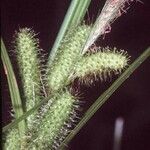
Carex frankii
Frank's Sedge · Bristly cattail sedge · Frank sedge
Description
Source: leafsnapCarex frankii, also known as Frank's sedge, is a widespread species of flowering plant in the family Cyperaceae, native to temperate eastern North America; Ontario, the central and eastern United States, and Coahuila, Mexico. Preferring to grow in wet, shady situations such as the edges of streams and ponds, and erosion resistant, it is recommended for rain gardens.
💡 In 1754, Lin Nai established the genus known as "true sedge." This plant is a significant component of China's flora and is the dominant grass species in the lowest layer of many forests. In some areas, true sedge makes up most of the lower vegetation.
Care Guide
💧 Water
Frank's sedge thrives in moist environments and has a preference for consistent moisture, though it can also tolerate wet conditions. It is ideally watered once a week. Commonly found in riparian zones, Frank's sedge has a growth cycle that adapts to varying soil moisture levels. It balances drought resistance with a preference for damp conditions.
☀️ Light Full sun
Frank's sedge does best in full light but can tolerate moderate illumination. Bright sunlight supports its healthy growth. In its native settings it is used to abundant sun yet can adjust to shadier situations. Excessive light or inadequate light can impede the plant's development.
What are the sunlight requirements for Frank's sedge?
Frank's sedge thrives best under full sun conditions, requiring above 6 hours of sunlight daily, but it can also grow in partial sun, with about 3-6 hours of sunlight. It's important to monitor the movement of sunlight through your garden to ensure that the plant receives an adequate balance of light and shade, as both overexposure and insufficient light can hinder its growth. In its natural habitat, Frank's sedge is accustomed to generous rays and can adapt to shaded environments.
How does artificial lighting support Frank's sedge indoors?
When natural sunlight is insufficient, especially during winter or in less sunny spaces, artificial lighting becomes vital for the optimal growth of indoor Frank's sedge plants. LED lights are recommended due to their ability to provide specific wavelengths required by the plant. Full sun plants need 30-50W/sq ft, partial sun plants require 20-30W/sq ft, and full shade plants need 10-20W/sq ft of artificial light. The light source should be placed 12-36 inches above the plant to mimic natural sunlight, and most plants benefit from 8-12 hours of light per day.
What symptoms indicate Frank's sedge is receiving inadequate light?
Symptoms of inadequate lighting in Frank's sedge include smaller new leaves than the older ones, leggy or sparse growth due to long spaces between leaves or stems, faster leaf drop to conserve resources, slower or halted growth as the plant enters survival mode, lighter-colored new leaves indicating a lack of chlorophyll, chlorosis where leaves lose their green color, sunscald showing as pale or necrotic spots from intense sunlight, leaf curling as a defense against too much sunlight, wilting from increased water loss, and leaf scorching visible as brown or crispy leaf edges.
How can I address light-related issues in Frank's sedge?
To address light-related issues in Frank's sedge, gradually increase sunlight exposure for outdoor plants by moving them to a sunnier spot each week. For indoor plants, consider moving them to a south-facing window or using artificial light if moving is not feasible. Ensure the plant receives at least 6 hours of direct sunlight or artificial light for optimal growth. If sunlight is blocked by trees or other obstructions, consider pruning to allow more light to reach your plants. For smaller plants, transplanting them during their dormant period to a sunnier location with good drainage can be beneficial. Note that while parts of the plant affected by insufficient sunlight may not recover, new growth should be healthy once proper light conditions are established.
🌡️ Temperature 5–32.2°C
Frank's sedge is a hardy species that performs well in temperatures between 41 and 89.6°F (5 and 32 ℃). In extreme cold or heat, adjustments may be needed to preserve optimal growing conditions.
What is the optimal temperature range for Frank's sedge?
Frank's sedge thrives in environments with a temperature range between 41 to 89.6°F (5 to 32°C). Although it has strong cold resistance, adjustments may be necessary in severe cold or intense heat to maintain optimal growth conditions. Special frost protection measures are usually not required during winter. However, if winter temperatures are expected to drop below -25°C, it's vital to provide cold protection by covering the plant with materials such as soil or straw. Additionally, watering the plant abundantly before the first freeze in autumn, so the soil remains moist and enters a frozen state, helps prevent drought and water scarcity for the plant during winter and early spring.
How does Frank's sedge handle low temperatures?
Frank's sedge is notably cold-tolerant, best thriving when the temperature stays above 5°C. However, during the winter, it should be kept above -20°C to avoid damage. Temperatures falling below -25°C might not cause visible harm during the winter, but could result in decreased sprouting or no sprouting at all come springtime. As a solution, in spring, it's recommended to remove any parts of the plant that have failed to sprout to promote new growth.
What are the signs and solutions for Frank's sedge in high temperatures?
During the summer, it's crucial to ensure Frank's sedge remains below 32°C to avoid stress from high temperatures. Should the temperature exceed 35°C, the plant's leaves may become lighter in color, curl, and become susceptible to sunburn, with severe cases leading to the wilting and drying of the entire plant. To combat these issues, trim away any sunburned and dry parts of the plant. Moving the plant to a shaded location or using a shade cloth can protect it from the midday and afternoon sun. Additionally, watering the plant in the morning and evening to keep the soil moist can help alleviate the stress caused by high temperatures.
💨 Humidity
🪴 Soil 5-7
🌱 Fertilizer
Frank's sedge needs extra nutrients to encourage healthy new growth. In spring, putting some compost around the plant's base can effectively supply the nutrition it requires. Fertilizing helps support vigorous growth and improves the plant's resistance to diseases and pests.
🪴 Pot & Repot
✂️ Pruning
Frank's sedge is a perennial plant characterized by its clumping growth habit and triangular stems. To keep it healthy and looking its best, prune it in early spring. Begin by cutting back any dead stems and removing old foliage to enhance air circulation around the plant. Regular pruning not only helps maintain a neat appearance but also rejuvenates the sedge. Be sure to use clean, sharp tools to minimize the risk of infection.
🌿 Propagating
🐛 Diseases & pets
☠️ Toxicity
Characteristics
- Plant Type
- Grass
- Life Cycle
- Perennial
- Genus
- Carex
- Family
- Cyperaceae
- Hardiness Zone
- 5-8
- Mature Height
- 30 cm to 61 cm
- Mature Spread
- 30 cm to 61 cm
- Leaf Color
- Green
- Leaf Type
- Semi-evergreen
- Flower Color
- Yellow, Green, Brown
- Flower Size
- 2.03 cm
- Bloom Time
- Early summer, Mid summer
- Planting Time
- Spring, Summer, Autumn
- Harvest Time
- Mid summer, Late summer, Early fall
- Native Area
- Mexico