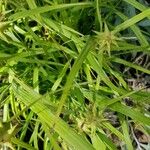
Carex grayi
Carex De Gray · Gray's Sedge · Mace Sedge · Asa Gray's Sedge · Bur Sedge
Description
Source: leafsnapCarex grayi, commonly known as Gray's sedge, is a species of flowering plant in the sedge family, Cyperaceae. It is native to eastern North America.
💡 In 1754, Lin Nai established the genus known as "true sedge." This plant is a significant component of China's flora and is the dominant grass species in the lowest layer of many forests. In some areas, true sedge makes up most of the lower vegetation.
Care Guide
💧 Water
Gray's Sedge originates from moist woodlands and thrives in consistently wet environments. It prefers soil that remains evenly damp. While it has moderate drought tolerance, weekly watering helps it flourish. As an herbaceous perennial, Gray's Sedge is perfect for rain gardens, where it aids in managing natural rainfall and supports ecosystem health.
What should I do if I give too much or too little water to my Gray's Sedge plant?
Proper watering is essential for the health of this beautiful ornamental grass. In the ground, watering issues can be resolved, but in a container, Gray's Sedge can quickly die from both overwatering and underwatering. Insufficient water can cause it to stop growing, resulting in drooping leaves, weak seed head production, and browning. On the other hand, overwatering can cause yellow leaves with brown tips. If you suspect improper watering, first determine whether it's getting too much or too little water. If it's being overwatered, stop watering immediately and wait for the soil to dry out. Once new growth appears, check the soil moisture and decide if it needs more water. If it's being underwatered, simply give it a deep drink and observe if it revives. It's important to remember that long, deep watering is superior to frequent shallow waterings. This encourages the growth of deep roots, making the grass more resistant to drought and watering-related issues.
How much should I water my Gray's Sedge plant?
The watering needs of Gray's Sedge depend on where it's planted. Generally, watering once a week is sufficient. However, in hot climates, watering once or twice a week during summer might be necessary. In moderate climates, watering once every seven days or more could be enough. Grasses in containers generally require more frequent watering compared to those planted in the ground. However, the location also matters since Gray's Sedge can thrive in full sun or part shade. Shaded grasses need less frequent watering compared to those in the ground. Only water Gray's Sedge when the soil is dry. There are a few key signs to look for if you're unsure when to water. Checking the soil's dryness by pressing your finger a couple of inches into it is one method. For potted grass, you can determine its dryness by weighing it with a portable scale or judging if the pot feels light due to lack of water. When the roots lack sufficient water, the blades may appear folded along their centers and thinner than usual. Despite its ability to tolerate drought, consistent waterings will reward you with beautiful color. In the wild, Gray's Sedge grows in open scrubland where it's exposed to extreme heat, bright sun, and intermittent rain. While it may seem like this grass would never need watering due to its drought resistance, it still requires care and attention. Gardeners agree that Gray's Sedge thrives best with regular waterings. When newly planted, Gray's Sedge needs more frequent watering until it establishes deep roots. In pots, the soil dries out quickly, especially if exposed to hot, direct sun. Test the soil every 3 to 4 days and water only when it feels dry. Gray's Sedge planted in the ground generally requires less watering, but it depends on the type of soil. Heavy clay soil retains moisture below the ground even if it feels dry at the surface, while sandy soils that drain quickly will need more frequent watering.
What do I need to be careful of when I water my Gray's Sedge in different seasons, climates, or during different stages of growth?
To determine if you are watering your grass enough, pay attention to how quickly it grows. Gray's Sedge, for example, can double in size within a year during the hottest months. If the weather is hot but the grass isn't growing well, adjust your watering schedule. In winter, you may only need to water once a month, but still check the soil for moisture. During the warmest months when the grass is actively growing, it will require more water. However, during winter and cooler months, the need for water will decrease significantly. Remember, it is crucial to let the soil dry out completely before watering Gray's Sedge.
☀️ Light Partial sun
Gray's Sedge grows best in locations where it receives a sufficient amount of sunlight each day, though it can tolerate conditions with either more or less light. However, constant exposure to very intense rays or prolonged periods in deep shade can be harmful to its health and development. Having originated in habitats with mixed light, it is resilient through various growth stages.
What are the sunlight requirements for Gray's Sedge?
Gray's Sedge requires various amounts of sunlight depending on its environment. It thrives best in partial sun, needing about 3-6 hours of sunlight, but it can also adapt to full sun or full shade conditions, which entails receiving more than 6 hours of sunlight. It's essential to watch the sunlight's movement through your garden to choose spots that provide the right balance of light and shade, optimizing the plant's happiness and growth.
How does Gray's Sedge adapt to different light conditions?
Gray's Sedge is adaptable to a wide range of light conditions, doing well in areas that receive an adequate amount of daily sunlight. However, extreme exposure to intense rays or prolonged periods in deep shade might be harmful. Originating from environments with mixed light conditions, this plant is resilient and can manage various stages of growth. When natural sunlight is insufficient, especially in spaces with less light or during winter, artificial lighting, such as LED lights providing specific wavelengths, is beneficial. The amount of artificial light required varies depending on the plant's sun exposure needs, ranging from 10-50W/sq ft.
What are the symptoms of light deficiency in Gray's Sedge?
Gray's Sedge shows several symptoms when it suffers from insufficient light exposure. These include smaller than usual new leaves, leggy or sparse growth, faster leaf drop, slower or halted new growth, lighter-colored new leaves, and symptoms of chlorosis. Conversely, excessive sunlight exposure can lead to sunscald, leaf curling, wilting, leaf scorching, and chlorosis, indicating an imbalanced exposure to sunlight which affects the plant's ability to thrive.
How can I optimize light conditions for Gray's Sedge indoors and outdoors?
To optimize light conditions for Gray's Sedge, gradually introduce the plant to sunnier spots each week to allow adaptation. This is advised for both indoor and outdoor plants, avoiding sudden changes in light exposure that could harm the plant. For indoor scenarios, consider using artificial lights if the plant is not feasible to move, ensuring it gets about 8 hours of light daily. Outdoors, moving plants to sunlight-rich spots or reducing obstructions like overhanging branches can improve light exposure. For plants directly planted in the ground, transplanting during the dormant period to a sunnier location with good drainage can significantly help.
🌡️ Temperature 5–35°C
Gray's Sedge is native to environments with temperatures ranging from 41 to 95 °F (5 to 35 ℃). Because it prefers that range, growers in hotter or colder regions may need to adjust conditions seasonally to keep the plant healthy.
What is Gray's Sedge?
Gray's Sedge, botanically known as Carex grayi, is a plant native to environments that experience a wide range of temperatures, typically between 41 to 95 °F (5 to 35 °C). It is adapted to thrive in these conditions, showing strong resistance to cold. This makes it suitable for growth in various climates, though adjustments may be necessary for those outside its preferred temperature range to maintain plant health.
How does Gray's Sedge handle cold weather?
Gray's Sedge possesses strong cold resistance, meaning specific frost protection measures are not generally required during winter. However, in extremely cold climates where winter temperatures are expected to plunge below -25°C, it's important to provide additional protection. This can include covering the plant with insulating materials such as soil or straw. Additionally, watering the plant abundantly before the first freeze of autumn to ensure the soil is moist going into the frozen state helps prevent drought and water scarcity for the plant during the colder months.
What should I do if Gray's Sedge is exposed to temperatures below -25°C?
If Gray's Sedge is exposed to temperatures falling below -25°C, you may not notice any immediate changes during the winter. However, there could be a decrease in sprouting or even no sprouting at all come springtime. In such cases, it is advised to remove any parts of the plant that have failed to sprout as a corrective measure once spring arrives.
How should Gray's Sedge be cared for in high temperatures?
During the summer, it's important to ensure that Gray's Sedge's environment does not exceed 35°C to avoid heat stress, as temperatures above 38°C can lead to lighter leaf colors, curling, susceptibility to sunburn, and in extreme cases, wilting and drying out of the plant. To protect and care for the plant in these conditions, trim away any sunburned or dried up parts of the plant. Relocate the plant to an area with shade from the midday and afternoon sun or use a shade cloth. Additionally, keep the soil moist by watering the plant in the morning and evening.
💨 Humidity
🪴 Soil 5-6
🌱 Fertilizer
Gray's Sedge needs extra nutrients to encourage healthy new growth. In spring, spreading compost around the base of the plant will effectively supply the required nourishment. Fertilizing helps support vigorous growth and enables the plant to better resist diseases and pests.
Why should I add fertilizer to my Gray's Sedge plant?
Fertilizing Gray's Sedge is important for a few reasons. Firstly, it provides your plant with the necessary nutrients for healthy new growth. Secondly, the additional nutrients also assist in maintaining the health of existing growth. Lastly, fertilization helps your plant build up its defenses against diseases and pests.
When should I fertilize my Gray's Sedge for the best results?
To ensure the survival of Gray's Sedge in the garden, it's important to understand the timing of fertilization. This plant doesn't need a lot of nutrients and doesn't require additional fertilization when it's dying back. While you can use diluted fertilizer at the beginning of the growing season, it's not the best option. Instead, it's recommended to apply mulch or compost around the base of the plant.
When is it not a good idea to fertilize my Gray's Sedge plant?
If you don't use packaged fertilizers, you can relax about when to stop feeding Gray's Sedge. Just apply a layer of compost or mulch in the spring, and that will be sufficient to keep Gray's Sedge content all year. No need to bother with mulching or composting in the dormant winter months.
What kind of fertilizer does my Gray's Sedge plant need?
There's no need to buy fertilizer from the garden center for Gray's Sedge. You can simply use compost in the spring to provide the necessary nutrients. Additionally, if you mulch your garden annually, the bark will also keep your plant well-nourished and content.
How can I give my Gray's Sedge plant the nutrients it needs to grow?
The steps for using mulch or compost for Gray's Sedge are the same. Start by putting a layer of the chosen material over the plant's base. If you decide to use both mulch and compost, use less compost. Adding mulch has dual benefits: it helps retain moisture in the soil and nourishes the plant.
🪴 Pot & Repot 2-3 years
When repotting Gray's Sedge, select a pot 1-2 inches (2.5–5.1 cm) larger that provides good drainage. Use a well-draining potting mix. Repot in spring or fall, making sure the root ball sits slightly lower than the rim of the flower pot. Water thoroughly after repotting and place in a warm spot with indirect sunlight.
✂️ Pruning
Pruning gray's sedge in early spring encourages healthy growth. By trimming dead foliage and removing old stems, you can rejuvenate and shape the plant. This practice prevents overcrowding, improves air circulation, and reduces the risk of disease, ensuring the plant has a robust appearance throughout the growing season.
🌿 Propagating
🐛 Diseases & pets
☠️ Toxicity
Characteristics
- Plant Type
- Grass
- Life Cycle
- Perennial
- Genus
- Carex
- Family
- Cyperaceae
- Hardiness Zone
- 5-9
- Mature Height
- 61 cm to 91 cm
- Mature Spread
- 61 cm
- Leaf Color
- Green
- Leaf Type
- Evergreen, Deciduous
- Flower Color
- Green, Brown
- Flower Size
- 2.54 cm to 7.62 cm
- Bloom Time
- Late spring, Early summer
- Planting Time
- Spring, Autumn
- Harvest Time
- Mid summer, Late summer, Early fall