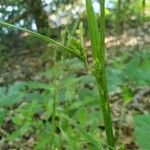
Carex grisea
Inflated Narrow-Leaf Sedge · Grey Sedge · Eastern Narrow-leaved Sedge · Grey Wood Sedge · Inflated Narrow-leaved Sedge
Description
Source: wikipedia (CC BY-SA)Carex grisea, the wood gray sedge or inflated narrow-leaf sedge, is a widespread species of flowering plant in the family Cyperaceae, native to eastern Canada and the central and eastern United States. It resembles and co‑occurs with Carex amphibola in alluvial areas in forests, but where they co‑occur, Carex grisea is usually found in sandier, more alkaline soils.
💡 In 1754, Lin Nai established the genus known as "true sedge." This plant is a significant component of China's flora and is the dominant grass species in the lowest layer of many forests. In some areas, true sedge makes up most of the lower vegetation.
Care Guide
💧 Water
☀️ Light Partial sun
Inflated narrow-leaf sedge occurs naturally in settings like forest understories and rocky areas, where natural shade is present. It prefers partial sun but can tolerate both full sun and full shade, illustrating its hardy, adaptable nature.
What are the sun requirements for Inflated narrow-leaf sedge (Carex grisea)?
Inflated narrow-leaf sedge (Carex grisea) thrives under specific sunlight conditions. It requires full sun, which is defined as receiving more than 6 hours of direct sunlight daily, or it can grow in partial sun, experiencing about 3-6 hours of sunlight. It's important to observe the patterns of sunlight in your garden to ensure you pick a location that offers a good balance of light and shade, aligning with these requirements to guarantee the plant's well-being.
🌡️ Temperature 5–35°C
Inflated narrow-leaf sedge can tolerate a wide range of temperatures, but its distribution may still be constrained by different combinations of moisture and heat. It performs best in warm summer conditions with adequate rainfall or watering. Extended stretches of cloudy, rainy weather and prolonged high temperatures can raise the likelihood of Inflated narrow-leaf sedge dying. In winter, proper protection against cold can increase the plant’s survival rate.
What is the Inflated narrow-leaf sedge?
The Inflated narrow-leaf sedge is known scientifically as Carex grisea. It is a type of sedge, distinguished by its narrow leaves. Further detailed information, including its essential characteristics or symptoms, if any, was not provided.
💨 Humidity
🪴 Soil 6-7
🌱 Fertilizer
Inflated narrow-leaf sedge needs extra nutrients to encourage healthy new growth. In spring, spreading compost around the plant’s base can effectively supply the necessary nourishment. Fertilizing helps support vigorous growth and improves the plant’s resistance to diseases and pests.
🪴 Pot & Repot
✂️ Pruning
Inflated narrow-leaf sedge thrives with early spring pruning. This involves trimming back dead leaves and thinning out crowded spots to improve air circulation. Be careful not to prune too heavily, as this can stress the plant. Consistent maintenance encourages healthy growth, controls its spread, and ensures robust clumps.
🌿 Propagating
🐛 Diseases & pets
☠️ Toxicity
Characteristics
- Plant Type
- Grass
- Life Cycle
- Perennial
- Genus
- Carex
- Family
- Cyperaceae
- Hardiness Zone
- 4-9
- Mature Height
- 15 cm to 91 cm
- Mature Spread
- 20 cm to 30 cm
- Leaf Color
- Light Green
- Leaf Type
- Semi-evergreen
- Flower Color
- White, Yellow, Green
- Bloom Time
- Mid spring, Late spring
- Planting Time
- Spring, Summer, Autumn
- Harvest Time
- Early summer, Mid summer