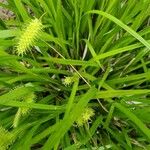
Carex hystericina
Porcupine Sedge · Bottlebrush sedge
Description
Source: leafsnapCarex hystericina is a species of sedge known by the common names bottlebrush sedge and porcupine sedge. It is native to much of North America including most of southern Canada and most of the United States. It grows in wet habitat such as wetlands and riverbanks, especially on calcareous soils. In the right conditions it can become very abundant and even weedy. This sedge produces dense or loose clumps of triangular stems up to a meter tall from short rhizomes. The inflorescence is several centimeters long and is accompanied by a bract which is longer than the spikes. The fruits are coated in perigynia with pointed, toothed tips. It is highly recommend for sedge meadow restorations.
💡 In 1754, Lin Nai established the genus known as "true sedge." This plant is a significant component of China's flora and is the dominant grass species in the lowest layer of many forests. In some areas, true sedge makes up most of the lower vegetation.
Care Guide
💧 Water
Bottlebrush sedge is a plant native to wetlands, and it thrives in consistently moist soil and high humidity. It does well with weekly watering and can tolerate short periods of dryness. Usually grown outdoors, this plant benefits from seasonal rainfall, which helps meet its moisture needs and promotes lush growth.
☀️ Light Full sun
Bottlebrush sedge flourishes best with abundant sunlight, although it can adjust to locations with less light. Coming from habitats with plentiful sunlight, extreme or insufficient exposure could impede its growth process. The varying growth phases of bottlebrush sedge might not necessitate changes in the amount of sun exposure.
What are the sunlight requirements for Bottlebrush sedge?
Bottlebrush sedge requires full sun, defined as over 6 hours of sunlight, for optimal growth, but it can also adapt to partial sun, which is about 3-6 hours of sunlight. It's crucial to monitor the movement of sunlight through your garden to select locations offering the right mix of light and shade, ensuring your plants are happy. Originating from environments with ample daylight, the growth cycle of Bottlebrush sedge can be disrupted by both excessive and inadequate sun exposure, which does not vary across different growth stages.
How can artificial lighting benefit indoor Bottlebrush sedge plants?
Indoor Bottlebrush sedge plants require adequate lighting to thrive, especially when natural sunlight is insufficient such as during winter or in less sunny areas. Artificial lights provide a critical solution by promoting faster, healthier growth. LED lights are recommended due to their ability to supply plants with specific wavelengths needed. For full sun plants, 30-50W/sq ft is necessary, partial sun plants need 20-30W/sq ft, and full shade plants require 10-20W/sq ft. The light source should be placed 12-36 inches above the plant, mimicking natural daylight for 8-12 hours per day.
What are the symptoms of inadequate light exposure in Bottlebrush sedge?
Inadequate lighting can cause several issues for Bottlebrush sedge, including smaller new leaves, leggy or sparse growth, accelerated leaf drop, reduced or halted growth, paler new leaves, chlorosis, sunscald, leaf curling, wilting, and leaf scorching. These symptoms result from poor light conditions that affect the plant's ability to undergo photosynthesis and maintain its essential processes. Overexposure to sunlight can lead to some of these symptoms, such as chlorosis and leaf scorching, indicating the need for a balanced light environment.
How can I address Bottlebrush sedge's light exposure issues?
To optimize growth, gradually move Bottlebrush sedge to sunnier locations each week until they receive at least 6 hours of direct sunlight daily. Utilize a south-facing window and keep curtains open for maximum exposure. For indoor plants, consider artificial lighting for at least 8 hours daily, especially if repositioning the plant isn't feasible. Outdoors, adapt your plants to sunlight changes gently to prevent sunburn. Removing obstructions or transplanting to sunnier areas can also improve sunlight access. Note that parts of the plant with prior damage from insufficient light might not recover, but new growth should be healthy with adequate light.
🌡️ Temperature 10–35°C
The plant 'Bottlebrush sedge' is indigenous to climates with a significant temperature variation, favoring a moderate climate. Ideally, it flourishes in temperatures ranging from 50 to 95 °F (10 to 35 ℃). Minor adaptations might be necessary during extreme seasonal changes to mimic its original habitat.
What is the ideal climate for Bottlebrush sedge?
Bottlebrush sedge, or Carex hystericina, flourishes within a broad temperature range, thriving best in a temperate climate. The plant prefers temperatures between 50 to 95°F (10 to 35°C), which constitutes its ideal growing conditions. Although it possesses strong cold resistance and can generally withstand winter without special frost protection, it's important to provide extra care when temperatures are expected to drop below -25°C. Before winter's first freeze, it's advisable to water the plant thoroughly to ensure the soil remains moist, facilitating a protective frozen state that helps prevent drought and water scarcity during the colder months.
How does Bottlebrush sedge handle low temperatures?
Bottlebrush sedge exhibits significant cold tolerance, optimally growing in conditions above 10°C. During winter, it is preferable to keep the temperature above -15°C. However, when temperatures plunge below -25°C, the plant might not show immediate distress, but its ability to sprout in spring could be diminished or completely halted. It's advisable to remove any non-sprouting parts in spring as part of the plant's care routine to promote healthier growth.
What care is required for Bottlebrush sedge in high temperatures?
In the warmer summer months, it's crucial to ensure that the temperature around Bottlebrush sedge does not exceed 35°C. Exposure to temperatures above 41°C might lead to the plant's leaves becoming discolored, curling, and becoming prone to sunburn. In severe cases, the plant could wilt and dry out entirely. To mitigate these effects, affected areas should be trimmed away. Moving the plant to a spot with ample shade during the midday and afternoon sun or utilizing shade cloth can provide necessary protection. Additionally, watering the plant in the morning and evening helps maintain soil moisture, further safeguarding it from the extremes of high temperatures.
💨 Humidity
🪴 Soil 5-7
🌱 Fertilizer
To encourage robust new growth, Bottlebrush sedge needs extra nutrients. Distributing compost around the plant's base during springtime can successfully supply the essential nourishment it needs. The act of fertilizing bolsters healthy growth and aids the plant in fending off diseases and pests.
🪴 Pot & Repot
✂️ Pruning
The Bottlebrush sedge is known for its distinctive seed heads that look like bottlebrushes. To keep it healthy, prune the plant in early spring to remove any damaged leaves and old stalks, which will encourage new growth. Regular pruning not only increases the plant's density but also helps prevent diseases. Be sure to use clean tools to avoid infections, ensuring your plant remains healthier and more attractive.
🌿 Propagating
🐛 Diseases & pets
☠️ Toxicity
Characteristics
- Plant Type
- Grass
- Life Cycle
- Perennial
- Genus
- Carex
- Family
- Cyperaceae
- Hardiness Zone
- 6-10
- Mature Height
- 0.25 m to 1.07 m
- Mature Spread
- 30 cm to 61 cm
- Leaf Color
- Green, Dark Green
- Leaf Type
- Evergreen
- Flower Size
- 2.54 cm to 5.08 cm
- Bloom Time
- Late spring, Early summer
- Planting Time
- Spring, Summer, Autumn
- Harvest Time
- Mid summer, Late summer
- Native Area
- Mexico