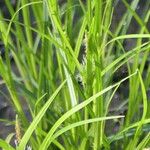
Carex intumescens
Greater Bladder Sedge · Swollen sedge · Bladder Sedge · Shining Bur Sedge
Description
Source: leafsnapCarex intumescens, also known as bladder sedge, is a species of Carex native to Canada and the eastern United States.
💡 In 1754, Lin Nai established the genus known as "true sedge." This plant is a significant component of China's flora and is the dominant grass species in the lowest layer of many forests. In some areas, true sedge makes up most of the lower vegetation.
Care Guide
💧 Water
Greater bladder sedge thrives in moist environments and requires a stable water supply for healthy growth. While it is moderately drought-tolerant, this plant performs best when moisture levels are consistent. Ideally, it should be watered weekly, and natural rainfall can further enhance its growth. As an herbaceous perennial, it is commonly cultivated outdoors.
How should I water my Greater bladder sedge plant?
When watering the Greater bladder sedge, it is important to use filtered water at room temperature. Tap water can have harmful particles that can affect the plant's health. The Greater bladder sedge prefers warm water, so it is best to avoid cold water, which can shock the plant. Additionally, overhead watering should be avoided as it can cause foliage issues. Instead, apply filtered room temperature water directly to the soil until it is completely soaked. This will benefit the plant by providing moisture to the roots and allowing them to spread and gather necessary nutrients.
What do I need to do if I give my Greater bladder sedge plant too much or too little water?
Overwatering is a common issue for Greater bladder sedge and can lead to wilting, yellowing leaves, and diseases like root rot, mold, and mildew. Underwatering is less common, but can cause brittle, brown leaves. It's important to notice signs of overwatering early, as some diseases may be irreversible if not addressed promptly. Reduce watering if you see early signs and check the soil's drainage. Replace poorly draining soil with a loose potting mix. If your sedge shows signs of underwatering, simply increase your watering frequency until the signs improve.
How frequently should I give water to my Greater bladder sedge?
If your Greater bladder sedge is in a pot, you can check if it needs water by sticking your finger into the soil. If the top two to three inches of soil feel dry, then it's time to water it. If you have this plant growing outdoors in the ground, you can use the same method to determine if it needs water. When the top few inches of soil have dried out, it's time to give it some water. Usually, during the spring and early fall, watering once a week is sufficient. However, during extremely hot weather, you may need to increase the frequency to two or more times per week. Nonetheless, mature and well-established Greater bladder sedges can typically handle dry conditions well.
How much water does my bladder sedge plant need?
When watering your Greater bladder sedge, don't be afraid to give it a generous amount of water. Make sure the first two to three inches of soil are dry before watering, and then fully saturate the soil. This means enough water should be added to make excess water flow out of the drainage holes in the pot. If you don't see excess water draining, you may not have given enough water. However, be careful not to let water build up in the soil, as this can be harmful to the plant. On the other hand, if water is not draining properly, it could be due to poorly draining soil, which is not good for the plant's health. If the plant is outdoors, receiving about 1 inch of rain per week should be enough.
How do I water my Greater bladder sedge when it's growing at different stages?
The water requirements of the Greater bladder sedge can vary at different growth stages. In the early years or after transplanting, you will need to provide more water to support root growth. As the plant matures, it will require less water. Additionally, during the bloom period, the Greater bladder sedge may need extra water to support flower development.
☀️ Light Partial sun
Greater bladder sedge does best in lighting that is neither too bright nor too dim. Its health and vigorous growth are maximized by a balance of sun and shade, resembling its natural habitat. Excessive exposure can cause its health to decline, while too little light may restrict its growth.
What are the sunlight requirements for Greater bladder sedge?
Greater bladder sedge requires a balanced light condition, thriving in environments that offer a mix of sun and shade throughout the day. It does well in partial sun, receiving about 3-6 hours of sunlight daily, and can also tolerate full shade, which is defined as less than 3 hours of direct sunlight per day. Observing how sunlight moves through your garden will help you choose the ideal locations for your plants, ensuring they receive the right amount of light for optimal growth. It's noted that extreme sunlight exposure or very limited light can negatively affect the plant's health, suggesting a careful balance is necessary for its well-being.
What are some artificial lighting tips for indoor Greater bladder sedge?
For indoor Greater bladder sedge, especially when natural sunlight is insufficient, artificial lighting can be a beneficial supplement. It is recommended to use LED lights as they can be customized to provide specific light wavelengths needed by the plant. Full sun plants should receive 30-50W/sq ft of artificial light, partial sun plants 20-30W/sq ft, and full shade plants 10-20W/sq ft. The light source should be placed 12-36 inches above the plant, and the duration should mimic natural daylight hours, typically 8-12 hours per day, to promote healthy growth.
What symptoms indicate light deficiency in Greater bladder sedge?
Symptoms of light deficiency in Greater bladder sedge include smaller than usual new leaves, leggy or sparse growth, more rapid leaf drop, halted or significantly slower new growth, and paler, lighter-colored leaves. Additionally, too much sunlight can cause chlorosis (loss of green color), sunscald (damage from intense sunlight exposure), leaf curling (to minimize water loss), wilting (drooping due to loss of turgor pressure), and leaf scorching (brown, dry edges on leaves). These symptoms reflect the plant's struggle with inappropriate light levels, indicating the need for adjustments to their lighting environment.
How can I manage light-related issues for indoor and outdoor Greater bladder sedge?
To manage light-related issues for Greater bladder sedge, gradual adjustment is key. For indoor plants, it's advised to slowly transition them to brighter spots, aiming for 3-6 hours of direct sunlight a day, or use artificial lighting such as desk or ceiling lamps for at least 8 hours daily for plants that can't be moved easily. Outdoors, gradually moving your plants to sunnier locations each week will help them adapt without the risk of sunburn. Additionally, for plants on the ground, reducing obstructions by pruning or transplanting during a plant's dormant period to a sunnier location can significantly improve light exposure. Remember, parts of the plant that have suffered from insufficient light might not recover, but new growth should be healthy with adequate light adjustments.
🌡️ Temperature 5–32.2°C
The Greater bladder sedge thrives in regions having temperate climates, ideally flourishing in temperatures ranging from 41 to 89.6 °F (5 to 32 ℃). It may necessitate adjusting the temperature based on the time of year in order to mimic this optimal range.
What is the native climate for Greater bladder sedge?
Greater bladder sedge, also known by its botanical name Carex intumescens, is native to regions with temperate climates. It thrives best when the temperature ranges between 41 to 89.6 °F (5 to 32 ℃). To ensure optimal growth, it may be necessary to adjust temperatures depending on the season to replicate this preferred environmental range.
Is Greater bladder sedge cold-tolerant?
Yes, Greater bladder sedge is highly cold-tolerant and does not require additional frost protection measures during the winter months. However, it's recommended to water the plant generously before the first freeze in autumn. This practice ensures the soil around the plant remains moist and enters a frozen state, helping to prevent drought and water scarcity for the plant during the winter and early spring seasons.
How should Greater bladder sedge be cared for in low temperatures?
Greater bladder sedge is extremely cold-tolerant, with the ability to withstand winter temperatures above -30°C. However, if temperatures drop below this threshold, the plant may exhibit decreased sprouting or fail to sprout during the springtime, without showing noticeable changes during the winter. If this occurs, it is advisable to remove any parts of the plant that have failed to sprout in the spring as a solution to encourage healthier growth.
How does high temperature affect Greater bladder sedge and what are the solutions?
Greater bladder sedge struggles in high temperatures, particularly when the temperature exceeds 32°C. Under such conditions, its growth halts, and the plant becomes more susceptible to rot. To mitigate the effects of high temperatures, sunburned and dried-up parts of the plant should be trimmed away. The plant should be moved to a location that provides shade during the midday and afternoon sun, or a shade cloth can be used to create a suitable shaded area. Additionally, watering the plant in the morning and evening will help keep the soil moist, further protecting it from heat stress.
💨 Humidity
🪴 Soil 5-6
🌱 Fertilizer
One fertilizer application in spring is typically enough for Greater bladder sedge, though multiple feedings can boost growth. Fertilize once every month to a month and a half. Fertilization improves leaf appearance and function, helping maintain even color and a healthy texture. It also promotes root development and nutrient uptake for long-term plant health.
🪴 Pot & Repot
✂️ Pruning
Greater bladder sedge thrives in wet conditions and is characterized by its swollen stems. To encourage new growth and improve air circulation, prune away old foliage from early to late spring. Regular pruning helps control the plant's size and reduces the risk of disease. For precise cuts that enhance the plant's vigor and appearance, always use clean, sharp tools.
🌿 Propagating
🐛 Diseases & pets
☠️ Toxicity
Characteristics
- Plant Type
- Herb
- Life Cycle
- Perennial
- Genus
- Carex
- Family
- Cyperaceae
- Hardiness Zone
- 4-7
- Mature Height
- 30 cm to 76 cm
- Mature Spread
- 30 cm to 61 cm
- Leaf Color
- Green
- Leaf Type
- Semi-evergreen
- Flower Size
- 2.03 cm to 15.24 cm
- Bloom Time
- Late spring, Early summer
- Planting Time
- Spring, Summer, Autumn
- Harvest Time
- Mid summer, Late summer