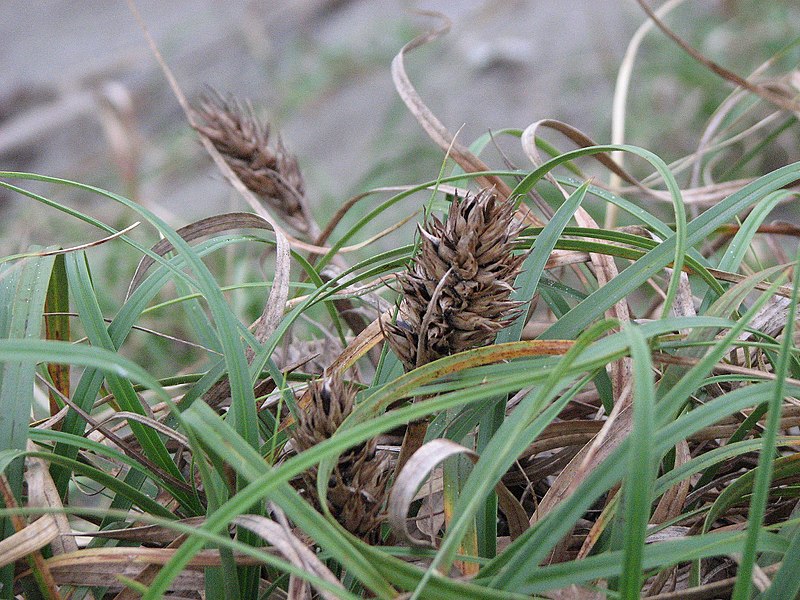
Carex kobomugi
Japanese sedge · Asiatic sand sedge · Asian sand sedge
Description
Source: leafsnapCarex kobomugi is a species of sedge, known as the Japanese sedge or Asiatic sand sedge, that lives in sandy coastal areas of eastern Asia, and has become an invasive species in the north-eastern United States.
💡 In 1754, Lin Nai established the genus known as "true sedge." This plant is a significant component of China's flora and is the dominant grass species in the lowest layer of many forests. In some areas, true sedge makes up most of the lower vegetation.
Care Guide
💧 Water
Japanese sedge thrives in coastal environments, where it prefers consistent humidity and regular watering, ideally once a week. It grows well in sandy soils that drain quickly while retaining moisture, making it well-suited for shoreline conditions.
☀️ Light Full sun
Japanese sedge prefers plentiful light typically found in open areas, though it can tolerate spots with less daily sunlight. Adequate light supports its healthy growth. Both insufficient and excessive light can negatively affect its condition. Having originated in a sunny habitat, it continues to prefer similar lighting.
What are the sunlight requirements for Japanese sedge?
Japanese sedge requires full to partial sunlight to thrive, necessitating more than 6 hours of sunlight per day for 'full sun' conditions, and about 3-6 hours for 'partial sun' conditions. It's essential to observe the movement of sunlight through your garden to choose optimal spots for your plants, ensuring a balance of light and shade that matches their needs.
How does light affect the growth of Japanese sedge?
Light plays a crucial role in the healthy growth of Japanese sedge, which prefers ample light exposure typically found in open locations. However, it can tolerate lower light conditions to some extent. Insufficient or excessive light can negatively affect the plant's health, indicating its preference for conditions similar to its original habitat with plentiful sunlight. When natural light is not enough, especially indoors or during less sunny seasons, artificial lighting such as LED lights can be used to provide the necessary wavelengths and intensity (30-50W/sq ft for full sun plants, 20-30W/sq ft for partial sun plants, and 10-20W/sq ft for full shade plants). The light should be placed 12-36 inches above the plant, simulating natural daylight for 8-12 hours per day.
What are the signs of inadequate lighting for Japanese sedge?
Inadequate lighting can cause several symptoms in Japanese sedge, such as smaller new leaves, leggy or sparse growth, faster leaf drop, slowed or halted growth, and lighter-colored or yellowing leaves indicating chlorosis. Excessive sunlight, conversely, may lead to sunscald, leaf curling, wilting, leaf scorching, and the breakdown of chlorophyll. These symptoms highlight the plant's need for optimal light conditions, crucial for maintaining its health and vibrant appearance.
How can I address light-related issues for Japanese sedge?
To combat light-related issues in Japanese sedge, gradually acclimate the plant to its ideal lighting conditions, aiming for at least 6 hours of direct sunlight daily for outdoor plants and utilizing artificial lighting for indoor plants if necessary. For outdoor plants, avoid abrupt changes to prevent sunburn by gradually relocating them to sunnier spots each week. Indoor plants benefit from maximum exposure to natural light through south-facing windows or professional grow lights. Removing obstructions or transplanting to sunnier locations are options for plants in the ground. Note that some damage from insufficient light may be irreversible, but new growth should be healthy with proper light exposure.
🌡️ Temperature 10–32.2°C
Japanese sedge is adapted to the temperate climate of its native habitat, doing best at temperatures between 10 and 32°C (50 to 89.6°F). During hotter seasons, consider lessening heat exposure to maintain optimal growth.
What is the native climate for Japanese Sedge?
Japanese sedge, known botanically as Carex kobomugi, thrives in a temperate climate, preferring temperatures within the range of 10 to 32°C (50 to 89.6°F). This makes it well-suited to environments that do not experience extreme heat, advising a reduction in heat exposure during warmer seasons for optimal growth. Despite its strong cold resistance, where special frost protection measures are generally not necessary, precautions should still be taken if winter temperatures are expected to plummet below -25°C by using protective coverings such as soil or straw to retain soil moisture and prevent drought during colder months.
How does Japanese Sedge respond to low temperatures?
Japanese sedge exhibits significant cold tolerance, optimally thriving when temperatures stay above 10°C. During the winter season, ensuring the temperature does not fall beneath -15°C is crucial, and special attention is needed if temperatures dip below -25°C. While the plant itself might not show noticeable changes immediately during winter at these lower temperatures, there could be subsequent effects on its growth pattern, such as a decrease in sprouting or a lack of sprouting come springtime. To mitigate this, any parts of the plant that have failed to sprout by spring should be removed.
How should Japanese Sedge be cared for in high temperatures?
In the summer months, it's important to ensure that the environment for Japanese sedge remains below 32°C, as exposure to temperatures above 35°C can cause its leaves to lighten in color, curl, become prone to sunburn, and in severe cases, lead the entire plant to wilt and dry out. To combat these symptoms, sunburned and dried-up sections of the plant should be trimmed away. Additionally, moving the plant to a shaded location or utilizing a shade cloth can provide protection against the harsh midday and afternoon sun. Keeping the soil moist by watering the plant in the morning and evening is also advisable to prevent heat stress.
💨 Humidity
🪴 Soil 6-7
🌱 Fertilizer
Japanese sedge needs extra nutrients to encourage healthy new growth. In spring, placing compost around the plant’s base can effectively supply the necessary nourishment. Fertilizing helps support vigorous growth and improves the plant’s resistance to diseases and pests.
🪴 Pot & Repot
✂️ Pruning
Japanese sedge is characterized by its dense, tufted growth and a tendency to spread. For the best results, prune it in early spring to remove any dead leaves and encourage new growth. Use sharp shears and be careful not to over-prune, as this can stress the plant. Proper pruning helps improve air circulation, which reduces the risk of diseases and pests.
🌿 Propagating
🐛 Diseases & pets
☠️ Toxicity
Characteristics
- Plant Type
- Grass
- Life Cycle
- Perennial
- Genus
- Carex
- Family
- Cyperaceae
- Hardiness Zone
- 6-8
- Mature Height
- 10 cm to 20 cm
- Mature Spread
- 30 cm to 61 cm
- Leaf Color
- Green, Dark Green
- Leaf Type
- Evergreen
- Flower Color
- Yellow, Green, Bronze
- Flower Size
- 1.27 cm
- Bloom Time
- Late spring, Early summer
- Planting Time
- Spring, Summer, Autumn
- Harvest Time
- Mid summer, Late summer
- Native Area
- Russia, Japan, Koppen, South Korea, China