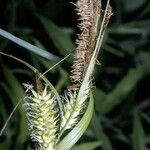
Carex lacustris
Lakebank Sedge · Hairy sedge · Lake bank sedge · Lake Sedge · Common Lake Sedge
Description
Source: leafsnapCarex lacustris, known as lake sedge (lucastris is from the Latin lacus, or lake), is a tufted grass-like perennial of the sedge family (Cyperaceae), native to southern Canada and the northern United States. C. lacustris us an herbaceous surface-piercing plant that grows in water up to 50 cm (1.6 ft) deep, and grows 50–150 cm (1.6–4.9 ft) tall. It grows well in marshes and swampy woods of the boreal forest, along river and lake shores, in ditches, marshes, swamps, and other wetland habitat. It grows on muck, sedge peat, wet sand or silt, in filtered or full sunlight.It's a common sedge that dominates many native wetlands, or intermixes with other sedges and grasses, and its ability to spread by rhizomes makes it a good colonizer for a large area.
💡 In 1754, Lin Nai established the genus known as "true sedge." This plant is a significant component of China's flora and is the dominant grass species in the lowest layer of many forests. In some areas, true sedge makes up most of the lower vegetation.
Care Guide
💧 Water
Hairy sedge thrives in wetland environments and needs high moisture and consistent hydration. It should be watered weekly, especially during periods of active growth when its water requirements increase significantly. Since this plant is often grown outdoors, meeting its moisture needs is essential for its proper care and maintenance.
☀️ Light Full sun
Hairy sedge prefers abundant sunlight but can tolerate moderate to low light levels. It comes from habitats where sunlight is plentiful. Insufficient light may restrict its growth, while excessive sun is generally tolerated and does not cause significant harm.
What are the sunlight requirements for Hairy sedge?
Hairy sedge requires full sun, which means it needs above 6 hours of sunlight to thrive optimally. However, it can also tolerate partial sun and full shade conditions, which equate to about 3-6 hours of sunlight. It's essential to observe the movement of sunlight through your garden and select spots that provide a balance of light and shade, ensuring the plants' happiness and health.
Can Hairy sedge grow in artificial lighting?
Yes, Hairy sedge can grow in artificial lighting, which is especially useful in conditions where natural sunlight is insufficient, such as during winter or in less sunny spaces. Artificial lights, like LED lights, can be customized to provide specific wavelengths needed for the plant's growth, ensuring faster, healthier development. Full sun plants require 30-50W/sq ft, partial sun plants 20-30W/sq ft, and full shade plants 10-20W/sq ft of artificial light. The light source should be placed 12-36 inches above the plant, mimicking natural sunlight as closely as possible, and provided for 8-12 hours per day to support optimal growth.
What symptoms indicate Hairy sedge is receiving inadequate light?
Symptoms of inadequate light for Hairy sedge include smaller new leaves, leggy or sparse growth, faster leaf drop, slower or no new growth, lighter-colored new leaves, chlorosis or yellowing leaves, sunscald, leaf curling, wilting, and leaf scorching. These symptoms vary from light deficiency issues to problems associated with excessive sunlight exposure, each indicating the plant's struggle to maintain healthy growth under less than ideal light conditions.
How can I address light-related issues in Hairy sedge?
To address light-related issues in Hairy sedge, for indoor plants, gradually move them to a sunnier location each week until they receive at least 6 hours of direct sunlight daily. Use a south-facing window and keep curtains open during the day. If necessary, provide additional light with a desk or ceiling lamp for at least 8 hours daily, or invest in professional plant grow lights. For outdoor plants, move them gradually to better sunlight spots to avoid sunburn. Reducing obstructions by pruning trees or shrubs and transplanting smaller plants to sunnier locations can also help. Note that parts of the plant that have suffered from insufficient light may not recover, but new growth should be healthy with improved light conditions.
🌡️ Temperature 5–32.2°C
Hairy sedge is native to habitats with temperatures ranging from 41 to 89.6 °F (5 to 32 ℃). For best growth, keep conditions within this temperature range. Seasonal adjustments may be necessary.
What is the optimal temperature range for growing hairy sedge?
Hairy sedge, or Carex lacustris, thrives in environments with temperatures ranging from 41 to 89.6 °F (5 to 32 °C). To ensure optimum growth, it's crucial to maintain temperatures within this range. Seasonal adjustments might be necessary to accommodate the plant’s temperature needs.
Does hairy sedge require any special care during winter to protect against frost?
Hairy sedge is highly cold-tolerant and does not require additional frost protection measures during winter. However, it's recommended to water the plant generously before the first freeze in autumn. This practice ensures the soil remains moist when it enters a frozen state, which helps prevent drought and water scarcity for the plant during winter and early spring.
How does hairy sedge respond to temperatures below -25°C?
Although hairy sedge is extremely cold-tolerant, it's important to maintain winter temperatures above -25°C. Dropping below this temperature might not result in noticeable changes during winter, but it could lead to a decrease in sprouting or even prevent sprouting during springtime. If this occurs, removing any parts of the plant that have failed to sprout is recommended in spring.
What should I do if the temperature exceeds 32°C and affects my hairy sedge?
Hairy sedge is not tolerant of high temperatures. When the temperature rises above 32°C, the plant's growth will stop, and it may become more susceptible to rot. To protect the plant in such conditions, trim away any sunburned or dried-up parts, move the plant to a shadier location or use a shade cloth to protect it from the midday and afternoon sun. Additionally, watering the plant in the morning and evening can help keep the soil moist and support the plant through the heat.
💨 Humidity
🪴 Soil
🌱 Fertilizer
🪴 Pot & Repot
✂️ Pruning
Hairy sedge needs annual care, including pruning in early spring to encourage healthy growth. Remove dead leaves to improve air circulation and prevent disease, but be careful not to overcut. Regular pruning helps maintain the plant's size and shape, promoting strong growth throughout the season.
🌿 Propagating
🐛 Diseases & pets
☠️ Toxicity
Characteristics
- Plant Type
- Grass
- Life Cycle
- Perennial
- Genus
- Carex
- Family
- Cyperaceae
- Hardiness Zone
- 5-7
- Mature Height
- 0.52 m to 1.22 m
- Mature Spread
- 61 cm to 91 cm
- Leaf Color
- Dark Green
- Leaf Type
- Semi-evergreen
- Flower Color
- White, Yellow, Green, Brown
- Bloom Time
- Late spring, Early summer
- Planting Time
- Spring, Summer
- Harvest Time
- Mid summer, Late summer