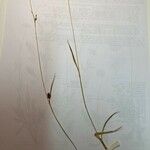
Carex lasiocarpa
Slender sedge · Hairy Fruited Sedge · Slender-leaved Sedge · Woolly-Fruit Sedge · Woollyfruit sedge
Description
Source: leafsnapCarex lasiocarpa is a broadly distributed species of wetland sedge sometimes known as woollyfruit sedge or slender sedge. It is considered a species of Least Concern by the IUCN Red List due to its extensive range (much of North America, Europe, and Asia) with many stable populations.
💡 In 1754, Lin Nai established the genus known as "true sedge." This plant is a significant component of China's flora and is the dominant grass species in the lowest layer of many forests. In some areas, true sedge makes up most of the lower vegetation.
Care Guide
💧 Water
Woollyfruit sedge naturally grows in boggy areas, so it thrives in consistently moist soil and can tolerate moderate drought. To replicate its natural conditions, it needs weekly watering. When grown outdoors in temperate climates, woollyfruit sedge benefits greatly from rainwater, which provides both irrigation and essential nutrients.
☀️ Light Full sun
Woollyfruit sedge grows best in locations with plenty of sunlight, but it can also tolerate spots with a mix of sun and shade or even mostly shaded areas. Too little light can impede its healthy growth, while too much can cause stress to the plant.
What are the sunlight requirements for Woollyfruit Sedge (Carex lasiocarpa)?
Woollyfruit Sedge requires full sun, which means it needs more than 6 hours of sunlight daily to thrive optimally. It can also grow in partial sun or full shade conditions, requiring about 3-6 hours of sunlight. It's important to monitor the movement of sunlight through your garden to ensure your plants receive the ideal amount of light and shade for their happiness.
What are the essential conditions for the growth of Woollyfruit Sedge?
Woollyfruit Sedge thrives best when exposed to abundant sunlight but is versatile enough to tolerate a mix of sun and shade, or even predominantly shady conditions. Insufficient light might slow its growth, whereas excessive exposure can stress the plant. In indoor settings, artificial lighting can be crucial for optimal growth, especially in winter or less sunny locations. LEDs are preferred for indoor plants, requiring 30-50W/sq ft for full sun plants, 20-30W/sq ft for partial sun plants, and 10-20W/sq ft for full shade plants. The artificial light should be positioned 12-36 inches above the plant for 8-12 hours per day to mimic natural daylight conditions effectively.
What symptoms indicate Woollyfruit Sedge is receiving inadequate light?
Symptoms of light deficiency in Woollyfruit Sedge include smaller new leaves, leggy or sparse growth, premature leaf drop, slower or halted growth, pale new leaves, and symptoms of overexposure such as chlorosis (yellowing leaves), sunscald, leaf curling, wilting, and leaf scorching. These signs suggest the plant is not receiving the appropriate amount of sunlight it needs for healthy growth.
What solutions can help Woollyfruit Sedge receive adequate light?
To ensure Woollyfruit Sedge receives adequate light, gradually relocate the plant to a sunnier spot each week until it gets at least 6 hours of direct sunlight daily. A south-facing window can provide maximum sunlight for indoor plants. If moving the plant isn't feasible, consider using artificial lighting, like plant grow lights, for at least 8 hours daily. For outdoor plants, similarly, move them gradually to sunnier locations to prevent sunburn. If trees block sunlight, prune them to improve light access. For smaller plants, consider transplanting them during their dormant period to a brighter location with good drainage. It's essential to note that parts of the plant affected by insufficient sunlight might not recover, but new growth should be healthy with improved light conditions.
🌡️ Temperature 20–37.8°C
Woollyfruit sedge is a plant that does best in native temperature ranges of 68 to 100.4°F (20 to 38℃). It favors mild to warm conditions and may require seasonal temperature adjustments, with a consistent warmth being ideal.
What are the ideal temperature conditions for Woollyfruit sedge?
Woollyfruit sedge thrives in temperatures ranging from 68 to 100.4°F (20 to 38°C), preferring mild to warm conditions. It is a heat-loving plant that can be harmed by cold temperatures. During the cooler months, such as autumn, it's recommended to bring the plant indoors and place it near a bright window, though not too close to heaters to avoid harm. To support its growth, maintain temperatures above 20°C, especially during winter, as temperatures nearing 10°C can be detrimental.
How does low temperature affect Woollyfruit sedge, and what are the remedies?
Woollyfruit sedge prefers warmth and does not tolerate low temperatures well. It should be kept in temperatures above 20°C and remain above 10°C during winter. Exposure to temperatures below 5°C can cause the leaves to lighten in color, while frost leads to browning or blackening of leaves, along with wilting and drooping. To remedy this, trim off the frost-damaged parts and move the plant to a warm indoor environment. Position it near a south-facing window for ample sunlight but away from heaters or air conditioning vents to avoid air dryness.
What should be done if Woollyfruit sedge is exposed to high temperatures?
In the summer, Woollyfruit sedge should be kept below 38°C as temperatures above 43°C can lead to lighter leaf colors and increase the risk of sunburn. To manage this, trim away sunburned or dried-up parts and relocate the plant to a shaded area during the midday and afternoon sun. It's also advisable to water the plant in the morning and evening to maintain soil moisture and counteract the heat's effects.
💨 Humidity
🪴 Soil 5-7
🌱 Fertilizer
Woollyfruit sedge needs extra nutrients to encourage healthy new growth. In spring, adding some compost around the plant’s base can effectively supply the nutrition it requires. Fertilizing supports vigorous growth and helps the plant resist diseases and pests.
🪴 Pot & Repot
✂️ Pruning
The woollyfruit sedge is characterized by its dense foliage and woolly fruit. Pruning in early spring helps maintain the plant's health by removing dead stems, improving air circulation, and reducing pests. Make sure to use clean tools to prevent the spread of disease. For detailed pruning instructions, consult reliable sources.
🌿 Propagating
🐛 Diseases & pets
☠️ Toxicity
Characteristics
- Plant Type
- Grass
- Life Cycle
- Perennial
- Genus
- Carex
- Family
- Cyperaceae
- Hardiness Zone
- 11
- Mature Height
- 0.4 m to 1.22 m
- Mature Spread
- 30 cm to 61 cm
- Leaf Color
- Dark Green
- Leaf Type
- Semi-evergreen
- Flower Color
- Yellow, Green, Brown
- Flower Size
- 5.08 cm
- Bloom Time
- Late spring, Early summer
- Planting Time
- Spring, Summer, Autumn
- Harvest Time
- Mid summer, Late summer
- Native Area
- Sweden, Austria, Slovakia, Slovenia, Croatia, Belarus, Russia, Germany, Estonia, Koppen, South Korea, Latvia, Romania, Belgium, Netherlands, France, Czech Republic, Armenia, Poland, Greece, Ukraine, Serbia, China, Lithuania, Norway, Italy, Kazakhstan, Spain, Switzerland, Denmark, Mongolia, Finland, Ireland, United Kingdom, Hungary