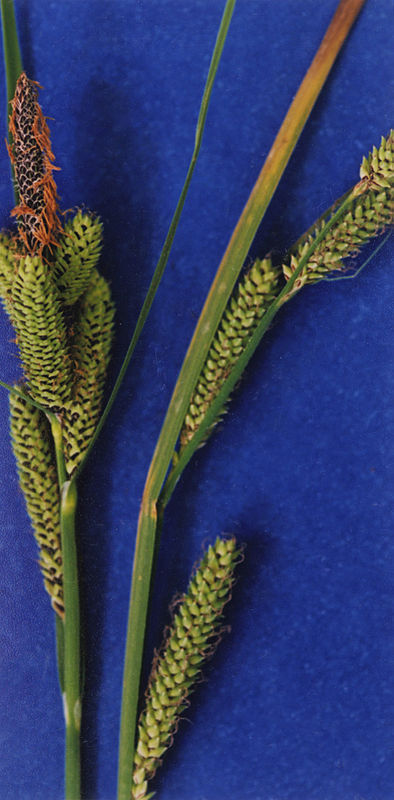
Carex lenticularis
Lakeshore sedge · Lenticular Sedge · Shore Sedge · Few-ribbed Sedge · Lens Sedge
Description
Source: leafsnapCarex lenticularis is a species of sedge known by the common names lakeshore sedge and goosegrass sedge. It is native to much of northern North America, including most all of Canada and the western United States, where it grows in wet habitats.
💡 In 1754, Lin Nai established the genus known as "true sedge." This plant is a significant component of China's flora and is the dominant grass species in the lowest layer of many forests. In some areas, true sedge makes up most of the lower vegetation.
Care Guide
💧 Water
Lakeshore sedge thrives in moist environments, favoring consistent moisture. While it can tolerate moderate drought once established, it still benefits from weekly watering. Generally flourishing outdoors, lakeshore sedge aligns its growth cycles and water uptake with the seasonal rains.
☀️ Light Full sun
Lakeshore sedge grows best in locations that receive abundant sunlight throughout the day, but it can also tolerate lower light levels or nearly no sun. Excessive exposure can cause its leaves to wither, while insufficient light may hinder its growth.
What are the sunlight requirements for Lakeshore Sedge?
Lakeshore Sedge (Carex lenticularis) requires full sun, meaning it should receive above 6 hours of sunlight daily. However, it can also thrive in partial sun to full shade conditions, which encompasses about 3-6 hours of sunlight per day. Monitoring the movement of sunlight through your garden is crucial to find spots that provide the ideal balance of light and shade, ensuring the plant's health and happiness.
How does Lakeshore Sedge react to different lighting conditions?
Lakeshore Sedge thrives best with plentiful sunlight throughout the day but is adaptable to less light or almost no sunlight conditions. Exposure to too much sunlight can cause the leaves to wither, while insufficient light may impede its growth. To compensate for low light, especially indoors during winter or in less sunny spaces, artificial lighting can be employed. LED lights are a popular choice, with full sun plants requiring 30-50W/sq ft, partial sun plants 20-30W/sq ft, and full shade plants 10-20W/sq ft of artificial light. The light source should be placed 12-36 inches above the plant for 8-12 hours per day to mimic natural sunlight.
What are common symptoms of light deficiency in Lakeshore Sedge?
Common symptoms indicating insufficient light in Lakeshore Sedge include smaller new leaves, leggy or sparse growth, faster leaf drop, slower or halted new growth, and lighter-colored or irregularly colored new leaves. These symptoms are signs that the plant is not receiving adequate sunlight, affecting its growth and health. Providing adequate light, either by gradually moving the plant to a sunnier location or employing artificial light, can encourage healthier growth.
How do you address light deficiency in Lakeshore Sedge?
To address light deficiency in Lakeshore Sedge, gradually move the plant to a sunnier spot until it receives at least 6 hours of direct sunlight daily. For indoor plants, use a south-facing window and keep curtains open during the day, or consider artificial lighting if the plant is large or not easily movable. For outdoor plants, ensure a gradual transition to avoid sunburn, and assess the environment for any obstructions like trees, which may require pruning to allow more sunlight through. For smaller plants, consider transplanting them during their dormant period to a location with ample sunlight and good drainage. It's important to note that parts of the plant affected by insufficient sunlight may not recover, but new growth should be healthy once light conditions improve.
🌡️ Temperature 20–37.8°C
Lakeshore sedge is a native plant species that performs best in a temperature range of 68 to 100 °F (20 to 38 °C). It may require extra care during colder seasons to maintain those temperatures. For optimal growth, temperature-adjustment measures might be necessary in both winter and summer.
What temperature range is ideal for Lakeshore sedge growth?
Lakeshore sedge, or Carex lenticularis, thrives in a temperature range of 68 to 100 °F (20 to 38 °C). This native plant species loves heat and requires careful temperature management throughout the year to ensure optimal growth. During colder seasons, it's crucial to take steps to maintain these temperatures, such as moving the plant indoors or adjusting its environment to avoid cold damage.
How should I care for Lakeshore sedge in the winter?
In the winter, it's recommended to bring outdoor-grown Lakeshore sedge indoors and place it near a bright window to ensure it receives enough light. However, keep it at a safe distance from heaters to avoid overly dry conditions. The goal is to maintain temperatures above 20°C, as the plant does not tolerate cold well. Any temperatures nearing 10°C can harm the plant, and it's essential to provide a warm environment to support its growth during the cold months.
What do I do if Lakeshore sedge is damaged by low temperatures?
If your Lakeshore sedge suffers from low-temperature damage, characterized by leaves lightening in color or turning brown or black after frost, immediate action is needed. Trim off the frost-damaged parts and move the plant to a warm indoor environment. Placing it near a south-facing window while ensuring it's not too close to heaters or air conditioning vents will help protect it from cold stress and excessive dryness, facilitating recovery.
How can I protect Lakeshore sedge from high temperatures?
During summer, Lakeshore sedge should be kept below 100°F (38°C). Exposure to temperatures over 109°F (43°C) can cause leaves to lighten and increase the plant's susceptibility to sunburn. To mitigate this, trim away any sunburned or dried-up parts and relocate the plant to a shaded area, especially during the midday and afternoon sun. Ensuring adequate watering in the morning and evening helps keep the soil moist, providing additional protection against high temperature stress.
💨 Humidity
🪴 Soil 6-7
🌱 Fertilizer
Lakeshore sedge benefits from extra nutrients to encourage healthy new growth. In spring, applying compost around the base of the plant can effectively supply the nutrition it requires. Fertilizing helps support vigorous growth and increases the plant’s resistance to diseases and pests.
🪴 Pot & Repot
✂️ Pruning
Lakeshore sedge flourishes in wet environments. To encourage dense growth and remove any damage, prune the plant in early spring by cutting dead leaves down to the base. Light trimming helps improve its shape and vigor, which enhances both the garden's appearance and ecological health. Be careful to avoid heavy pruning, as this can stress the plant.
🌿 Propagating
🐛 Diseases & pets
☠️ Toxicity
Characteristics
- Plant Type
- Grass
- Life Cycle
- Perennial
- Genus
- Carex
- Family
- Cyperaceae
- Hardiness Zone
- 11
- Mature Height
- 10 cm to 61 cm
- Mature Spread
- 20 cm to 40 cm
- Leaf Color
- Green, Dark Green
- Leaf Type
- Semi-evergreen
- Flower Color
- White, Yellow, Green, Brown
- Flower Size
- 0.20 cm to 0.51 cm
- Bloom Time
- Late spring, Early summer
- Planting Time
- Spring, Summer, Autumn
- Harvest Time
- Mid summer, Late summer