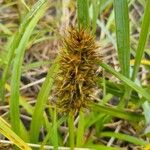
Carex macrocephala
Large-head sedge · Largehead sedge · Large-headed sedge · Big-headed sedge
Description
Source: leafsnapCarex macrocephala, the big-head sedge or largehead sedge, is a species of flowering plant in the family Cyperaceae. It is found on the beaches and dunes of the northern Pacific; Japan, Primorsky Krai, Sakhalin, the Kurils and Kamchatka in the Russian Far East, and Alaska, British Columbia, Washington state and Oregon in North America.
💡 In 1754, Lin Nai established the genus known as "true sedge." This plant is a significant component of China's flora and is the dominant grass species in the lowest layer of many forests. In some areas, true sedge makes up most of the lower vegetation.
Care Guide
💧 Water
☀️ Light Full sun
Large-head sedge is a sun-loving, perennial, herbaceous plant native to open habitats and commonly flourishing in meadows and grasslands. It prefers full sun but can also tolerate partial sun conditions.
What are the sunlight requirements for Large-head sedge (Carex macrocephala)?
Large-head sedge, known botanically as Carex macrocephala, thrives in conditions that provide it with the right balance of light. For optimal growth, it requires full sun, which is characterized by exposure to sunlight for more than 6 hours per day. It can also grow in partial sun, where it would receive about 3 to 6 hours of sunlight daily. When choosing a location for your Large-head sedge, it's important to observe how sunlight moves through your garden throughout the day. By doing so, you can select spots that offer the perfect mix of light and shade, ensuring your plant's health and happiness.
🌡️ Temperature 10–35°C
Large-head sedge comes from temperate regions and does best in temperatures of 50 to 95 °F (10 to 35 °C). When growing it, providing similar temperature conditions is important for optimal growth. It prefers moderate to high temperatures, especially in summer.
What is the native climate for large-head sedge?
Large-head sedge, botanically known as Carex macrocephala, is native to temperate areas. It thrives in environments where the temperature ranges between 50 to 95°F (10 to 35°C). For optimal growth when cultivating this plant, it is crucial to provide thermal conditions similar to its native habitat. Moderate to high temperatures, especially during the summer, are preferred.
💨 Humidity
🪴 Soil 5-7
🌱 Fertilizer
Large-head sedge needs extra nutrients to encourage healthy new growth. In spring, adding some compost around the base of the plant will effectively supply the necessary nutrition. Fertilizing helps support vigorous growth and improves the plant’s ability to withstand diseases and pests.
🪴 Pot & Repot
✂️ Pruning
The large-head sedge is characterized by its substantial inflorescences and grass-like appearance. To promote healthy new growth and prevent overcrowding, prune dead leaves and old growth in early spring. This not only supports vibrant development but also enhances the plant's overall appearance and health.
🌿 Propagating
🐛 Diseases & pets
☠️ Toxicity
Characteristics
- Plant Type
- Grass
- Life Cycle
- Perennial
- Genus
- Carex
- Family
- Cyperaceae
- Hardiness Zone
- 6-10
- Mature Height
- 20 cm
- Mature Spread
- 30 cm to 49 cm
- Leaf Color
- Dark Green
- Leaf Type
- Evergreen
- Flower Size
- 1.02 cm to 1.52 cm
- Bloom Time
- Late spring, Early summer
- Planting Time
- Spring, Summer, Autumn
- Harvest Time
- Mid summer, Late summer
- Native Area
- Russia, Japan