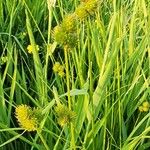
Carex molesta
Troublesome Sedge
Description
Source: leafsnapCarex molesta is a species of sedge known by the common name troublesome sedge. It is native to eastern and central North America, where it grows in varied wet and dry habitats, performs equally well in full sun and partial shade, including disturbed areas such as roadsides. It is an introduced species and often a weed in California. This sedge produces clumps of stems up to about a meter tall, with several narrow leaves up to about 35 centimetres (14 in) long. The inflorescence is an open cluster of green spherical spikes each 0.5 to 1.5 centimetres (0.20 to 0.59 in) long.
💡 In 1754, Lin Nai established the genus known as "true sedge." This plant is a significant component of China's flora and is the dominant grass species in the lowest layer of many forests. In some areas, true sedge makes up most of the lower vegetation.
Care Guide
💧 Water
Troublesome sedge flourishes in moist environments and prefers soil that is well-hydrated. While it has moderate drought tolerance, it benefits from being watered weekly to maintain optimal health. As an outdoor, herbaceous perennial, it requires consistent moisture to keep its foliage lush and to promote healthy growth.
☀️ Light Full sun
The troublesome sedge does best with plentiful sunlight, drawing the energy needed for healthy growth from ample light. It can persist in light shade, but reduced sun can slow its development. Its original habitat is characterized by abundant sun exposure. Both too much and too little light can damage the plant, affecting its growth and vigor.
What are the sun requirements for Troublesome Sedge (Carex molesta)?
Troublesome Sedge thrives in conditions where it can receive full sun, which means it needs more than 6 hours of sunlight daily. It can also grow in partial sun, receiving about 3-6 hours of sunlight. It's essential to monitor the movement of sunlight through your garden to find the best spots for your plants, balancing light and shade to ensure their health and happiness.
What are the essentials for growing Troublesome Sedge successfully?
For optimal growth, Troublesome Sedge requires abundant sunlight as it gains the energy needed for healthy growth from generous light exposure. While it can survive in slightly shaded conditions, less sunlight may impede its development. The use of artificial lighting can be a vital solution in conditions where natural sunlight is insufficient, such as during winter or in less sunny spaces. LED lights are popular for indoor plant lighting, providing specific wavelengths required for plant growth. Full sun plants need 30-50W/sq ft, partial sun plants need 20-30W/sq ft, and full shade plants require 10-20W/sq ft of artificial light.
What symptoms indicate Troublesome Sedge is not getting enough light?
Symptoms of light deficiency in Troublesome Sedge include smaller new leaves, leggy or sparse growth, faster leaf drop, slower or no new growth, lighter-colored new leaves, chlorosis (leaves turn yellow), sunscald (damaged leaves from intense exposure), leaf curling, wilting, and leaf scorching. These symptoms suggest the plant is not receiving adequate sunlight, affecting its growth and health.
How can I address light-related issues for Troublesome Sedge?
To address insufficient sunlight, gradually move Troublesome Sedge to sunnier locations until it receives at least 6 hours of direct sunlight daily. For indoor plants, consider using artificial lighting, like desk lamps or professional grow lights, for at least 8 hours a day. For outdoor plants, ensure they're gradually acclimated to avoid sunburn. Removing obstructions or transplanting to sunnier spots can also help. Note that parts of the plant damaged by low light may not recover, but new growth should be healthy with improved light conditions.
🌡️ Temperature 0–32.2°C
Troublesome sedge occurs naturally in areas where temperatures range from 32 to 90 °F (0 to 32 °C). The plant prefers moderate temperatures and should be protected from extreme cold or heat. Seasonal temperature adjustments are generally not necessary for this sedge.
What is the native temperature range for Troublesome Sedge (Carex molesta)?
Troublesome sedge, also known as Carex molesta, is native to environments boasting a temperature range of 32 to 90 °F (0 to 32 °C). This plant prefers moderate temperatures and usually does not require seasonal temperature adjustments. It's important to protect this sedge from extreme cold or heat to ensure its health and longevity.
Does Troublesome Sedge require any special frost protection during winter?
Troublesome sedge exhibits strong cold resistance, and special frost protection measures aren't typically necessary during winter. However, if winter temperatures are expected to plunge below -35°C, providing cold protection is important. This can be done by covering the plant with soil or straw and ensuring the soil around it is thoroughly watered before the first freeze of autumn. This preparation helps the soil retain moisture throughout the cold months, preventing drought and water scarcity for the sedge during winter and early spring.
How does Troublesome Sedge react to low winter temperatures?
Despite being cold-tolerant and thriving best in temperatures above 0°C, Troublesome Sedge should ideally be kept above -30°C during winter. When temperatures fall below -35°C, there might not be any noticeable change during the winter itself, but it may lead to a decrease in sprouting or even no sprouting at all come spring. To address this, any parts of the sedge that have failed to sprout in spring should be removed.
What should be done if Troublesome Sedge experiences high temperatures?
During the summer months, it's advised to keep Troublesome Sedge below 32°C to prevent stress. Temperatures exceeding 35°C can cause the leaves to lighten in color, become prone to curling, suffer from sunburn, and in severe cases, lead to the wilting and drying of the entire plant. To mitigate these issues, trim away sunburned and dried parts of the plant, move it to a shaded location or use shade cloth to protect it from the midday and afternoon sun, and water the plant in the morning and evening to ensure the soil remains moist.
💨 Humidity
🪴 Soil 5-7
🌱 Fertilizer
The troublesome sedge needs extra nutrients to encourage healthy new growth. In spring, placing compost around the plant’s base will effectively provide the nutrition it requires. Fertilizing supports vigorous growth and helps the plant resist diseases and pests.
🪴 Pot & Repot
✂️ Pruning
Troublesome sedge can grow densely and form thick tufts, often becoming invasive if not managed properly. To control its growth, prune the plant in early spring. This includes removing any dead foliage and thinning the clumps to improve airflow. Regular pruning not only helps prevent the sedge from spreading but also enhances its health and appearance. Always use clean tools during this process to prevent infections.
🌿 Propagating
🐛 Diseases & pets
☠️ Toxicity
Characteristics
- Plant Type
- Grass
- Life Cycle
- Perennial
- Genus
- Carex
- Family
- Cyperaceae
- Hardiness Zone
- 3-8
- Mature Height
- 0.3 m to 1.07 m
- Mature Spread
- 61 cm to 91 cm
- Leaf Color
- Green
- Leaf Type
- Evergreen
- Flower Color
- White, Yellow, Green, Brown
- Flower Size
- 0.20 cm to 0.51 cm
- Bloom Time
- Mid spring, Late spring
- Planting Time
- Spring, Autumn
- Harvest Time
- Early summer, Mid summer