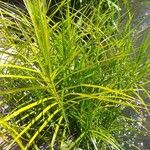
Carex muskingumensis
Muskingum sedge · Palm sedge · Swamp oval sedge
Description
Source: leafsnapCarex muskingumensis, commonly known as palm sedge, is a perennial plant belonging to the family Cyperaceae. Native to North America, it thrives in wetlands, marshes, and along stream banks. This plant has a clumping growth habit and can reach up to 2 feet in height. The leaves of Carex muskingumensis are long, narrow, and have a palm-like appearance with a slightly glossy green texture. The plant's flowers are small and inconspicuous, appearing on spikes that extend above the foliage. Palm sedge prefers moist soil conditions but can tolerate some drought once established. It is an excellent choice for rain gardens and wetland restoration projects due to its ability to withstand short periods of standing water. Additionally, Carex muskingumensis serves as an attractive ornamental grass, adding texture and interest to garden beds and borders. It pairs well with other moisture-loving plants such as ferns and hostas. Overall, Carex muskingumensis is an easy-to-grow plant that offers both ecological benefits and aesthetic appeal in garden settings.
💡 In 1754, Lin Nai established the genus known as "true sedge." This plant is a significant component of China's flora and is the dominant grass species in the lowest layer of many forests. In some areas, true sedge makes up most of the lower vegetation.
Care Guide
💧 Water Every 7 days
Native to the damp environments of North America, palm sedge thrives in consistently moist soil with high humidity. To ensure optimal growth, it should be watered weekly and benefits greatly from natural rainfall. This watering routine helps maintain its lush foliage during the growing season, while the plant also shows a moderate tolerance to drought.
What do I do if I give too much or too little water to my Palm sedge?
Proper watering is essential for this ornamental grass to thrive. If planted in the ground, watering issues can be resolved. However, in a container, excessive or insufficient water can be fatal for Palm sedge. Insufficient water can cause the grass to stop growing, resulting in drooping leaves, weak seed production, and browning. Overwatering can lead to yellow leaves with brown tips. If you suspect improper watering, first determine if the issue is excessive or insufficient water. Cease watering immediately if there is an excess. It may take some time for heavy soils to dry out, so patience is necessary. Test the soil for moisture when new growth appears, and decide if additional watering is required. If insufficient water is the problem, simply give the grass a deep drink and observe for improvement. Remember, it is better to water deeply and infrequently, as this encourages deep root growth, making the grass more resistant to drought and watering-related issues.
How often do I need to water my Palm sedge plant?
The watering needs of Palm sedge depend on the planting location. In general, it should be watered weekly. In hot climates, watering once or twice a week during summer may be necessary. In moderate climates, watering once every seven days or more should be enough. Grass in containers usually needs more frequent watering than grass in the ground. However, the location also matters for this species, as shaded grass needs less frequent watering than in-ground grass. Only water Palm sedge when the soil is dry, which can be determined by pressing your finger a couple of inches into the soil or weighing the grass in a pot. When the roots lack sufficient water, the blades may appear folded and thinner than usual. Regular, deep waterings will enhance the grass's color. Despite Palm sedge's drought tolerance, it still requires care and attention. Even though it can handle harsh, dry conditions, consistent watering is recommended. Initially, Palm sedge needs more frequent watering until it has established deep roots. For potted Palm sedge, the soil dries out quickly, so it should be tested every 3 to 4 days and watered when dry. In-ground Palm sedge generally needs less watering, but this depends on the soil type. Clay soil can feel dry at the surface while retaining moisture below ground, while sandy soil that drains quickly will require more frequent watering.
What do I need to watch out for when I water my Palm sedge in different seasons, climates, or stages of growth?
To determine if you are watering enough, observe the rate of growth of your grasses. Palm sedge, for example, tends to double in size in a year during the hottest months. If the weather is hot but the grass is not growing vigorously, it may be necessary to adjust your watering schedule. In winter, you can likely water just once a month, but it's still important to check the soil for moisture. During the warmest months, when the grass is actively growing, it will require more water than usual. However, during winter and cooler months, the water needs will significantly decrease. Remember that for Palm sedge, it's crucial to let the soil dry out completely before adding water.
☀️ Light Partial sun
Palm sedge performs best in settings with moderate sunlight, though it tolerates intense light or heavier shade. Native to regions with a mix of light conditions, it can adapt to different levels of sun exposure. Excessive or insufficient light may influence its growth and overall health.
What are the sunlight requirements for Palm Sedge (Carex muskingumensis)?
Palm Sedge thrives in various light conditions, from moderate exposure to full sun, and can even tolerate significant shade. For optimal growth, it should receive about 3-6 hours of sunlight daily. However, Palm Sedge is adaptable and can survive with more or less sunlight, though its vitality and growth may be affected by over or underexposure. It's essential to observe how sunlight moves through your garden and select locations that offer a balance of light and shade suitable for the plant's needs.
How can artificial lighting benefit indoor Palm Sedge plants, and what are the recommendations for use?
Artificial lighting is crucial for the growth of indoor Palm Sedge plants, particularly in conditions where natural sunlight is insufficient, like during winter or in less sunny spaces. LED lights are recommended due to their ability to provide specific wavelengths needed by plants. For full sun plants, 30-50W/sq ft of artificial light, for partial sun plants 20-30W/sq ft, and for full shade plants 10-20W/sq ft are advisable. The artificial light should be placed 12-36 inches above the plant and kept on for 8-12 hours per day to mimic natural daylight hours, ensuring faster, healthier growth.
What are the symptoms of light deficiency or overexposure in Palm Sedge?
Palm Sedge shows various symptoms under insufficient light, including smaller new leaves, leggy or sparse growth, quicker leaf drop, slower or halted growth, paler new leaves, and specific issues like chlorosis, sunscald, leaf curling, wilting, and leaf scorching due to excessive sunlight. Chlorosis leads to yellowing leaves because of chlorophyll breakdown, sunscald presents as pale or necrotic areas from intense sun exposure, leaf curling reduces surface area to minimize damage and water loss, wilting occurs from too much transpiration, and leaf scorching appears as brown, dry edges due to excessive sunlight.
What solutions are recommended for Palm Sedge suffering from light-related issues?
For indoor Palm Sedge, gradually shift the plant to sunnier spots each week to receive 3-6 hours of direct sunlight daily for adaptation. If moving the plant isn't feasible, provide additional light with desk, ceiling lamps, or professional grow lights for at least 8 hours a day. Outdoors, move plants gradually to sunlit spots to prevent sunburn. Remove obstacles that obstruct sunlight, like pruning trees. For smaller plants, consider transplanting during the dormant period in late winter or early spring to a location with ample sunlight and good drainage. Note that parts of the plant damaged by insufficient light may not recover, but new growth should be healthy with improved light exposure.
🌡️ Temperature 5–35°C
Palm sedge can adjust to a wide span of temperature conditions, but its range may still be restricted by different mixes of moisture and heat. It does best in warm summer climates with enough rainfall or watering. Long periods of cloudy, rainy weather or prolonged high temperatures can raise the chance of Palm sedge dying. In winter, suitable protection from cold can boost the plant's survival rate.
💨 Humidity
🪴 Soil 6-7
🌱 Fertilizer
The palm sedge needs extra nutrients for encouraging robust new growth. In the spring, adding compost around the bottom of the plant can efficiently offer the required nutrition it needs. The process of fertilization assists in promoting vigorous growth and fortifies the plant's resistance against diseases and pests.
Why should I add fertilizer to my Palm sedge plant?
Fertilizing Palm sedge is important because it provides the necessary nutrients for healthy new growth and helps maintain the overall health of the plant. Additionally, proper fertilization enhances the plant's ability to defend against diseases and pests.
When should I fertilize my Palm sedge?
To ensure the survival of Palm sedge in your garden, it's important to know when to fertilize it. This plant doesn't need a lot of nutrients when it's dying back, so there's no need to add additional fertilizers during that time. While you can use diluted fertilizer at the beginning of the growing season, it's actually not recommended. Instead, it's better to apply mulch or compost around the base of the plant.
When is it not a good idea to fertilize my Palm sedge?
If you don't use packaged fertilizers, you don't need to be concerned about when to stop feeding Palm sedge. Simply add a layer of compost or mulch in the spring, and that will suffice to keep Palm sedge thriving all year long. When the plant is dormant in winter, there's no need to worry about mulching or composting.
What fertilizer does my Palm sedge plant need?
You can skip buying fertilizer for palm sedge. Instead, just apply a layer of compost in the spring. This will provide the necessary nutrients for the plant. Also, if you mulch your garden annually, the bark will help keep your plant well-nourished and content.
How should I add fertilizer to my Palm sedge plant?
If you are using mulch or compost for Palm sedge, the steps are the same. Start by putting down a layer of the material, ensuring it covers the base of the plant. You can choose to use both mulch and compost, but if you do, decrease the amount of compost used. Adding a layer of mulch has two benefits – it helps the soil retain moisture and also provides nutrients to your plant.
🪴 Pot & Repot 2-3 years
When repotting Palm sedge, choose a pot 1-2 inches (2.5–5.1 cm) larger with ample drainage. Use a well-draining potting mix. Repot in spring or fall, making sure the root ball sits slightly lower than the rim of the flower pot. Water thoroughly after repotting and place in a warm spot with indirect sunlight.
✂️ Pruning
Palm sedge has leaves that resemble both grass and palms. To encourage strong growth and maintain its shape and density, prune the plant in early spring by cutting back any dead foliage. This practice aligns with its growth cycle and also helps improve air circulation, thereby reducing the risk of disease.
🌿 Propagating
🐛 Diseases & pets
☠️ Toxicity
Characteristics
- Plant Type
- Grass
- Life Cycle
- Perennial
- Genus
- Carex
- Family
- Cyperaceae
- Hardiness Zone
- 4-9
- Mature Height
- 61 cm to 91 cm
- Mature Spread
- 61 cm to 91 cm
- Leaf Color
- Green
- Leaf Type
- Deciduous
- Flower Color
- Tan
- Flower Size
- 5.08 cm to 8.89 cm
- Bloom Time
- Early summer, Mid summer
- Planting Time
- Spring, Summer, Autumn
- Harvest Time
- Late summer, Early fall