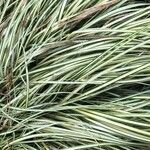
Carex oshimensis
Striped weeping sedge · Japanese Sedge
Description
Source: leafsnapCarex oshimensis, commonly known as Japanese sedge, is a perennial ornamental grass native to Japan. It is a popular choice for landscaping due to its attractive foliage and low maintenance requirements. The plant typically grows in clumps and can reach heights of 1-2 feet. The leaves of Carex oshimensis are narrow and arching, with a glossy green color that can range from light green to dark green, depending on the cultivar. Some varieties also feature variegated leaves with white or yellow stripes. Japanese sedge prefers moist soil but can tolerate some drought once established. It thrives best in partial shade but can also adapt to full sun or full shade conditions. Japanese sedge is commonly used as an edging plant, ground cover, or accent plant in gardens and landscapes, thanks to its attractive foliage and the color contrast it provides with other plants. It requires minimal maintenance, such as occasional watering during dry periods and pruning of dead leaves or flowers when necessary. Overall, Carex oshimensis is an excellent choice for gardeners looking for an easy-to-grow ornamental grass that adds texture and interest to their landscape design, while requiring minimal care.
💡 In 1754, Lin Nai established the genus known as "true sedge." This plant is a significant component of China's flora and is the dominant grass species in the lowest layer of many forests. In some areas, true sedge makes up most of the lower vegetation.
🌳 Striped weeping sedge is prized for its variegated leaves and elegant, flowing habit, making it a common choice in ornamental gardens. Its tolerance of a variety of light levels and soil types, together with low maintenance needs, makes it desirable for both public and private landscapes. Aside from its appearance, striped weeping sedge has few known uses for products such as oils or fibers.
Care Guide
💧 Water Every 7 days
Striped weeping sedge flourishes in moist environments and needs regular watering, ideally twice a week, to maintain its lush appearance. As an evergreen perennial, it keeps its foliage throughout the year, so it's important to water it consistently, even during the colder months when indoor heating reduces humidity.
☀️ Light Partial sun
Striped weeping sedge grows best in places that provide soft, filtered sunlight for a large portion of the day. Although the plant can tolerate prolonged sun exposure, the milder light conditions of its original habitats are still preferred. A balance between the two supports its growth and health. However, too little or too much light can negatively affect the plant's well-being.
What are the sunlight requirements for Striped Weeping Sedge?
Striped weeping sedge thrives best in environments that offer gentle, filtered sunlight for a significant portion of the day. It can tolerate a range of sunlight exposure, from partial sun, which is about 3-6 hours of sunlight, to full sun, requiring more than 6 hours of sunlight daily. The plant's origin in moderate sunlight conditions suggests that a balance between gentle and extensive sun exposure is ideal. However, too little or too much sunlight can negatively impact the plant's health. It's important to watch how sunlight moves through your garden to find locations that provide the perfect balance of light and shade, ensuring the happiness of your plants.
How does artificial lighting benefit indoor Striped Weeping Sedge?
Artificial lighting is crucial for the growth of indoor plants when natural sunlight is inadequate, such as during winter or in less sunny indoor spaces. It promotes faster and healthier growth by offering the vital light needed. For Striped weeping sedge, selecting the correct type of artificial light is important, with LED lights being a popular choice due to their customization abilities to match specific plant light wavelength needs. Full sun plants require 30-50W/sq ft, partial sun plants need 20-30W/sq ft, and full shade plants need 10-20W/sq ft of artificial light. The light source should ideally be placed 12-36 inches above the plant to mimic natural sunlight conditions and be on for 8-12 hours per day to replicate the natural daylight hours necessary for the plant species.
What are the symptoms of light deficiency in Striped Weeping Sedge?
When Striped Weeping Sedge grows in insufficient light, it can exhibit several symptoms indicating light deficiency. These include smaller new leaves compared to older ones, leggy or sparse growth due to elongated spaces between stems or leaves, early leaf drop to conserve resources, delayed or halted growth as the plant enters survival mode, lighter colored new leaves indicating a lack of chlorophyll and essential nutrients, and various other symptoms such as chlorosis, sunscald, leaf curling, wilting, and leaf scorching caused by inappropriate light conditions. These symptoms demonstrate the plant's struggle with either too little or too much sunlight.
How can I manage Striped Weeping Sedge with insufficient or excessive sunlight?
Managing Striped Weeping Sedge in conditions of insufficient or excessive sunlight involves a few strategies. Indoors, you can optimize growth by gradually shifting plants to sunnier spots each week until they receive 3-6 hours of direct sunlight daily or use artificial lighting like professional grow lights for at least 8 hours a day to supplement light. Outdoors, gradually move your plants to spots with better sunlight exposure, taking care not to cause sunburn by sudden exposure changes. To maximize sunlight reach, reduce obstructions like overhanging branches and consider transplanting smaller plants during their dormant period to locations with more suitable light conditions and good drainage. Note that while parts of the plant affected by insufficient sunlight may not recover, new growth should be healthy with proper light exposure adjustments.
🌡️ Temperature 5–35°C
Striped weeping sedge can tolerate a wide range of temperatures, but its range may still be restricted by various combinations of moisture and heat. It grows best in warm summers when there is sufficient rainfall or watering. Extended periods of cloudy, rainy weather or prolonged high temperatures can increase the chance of Striped weeping sedge dying. In winter, providing proper protection from the cold can boost the plant’s chances of survival.
What is the Striped Weeping Sedge?
The Striped Weeping Sedge is a plant known botanically as Carex oshimensis. It does not have additional provided information on its essentials or symptoms in this context.
💨 Humidity
🪴 Soil 5-6
🌱 Fertilizer
One application of fertilizer in spring is generally enough for Striped weeping sedge, although multiple feedings can enhance growth. Fertilize every month to every month and a half. Feeding improves the look and function of the leaves, maintaining even color and a healthy texture. It also promotes root development and nutrient uptake for sustained plant health.
🪴 Pot & Repot Every 12 months
✂️ Pruning
Striped weeping sedge is a plant with beautiful variegated leaves that benefits from pruning in the spring. To promote vigorous growth and control its spread, you should remove any damaged foliage and trim back old growth. Regular maintenance not only helps reduce the risk of disease but also supports healthy growth, enhancing the plant's aesthetic appeal.
🌿 Propagating
🐛 Diseases & pets
☠️ Toxicity
Characteristics
- Plant Type
- Herb
- Life Cycle
- Perennial
- Genus
- Carex
- Family
- Cyperaceae
- Hardiness Zone
- 6-10
- Mature Height
- 30 cm to 46 cm
- Mature Spread
- 30 cm to 43 cm
- Leaf Color
- Green, Variegated, Yellow, White, Gold
- Leaf Type
- Evergreen
- Flower Color
- Brown, Yellow
- Bloom Time
- Mid spring, Late spring, Early summer
- Planting Time
- Spring
- Harvest Time
- Early summer, Mid summer
- Native Area
- Japan