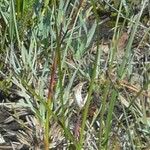
Carex panicea
Carnat tong-grass · Carnation sedge · Grass-like sedge · Millet Sedge · Pink-leaved Sedge
Description
Source: leafsnapCarex panicea, commonly known as carnation sedge, is a plant species in the sedge family, Cyperaceae. It is known as grass-like sedge and can be found in Northern and Western Europe, and also in north-eastern North America. The plant produces fruits which are 3–4 millimetres (0.12–0.16 in) long, are egg shaped and spiked. Both male and female species leaves are pale blue on both sides.
💡 In 1754, Lin Nai established the genus known as "true sedge." This plant is a significant component of China's flora and is the dominant grass species in the lowest layer of many forests. In some areas, true sedge makes up most of the lower vegetation.
Care Guide
💧 Water
☀️ Light Partial sun
The grass-like sedge occurs naturally in habitats like forest understories or rocky areas, where it grows under natural shade. It prefers partial sun but will tolerate full sun or full shade, showing its versatile and hardy nature.
What are the sunlight requirements for Carex panicea?
Carex panicea, also known as Grass-like sedge, flourishes in various sunlight conditions. It requires 'Full sun' which is defined as above 6 hours of sunlight per day to thrive optimally. However, it can also adapt to 'Partial sun' conditions, meaning it can grow well with about 3-6 hours of sunlight daily. When planning where to plant your Carex panicea, it's important to observe how sunlight moves through your garden. Finding the perfect spots that provide a balance of light and shade will ensure the happiness and health of your plants.
🌡️ Temperature 5–35°C
Grass-like sedge can adapt to a wide range of temperatures, but its distribution may still be limited by different combinations of moisture and heat. It performs best in warm summer climates with sufficient rainfall or watering. Long periods of cloudy, rainy weather, as well as prolonged high temperatures, can increase the likelihood of Grass-like sedge dying. In winter, adequate protection from cold can improve the plant's survival rate.
What is the botanical name of Grass-like sedge?
The botanical name of Grass-like sedge is Carex panicea.
💨 Humidity
🪴 Soil 5-7
🌱 Fertilizer
Grass-like sedge needs extra nutrients to encourage healthy new growth. In spring, placing compost around the plant's base can effectively supply the necessary nourishment. Fertilizing helps support vigorous growth and aids the plant in resisting diseases and pests.
🪴 Pot & Repot 2-3 years
When repotting Grass-like sedge, pick a container about 1–2 inches (2.5–5.1 cm) larger that offers good drainage. Use a well-draining potting mix. Repot in spring or fall, making sure the root ball sits just below the rim of the flower pot. Water thoroughly after repotting and place the pot in a warm location with indirect sunlight.
✂️ Pruning
Grass-like sedge features slender blades that resemble grass. It's best to prune these plants in early spring to remove dead leaves and encourage new growth. When pruning, cut the old stems down to ground level, taking care not to damage the emerging shoots. Regular pruning enhances air circulation, reduces the risk of disease, and supports a healthy, vigorous plant.
🌿 Propagating
🐛 Diseases & pets
☠️ Toxicity
Characteristics
- Plant Type
- Grass
- Life Cycle
- Perennial
- Genus
- Carex
- Family
- Cyperaceae
- Hardiness Zone
- 4-9
- Mature Height
- 30 cm
- Mature Spread
- 49 cm
- Leaf Color
- Light Green, Gray
- Leaf Type
- Semi-evergreen
- Flower Size
- 0.20 cm to 0.51 cm
- Bloom Time
- Mid spring, Late spring
- Planting Time
- Spring, Autumn
- Harvest Time
- Early summer, Mid summer
- Native Area
- Turkey, Sweden, Austria, Slovakia, Montenegro, Slovenia, Morocco, Croatia, Belarus, Uzbekistan, Russia, Iraq, Germany, Iceland, Estonia, Romania, Latvia, Belgium, Netherlands, France, Tajikistan, Czech Republic, Bulgaria, Armenia, Poland, Greece, Ukraine, Serbia, Lithuania, Norway, Kyrgyzstan, Kazakhstan, Italy, Spain, Switzerland, Denmark, Mongolia, Finland, Iran, Albania, Ireland, United Kingdom, Hungary, Azerbaijan