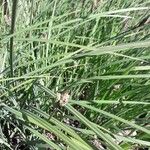
Carex paniculata
Greater tussock sedge · Great Panicled Sedge · Great Tussock Sedge · Panicled Sedge · Tussock Sedge
Description
Source: leafsnapCarex paniculata, commonly known as Greater Tussock-sedge, is a perennial plant species belonging to the family Cyperaceae. Native to Europe and Asia, this versatile plant thrives in wetlands, marshes, meadows, and along riverbanks. It features a clump-forming habit with long, narrow leaves that can grow up to 1 meter in height. The dark green leaves have a glossy texture, adding a vibrant touch to the landscape. The flowers of Carex paniculata are small and inconspicuous. Male flowers are positioned at the top of the stem, while female flowers are located at the base. The plant typically blooms from May to July. Carex paniculata prefers moist soil conditions but can tolerate some drought once established. It is an excellent choice for wetland restoration projects, as it helps stabilize soil and prevent erosion while providing habitat for wildlife such as birds and insects. Traditionally, Greater Tussock-sedge has been used for medicinal purposes, including treatments for diarrhea, dysentery, fever, and inflammation due to its anti-inflammatory properties. Overall, Carex paniculata is an attractive ornamental grass that adds texture and interest to any garden or landscape design. It also offers significant ecological benefits, such as erosion control and wildlife habitat creation.
💡 In 1754, Lin Nai established the genus known as "true sedge." This plant is a significant component of China's flora and is the dominant grass species in the lowest layer of many forests. In some areas, true sedge makes up most of the lower vegetation.
Care Guide
💧 Water Every 7 days
Greater tussock sedge flourishes in consistently moist environments, preferring wet soil and tolerating standing water. To keep its foliage lush and maintain its evergreen appearance, water it weekly. Typically grown outdoors, this plant needs a consistent water supply throughout the year to replicate its natural marshy habitat.
What do I do if I give too much or too little water to my Greater tussock sedge?
Proper watering is crucial for the health of this beautiful ornamental grass. In the ground, watering issues can be resolved, but in a container, incorrect watering can quickly kill Greater tussock sedge. Insufficient water can cause stunted growth, while overwatering can lead to yellow leaves with brown tips. Underwatering can result in drooping leaves, weak seed head production, and browned leaves. If you suspect your Greater tussock sedge is experiencing watering problems, first determine if there is too much or too little water. If it is receiving too much water, stop watering immediately and allow time for the soil to dry out. Once you see signs of new growth, test the soil for moisture before deciding whether to water again. On the other hand, if it is getting too little water, simply give it a deep drink and observe if it improves. Remember that deep watering is preferable to frequent shallow waterings, as it encourages deep root growth, making the grass more resilient to drought and watering issues.
How often should I give water to my Greater tussock sedge plant?
The watering needs of Greater tussock sedge depend on its location. In general, it should be watered once a week. In hot climates, watering once or twice a week in the summer may be necessary. In moderate climates, watering every seven days or more may be enough. Grass in containers typically needs more frequent watering than grasses in the ground. However, the location also matters. Shaded grasses require less frequent watering than grasses in the ground. It is important to water Greater tussock sedge only when the soil is dry. To determine if the soil is dry, you can press your finger into it a couple of inches or weigh the grass if it is in a pot. Lack of sufficient water can cause the blades of the grass to appear folded and thinner than usual. Despite its drought tolerance, regular, deep waterings will maintain the beautiful color of the grass. Although Greater tussock sedge is drought resistant, it still needs care and attention and thrives best with consistent water. When first planted, it will require more frequent watering until it establishes deep roots. Greater tussock sedge in pots may dry out quickly, especially if exposed to hot, direct sun. It is recommended to test the soil every 3 to 4 days and water only when it feels dry. Greater tussock sedge in the ground generally requires less watering, but this depends on the type of soil. Clay soil holds water for a long time and may feel dry at the surface while still retaining moisture below ground. Sandy soils that drain quickly will need to be watered more often.
What things should I watch out for when watering my Greater tussock sedge in different seasons, climates, or during different stages of growth?
To determine if you are providing enough water for your grasses, pay attention to their growth rate. During the hottest months, Greater tussock sedge tends to grow rapidly, sometimes doubling in size in a year. If it's hot outside but the grass isn't growing vigorously, you may need to adjust your watering schedule. In winter, you could potentially water just once a month, but it's still essential to check the soil for moisture. During the warmer months when the grass is actively growing, it will require more water than usual. However, during winter and cooler months, the water needs will decrease significantly. Remember to let the soil for Greater tussock sedge dry out completely before watering it again.
☀️ Light Full sun
Greater tussock sedge thrives in very bright conditions, though it can also adjust to situations where sunlight is partly blocked. Its preference for sun reflects its native habitat, which provides abundant light. Variations in light can impede its optimal development, affecting its health and growth.
What are the sun requirements for Greater Tussock Sedge?
Greater Tussock Sedge, or Carex paniculata, has a preference for a lot of sunlight due to its native habitat, which allows a high amount of light exposure. The sun requirements can be categorized as 'full sun,' which means the plant should receive above 6 hours of sunlight daily, and 'partial sun,' indicating about 3-6 hours of sunlight. It's important to watch how sunlight moves through your garden to find spots that offer the ideal balance of light and shade, ensuring the plants' wellbeing.
What symptoms indicate insufficient sunlight for Greater Tussock Sedge?
Symptoms of insufficient sunlight in Greater Tussock Sedge include small leaves compared to previous ones, leggy or sparse growth, faster leaf drop, slower or no new growth, lighter-colored new leaves, chlorosis, sunscald, leaf curling, wilting, and leaf scorching. These symptoms underscore the importance of providing adequate light for the plant's health and growth.
How does artificial lighting support plant growth?
Artificial lighting can be crucial for the growth of indoor plants, especially when natural sunlight is scarce, like in winter or less sunny spaces. For optimal growth, choose the right type of artificial light, with LED lights being a popular option as they can provide specific wavelengths needed by plants. Full sun plants require 30-50W/sq ft, partial sun plants need 20-30W/sq ft, and full shade plants 10-20W/sq ft of artificial light. The artificial light source should be placed 12-36 inches above the plant, for 8-12 hours per day to mimic natural sunlight conditions.
What are the solutions for sunlight-related issues in Greater Tussock Sedge?
For indoor Greater Tussock Sedge, gradually move your plants to a sunnier spot each week until they receive at least 6 hours of sunlight daily, using a south-facing window for maximum light. If the plant is large or not easily movable, consider using artificial light, like a desk or ceiling lamp for at least 8 hours daily or invest in professional plant grow lights. Outdoors, also move your plants progressively to sunnier spots to prevent sunburn. It might be necessary to prune obstructions like tree branches to increase sunlight exposure. For plants in the ground, consider transplanting during the dormant period to a location with ample sunlight and good drainage. Note that parts of the plant already affected by insufficient sunlight may not recover, but new growth can be healthy post adjustment.
🌡️ Temperature 10–35°C
Greater tussock sedge is native to temperate regions and favors temperatures between 50 and 95 °F (10 and 35 ℃). It can tolerate seasonal temperature changes, but extra precautions might be needed in cases of extreme cold or extreme heat.
What is the preferred temperature range for Greater Tussock Sedge?
Greater Tussock Sedge, botanically known as Carex paniculata, thrives in temperate climates with a preferred temperature range of 50 to 95 °F (10 to 35 °C). This plant is adaptable to varying seasonal temperatures but may require additional care in extreme cold or heat to maintain its health.
Does Greater Tussock Sedge need frost protection in winter?
Greater Tussock Sedge possesses strong cold resistance, typically negating the need for special frost protection measures during winter. However, in conditions where winter temperatures are anticipated to fall below -25°C, it is important to protect the plant. Covering it with soil or straw and ensuring the soil remains moist by watering abundantly before the first freeze can provide necessary cold protection and prevent drought and water scarcity during winter and early spring.
What should be done if Greater Tussock Sedge is exposed to temperatures below -15°C?
Greater Tussock Sedge is cold-tolerant and generally thrives at temperatures above 10°C. However, when the temperature falls below -15°C, and especially under -25°C, the plant may not show immediate changes but could experience reduced sprouting or fail to sprout altogether in spring. In such cases, it is recommended to remove any parts of the plant that have failed to sprout as spring arrives.
How should Greater Tussock Sedge be cared for during high temperatures?
During summer, it's crucial to keep Greater Tussock Sedge below 35°C, as temperatures exceeding 38°C can cause the leaves to lighten in color, become prone to curling, suffer from sunburn, and in severe cases, the entire plant may wilt and dry out. To combat this, trim away any sunburned or dried-up parts, relocate the plant to a shadier location or use a shade cloth to protect it from the midday and afternoon sun. Additionally, watering the plant in the morning and evening will help keep the soil moist and reduce stress on the plant.
💨 Humidity
🪴 Soil 5-7
🌱 Fertilizer
Greater tussock sedge needs extra nutrients to encourage healthy new growth. In spring, spreading a layer of compost around the plant’s base will effectively supply the nutrition it requires. Fertilizing supports strong growth and helps the plant withstand diseases and pests.
🪴 Pot & Repot
✂️ Pruning
The Greater Tussock Sedge is a low-maintenance perennial plant known for forming large clumps or tussocks. To maintain its health and appearance, it is best to prune the plant in early spring, which helps remove any dead or damaged leaves. Regular pruning not only improves air circulation and light penetration but also ensures the plant's vigorous growth and overall vitality.
🌿 Propagating
🐛 Diseases & pets
☠️ Toxicity
Characteristics
- Plant Type
- Grass
- Life Cycle
- Perennial
- Genus
- Carex
- Family
- Cyperaceae
- Hardiness Zone
- 6-9
- Mature Height
- 1.52 m
- Mature Spread
- 91 cm
- Leaf Color
- Dark Green
- Leaf Type
- Deciduous
- Flower Color
- Yellow, Green, Purple, Brown, Black
- Flower Size
- 5.08 cm to 15.24 cm
- Bloom Time
- Mid spring, Late spring
- Planting Time
- Spring, Summer, Autumn
- Harvest Time
- Early summer, Mid summer