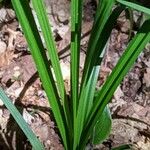
Carex sparganioides
Burr-Reed Sedge · Bur-reed sedge · Burreed Sedge · Loose-headed Bracted Sedge
Description
Source: leafsnapCarex sparganioides, known as bur-reed sedge or loose-headed bracted sedge, is a perennial plant belonging to the sedge family (Cyperaceae). Its native range includes most of the eastern and central United States and eastern Canada. In Maine, it is typically found in hardwood or mixed forests.It typically grows 30–100 centimeters (12–39 in) high, and contains teardrop-shaped seed sacs within egg-shaped spikelets.Carex sparganioides is considered endangered in Maine and New Hampshire. It is used for soil stabilization on shaded slopes.
💡 In 1754, Lin Nai established the genus known as "true sedge." This plant is a significant component of China's flora and is the dominant grass species in the lowest layer of many forests. In some areas, true sedge makes up most of the lower vegetation.
Care Guide
💧 Water
Bur reed sedge flourishes in marshy environments, needing a constant supply of moisture and stable water conditions. Its strong root system is well-suited to manage excess water. To ensure optimal growth, water the bur reed sedge weekly, allowing it to benefit from natural rainfall patterns that align with its growth and dormancy cycles.
☀️ Light Partial sun
Bur reed sedge occurs naturally in habitats like forest understories and rocky sites, where it is subject to natural shade. It favors partial sun but can tolerate both full sun and full shade, showing its adaptable, hardy nature.
What are the sunlight requirements for Bur reed sedge?
Bur reed sedge (Carex sparganioides) thrives in environments with partial sun to full shade. This means it requires about 3-6 hours of sunlight for partial sun conditions and less than 3 hours of sunlight for full shade. Ideal growth occurs in natural shade environments such as forest understories or rocky areas. It's important to observe how sunlight moves through your garden to find spots that offer the right balance of light and shade, ensuring the plant's well-being.
What additional care should be taken regarding lighting for indoor Bur reed sedge plants?
Indoor Bur reed sedge plants require adequate lighting to grow optimally, especially when natural sunlight is insufficient. Artificial lighting, such as LED lights, can be used to supplement natural light. These lights should mimic the specific wavelengths needed by the plant and be placed 12-36 inches above it. For full sun plants, 30-50W/sq ft is recommended, for partial sun plants 20-30W/sq ft, and for full shade plants 10-20W/sq ft. Additionally, the duration of artificial light should mimic natural daylight hours, generally 8-12 hours per day.
What are common symptoms of light deficiency in Bur reed sedge when grown indoors?
When grown indoors with insufficient light, Bur reed sedge may exhibit several symptoms, including smaller new leaves, leggy or sparse growth, faster leaf drop, slower or ceased new growth, paler new leaves, and symptoms of excessive light exposure such as chlorosis, sunscald, leaf curling, wilting, and leaf scorching. These signs indicate the plant is struggling with the light conditions and needs adjustment.
What are effective solutions for addressing light deficiency in Bur reed sedge?
To address light deficiency in Bur reed sedge, indoor plants can be gradually moved to sunnier spots each week until they receive 3-6 hours of direct sunlight daily or supplemented with artificial light for at least 8 hours daily. Outdoor plants should also be moved gradually to avoid shock. Reducing obstructions, such as pruning trees that block sunlight, or transplanting smaller plants to sunnier locations during their dormant period, can significantly improve light exposure. Note, parts of the plant affected by insufficient light may not recover, but new growth should be healthy with increased light exposure.
🌡️ Temperature 0–32.2°C
Bur reed sedge does well in cold areas and at high altitudes. It favors cool temperatures, good air circulation, and a moist environment. In summer, steps should be taken to keep it cool, since it is highly sensitive to heat and can easily die from it. Dry conditions can also injure the plant. In winter, no particular cold protection is necessary, but soil moisture should be maintained.
What are the essential care instructions for Bur reed sedge (Carex sparganioides)?
Bur reed sedge, or Carex sparganioides, thrives best in cool temperatures, ample ventilation, and moist environments due to its preference for cold regions and high-altitude areas. To keep it healthy during the summer, it's crucial to implement cooling measures because the plant is extremely susceptible to heat and can easily perish if it becomes too hot. Similarly, dry conditions are detrimental to its wellbeing. Throughout winter, no specific cold protection measures are needed, thanks to the plant's high tolerance to cold. However, it's important to ensure the soil remains moist, especially before the first freeze in autumn when watering generously can help keep the soil moist through the freeze, which prevents drought and water scarcity during the colder months.
How does low temperature affect Bur reed sedge and what measures should be taken?
While Bur reed sedge demonstrates remarkable tolerance to cold temperatures, it's advised to keep the winter temperature above -40°C to protect its sprouting capability in spring. Temperatures dropping below -40°C might not cause immediate visible damage during winter; however, the plant could exhibit decreased sprouting or fail to sprout at all when spring arrives. If this occurs, the recommendation is to remove any parts of the plant that have failed to sprout in spring, to promote healthier growth.
What are the symptoms of high temperature stress on Bur reed sedge and how can they be mitigated?
Bur reed sedge does not tolerate high temperatures well. When the temperature soars above 32°C, not only does the plant's growth halt, but it also becomes highly susceptible to rot. To combat the adverse effects of heat, it's advisable to trim away any parts of the plant that have become sunburned and dried up. Relocating the plant to a shaded area or utilizing shade cloth can effectively protect it from the harsh midday and afternoon sun. Keeping the soil consistently moist by watering in the mornings and evenings is key to helping the plant withstand high temperature stress.
💨 Humidity
🪴 Soil 6-7
🌱 Fertilizer
Bur reed sedge needs extra nutrients to encourage healthy new growth. In spring, applying some compost around the plant’s base can effectively supply the nutrition it requires. Fertilizing helps support vigorous growth and improves the plant’s resistance to diseases and pests.
🪴 Pot & Repot
✂️ Pruning
To encourage healthy growth and limit the spread of bur reed sedge, prune it in early spring by removing dead foliage and seed heads. This practice optimizes nutrient flow, enhances the plant's vigor, and maintains its shape while ensuring proper light penetration. Ultimately, this improves both the overall health and the appearance of the plant.
🌿 Propagating
🐛 Diseases & pets
☠️ Toxicity
Characteristics
- Plant Type
- Grass
- Life Cycle
- Perennial
- Genus
- Carex
- Family
- Cyperaceae
- Hardiness Zone
- 2-7
- Mature Height
- 0.3 m to 1.07 m
- Mature Spread
- 30 cm
- Leaf Color
- Green
- Leaf Type
- Semi-evergreen
- Flower Size
- 0.20 cm to 0.51 cm
- Bloom Time
- Mid spring, Late spring
- Planting Time
- Spring, Summer, Autumn
- Harvest Time
- Early summer, Mid summer