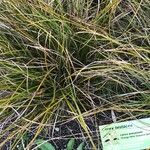
Carex testacea
Orange New Zealand sedge
Description
Source: leafsnapCarex testacea, commonly known as Orange New Zealand Sedge, is a perennial, grass-like plant belonging to the Cyperaceae family. Native to New Zealand and Australia, it has gained popularity worldwide as an ornamental plant due to its distinctive orange-brown foliage. This plant grows in clumps and can reach up to 30 cm in height, with a spread of about 60 cm. Its narrow, arching leaves boast an orange-brown hue that deepens during the summer months, and the foliage remains evergreen throughout the year. Carex testacea thrives in well-drained soil with moderate moisture levels but can tolerate dry conditions once established. It prefers full sun or partial shade, though its vibrant color may fade if grown in deep shade. A low-maintenance plant, Carex testacea requires minimal pruning or fertilization but does benefit from occasional watering during prolonged dry spells. Overall, Carex testacea is an excellent choice for gardeners seeking an attractive, ornamental, grass-like plant that adds color and texture to their landscape design while demanding minimal care.
💡 In 1754, Lin Nai established the genus known as "true sedge." This plant is a significant component of China's flora and is the dominant grass species in the lowest layer of many forests. In some areas, true sedge makes up most of the lower vegetation.
Care Guide
💧 Water Every 7 days
Sedge thrives in moderately moist environments, where it prefers consistent moisture without becoming waterlogged. To maintain its vitality, it is essential to water it weekly. Sedge also efficiently utilizes seasonal rainfall for hydration, demonstrating its adaptation to the precipitation patterns of its growing season.
☀️ Light Full sun
Sedge is a sun-loving, perennial herbaceous plant native to open habitats, often thriving in meadows and grasslands. It prefers full sun but can also tolerate partial sun.
What are the sunlight requirements for Sedge?
Sedge, a sun-loving perennial herbaceous plant known botanically as Carex testacea, thrives in full sun conditions, which means it requires more than 6 hours of sunlight daily. However, it can also tolerate partial sun, needing about 3-6 hours of sunlight. When choosing a location for your Sedge, observe the movement of sunlight through your garden to ensure that you provide the right balance of light and shade, keeping your plants healthy and happy.
Can artificial lighting be used for Sedge, and what are the recommendations?
Yes, artificial lighting can be used for Sedge, especially when natural sunlight is insufficient, like in winter or less sunny spaces. For indoor plants, LED lights are recommended as they can be tailored to provide specific wavelengths needed by the plants. Full sun plants require 30-50W/sq ft of artificial light, plants in partial sun need 20-30W/sq ft, and full shade plants need 10-20W/sq ft. The light source should be placed 12-36 inches above the plant, mimicking natural sunlight conditions, and most plants will need 8-12 hours of light per day.
What are the common symptoms of insufficient light in Sedge?
When Sedge is exposed to inadequate lighting, several symptoms may indicate light deficiency. These include smaller new leaves compared to mature ones, leggy or sparse growth, faster leaf drop, slower or halted new growth, and the development of lighter-colored or pale new leaves. Additionally, chlorosis could occur, leading to yellowing leaves due to chlorophyll breakdown, sunscald can create pale or necrotic areas on plant tissues, leaf curling can manifest as a defense mechanism against excessive sunlight, and both wilting and leaf scorching indicate overexposure to sunlight, resulting in increased water loss and reduced plant health.
What solutions are available for light-related issues in Sedge?
To address light-related growth issues in Sedge, consider moving your plant gradually to a sunnier location each week until it gets at least 6 hours of direct sunlight daily for outdoor plants or use a south-facing window for indoor plants. If the plant is large or not easily movable, supplement with artificial light, keeping a desk or ceiling lamp on for at least 8 hours daily, or invest in professional plant grow lights. For ground plants with obstructions blocking sunlight, consider pruning or transplanting to a location with ample sunlight and good drainage. Note that parts of the plant affected by prior insufficient light may not recover, but new growth should be healthy following these adjustments.
🌡️ Temperature 10–35°C
Sedge can tolerate a wide range of temperatures, but its range may still be restricted by particular combinations of moisture and heat. It grows best in warm summer conditions with sufficient rainfall or watering. Prolonged periods of cloudy, rainy weather or sustained high temperatures can raise the likelihood of Sedge dying. In winter, appropriate protection from cold can increase the plant's survival rate.
What is the botanical name of Sedge?
The botanical name of Sedge is Carex testacea.
💨 Humidity
🪴 Soil 5-7
🌱 Fertilizer
One application of fertilizer in spring is generally enough for Sedge, although multiple feedings can maximize growth. Apply fertilizer about once every month to a month and a half. Fertilization improves leaf appearance and function, helping maintain even color and a healthy texture. It also encourages root growth and nutrient uptake, supporting the plant's long-term health.
🪴 Pot & Repot 2-3 years
When repotting Sedge, select a pot 1-2 inches (2.5–5.1 cm) larger with ample drainage. Use a well-draining potting mix. Repot in spring or fall, ensuring the root ball sits slightly below the rim of the flower pot. Water thoroughly after repotting and place it in a warm spot with indirect sunlight.
✂️ Pruning
Sedge boasts arching, orange-brown foliage that is perfect for ornamental gardens. To enhance its shape and promote healthy growth, prune it from early to late spring. Be sure to remove any dead or damaged stems and trim back any overgrown areas to encourage new shoots. Always use clean, sharp tools to prevent the spread of disease.
🌿 Propagating
🐛 Diseases & pets
☠️ Toxicity
Characteristics
- Plant Type
- Herb
- Life Cycle
- Perennial
- Genus
- Carex
- Family
- Cyperaceae
- Hardiness Zone
- 6-10
- Mature Height
- 1.52 m
- Mature Spread
- 61 cm
- Leaf Color
- Orange, Green, Bronze, Brown
- Leaf Type
- Evergreen
- Flower Color
- Brown
- Bloom Time
- Mid spring, Late spring
- Planting Time
- Spring, Summer
- Harvest Time
- Early summer, Mid summer
- Native Area
- New Zealand