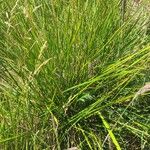
Carex tumulicola
Splitawn sedge · Foothill Sedge · Slender sedge · Split-awn sedge · Foot-hill sedge
Description
Source: leafsnapCarex tumulicola, the splitawn sedge foothill sedge, or previously Berkeley sedge, is a sedge member of the family Cyperaceae.
💡 In 1754, Lin Nai established the genus known as "true sedge." This plant is a significant component of China's flora and is the dominant grass species in the lowest layer of many forests. In some areas, true sedge makes up most of the lower vegetation.
🌳 Berkeley sedge is an ideal choice for a border or ground cover, particularly in shaded areas. Its long, clumping grasses remain vibrant throughout the year in warmer climates, adding ornamental appeal to both wildlife and city gardens. Additionally, it attracts birds that enjoy its seeds. This resilient plant is drought-tolerant and deer-resistant.
🎭 Furry, steadying, reliable
Care Guide
💧 Water
Berkeley sedge thrives in moderate moisture conditions, requiring watering twice a week to keep the soil damp but not waterlogged. As an evergreen plant, it needs consistent hydration throughout the year, making it well-suited for outdoor growth in temperate climates.
☀️ Light Partial sun
Berkeley sedge grows best in spots with limited to moderate sunlight. It can tolerate lower light levels as well as exposure to full sun. In the wild, it commonly occurs in habitats where the strength of sunlight varies. Too little or too much sun can affect its health, but it possesses a fairly wide light tolerance, appropriate for this hardy plant.
What are the sunlight requirements for Berkeley Sedge?
Berkeley sedge, also known by its botanical name Carex tumulicola, thrives best in areas with partial to full sun exposure, requiring about 3-6 hours of sunlight for optimal growth. It is adaptable and can also grow well in full shade, where it receives more than 6 hours of sunlight. It's important to observe your garden's sunlight patterns closely, as the right balance of light and shade is crucial for the plant's well-being. Berkeley sedge is naturally accustomed to varying intensities of sun in its habitat, making it a robust plant with a decent tolerance for different lighting conditions.
Can Berkeley sedge survive with artificial lighting?
Yes, Berkeley sedge can benefit from artificial lighting, especially in conditions where natural sunlight is insufficient, such as during winter or in less sunny indoor spaces. To ensure optimal growth under artificial lights, the following guidelines can be useful: Choose LED lights for their ability to provide specific wavelengths needed by plants. Full sun plants require 30-50W/sq ft, partial sun plants need 20-30W/sq ft, and full shade plants should have 10-20W/sq ft of artificial light. The light source should be placed 12-36 inches above the plant to mimic natural sunlight effectively, and most plants will need 8-12 hours of light per day.
What are common symptoms of Berkeley sedge getting insufficient light?
When Berkeley sedge does not receive enough light, several symptoms may become apparent, indicating its need for better lighting conditions. These include smaller new leaves, leggy or sparse growth, faster leaf drop, slower or halted growth, and lighter-colored or irregularly patterned new leaves. These symptoms reflect the plant's efforts to adapt to low light by conserving resources or altering its growth patterns. Additionally, excessive sunlight can cause symptoms like chlorosis, sunscald, leaf curling, wilting, and leaf scorching, highlighting the importance of finding the right balance of light exposure for the plant.
What solutions can help optimize Berkeley sedge's growth in terms of sunlight?
To optimize Berkeley sedge's growth in response to sunlight exposure, consider gradually acclimatizing the plant to changing light conditions. For indoor plants, it's advisable to move them to sunnier spots each week, aiming for 3-6 hours of direct sunlight daily. If moving the plant is not feasible, supplement with artificial lighting, keeping a desk or ceiling lamp on for at least 8 hours daily, or investing in professional grow lights. For outdoor plants, similarly move them to progressively sunnier locations while avoiding sudden changes in light intensity to prevent sunburn. If physical obstructions block sunlight, consider pruning or transplanting to a better-lit area. Remember, parts of the plant damaged by insufficient light might not recover, but new growth can be healthy with improved light conditions.
🌡️ Temperature 15–35°C
The berkeley sedge needs a native growing environment with temperatures from 59 to 95 ℉ (15 to 35 ℃). It prefers temperatures of 59 to 77 ℉ (15 to 25 ℃), but can tolerate heat up to 95 ℉ (35 ℃). In summer, it may benefit from some shade or extra watering to cope with higher temperatures.
What are the ideal growing conditions for Berkeley sedge?
Berkeley sedge, botanically known as Carex tumulicola, thrives in its native growth environment with temperatures ranging from 59 to 95°F (15 to 35°C), ideally between 59 to 77°F (15 to 25°C). While it can tolerate temperatures up to 95°F (35°C), during summer months, it benefits from some shade or extra watering to cope with higher temperatures. The plant has a moderate tolerance to cold, generally requiring no additional measures when temperatures are above -5°C. However, if temperatures are expected to drop below this point, protective measures such as wrapping the plant with plastic film, fabric, or other materials are necessary, which should be removed once temperatures rise again.
How does Berkeley sedge react to low temperatures, and what should I do?
Berkeley sedge has a moderate tolerance to low temperatures but thrives best when the temperature remains above 15°C. During winter, it's crucial to keep it above -5°C. Should temperatures fall below -10°C, the leaves may start to droop; they can recover in mild cases, but in severe cases, the leaves will wilt and eventually fall off. To mitigate frost damage, trim off the frost-damaged parts, and before encountering low temperatures again, wrap the plant with materials such as non-woven fabric or cloth, and construct a wind barrier to protect it from the cold wind.
What measures should be taken for Berkeley sedge in high temperatures?
Berkeley sedge should be maintained below 35°C during summer. Exposing the plant to temperatures exceeding 41°C can cause the leaves to lighten in color, dry and wither at the tips, curl, and become more susceptible to sunburn. To address damage from high temperatures, trim away the sunburned and dried parts of the plant. Also, move the plant to a shaded location during the midday and afternoon sun, or use a shade cloth. It's beneficial to water the plant in the morning and evening to keep the soil moist, aiding in its recovery and health.
💨 Humidity
🪴 Soil 5-7
🌱 Fertilizer
Berkeley sedge benefits from extra nutrients to encourage healthy new growth. In spring, applying compost around the base of the plant will effectively supply the nutrition it needs. Fertilizing supports vigorous growth and improves the plant’s ability to resist diseases and pests.
🪴 Pot & Repot 2-3 years
When repotting Berkeley sedge, select a container 1–2 inches (2.5–5.1 cm) larger that provides good drainage. Use a well-draining potting mix. Repot in spring or fall, making sure the root ball sits slightly below the rim of the pot. Water thoroughly after repotting and place it in a warm spot with indirect sunlight.
✂️ Pruning
Berkeley sedge is a low-maintenance ornamental grass characterized by its slender blades. To encourage growth and prevent overcrowding, prune it in early spring by cutting it back to 5-8 cm (2-3 inches). Avoid pruning in the fall to protect it from frost, which helps maintain its aesthetic appeal and promotes healthy renewal.
🌿 Propagating
🐛 Diseases & pets
☠️ Toxicity
Characteristics
- Plant Type
- Grass
- Life Cycle
- Perennial
- Genus
- Carex
- Family
- Cyperaceae
- Hardiness Zone
- 8-10
- Mature Height
- 30 cm to 61 cm
- Mature Spread
- 61 cm to 91 cm
- Leaf Color
- Green, Blue
- Leaf Type
- Semi-evergreen
- Flower Color
- Green, White, Yellow, Cream, Brown
- Flower Size
- 0.51 cm to 0.76 cm
- Bloom Time
- Mid spring, Late spring
- Planting Time
- Spring
- Harvest Time
- Early summer, Mid summer
- Native Area
- Western North America