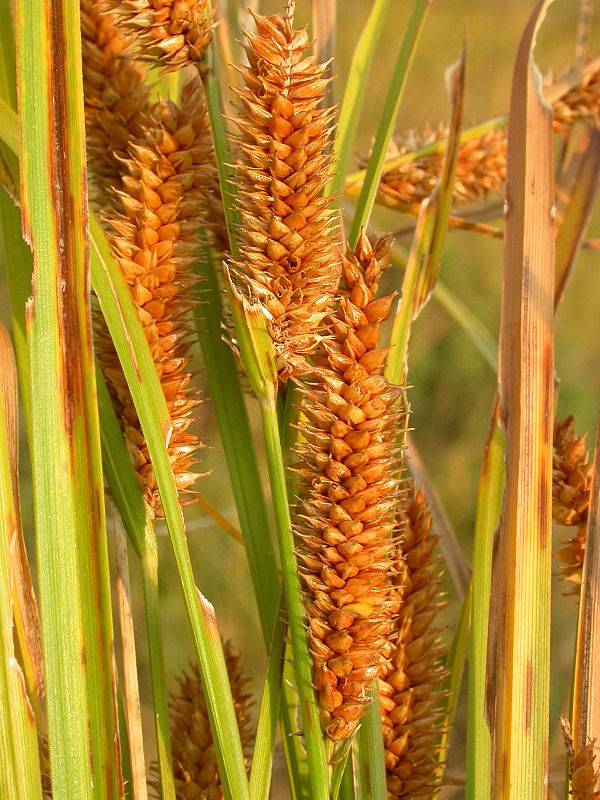
Carex utriculata
Northwest Territory Sedge · Beaked sedge · Bottle sedge · Common yellow lake sedge · Northern Beaked Sedge
Description
Source: leafsnapCarex utriculata is a species of sedge known as Northwest Territory sedge and common yellow lake sedge.
💡 In 1754, Lin Nai established the genus known as "true sedge." This plant is a significant component of China's flora and is the dominant grass species in the lowest layer of many forests. In some areas, true sedge makes up most of the lower vegetation.
Care Guide
💧 Water
Northwest Territory sedge, native to wetlands, thrives in environments with consistent moisture and can even endure moderate drought. It should be watered weekly, ensuring that the soil does not become waterlogged. This plant thrives outdoors, where natural rain patterns during the growing season help boost its growth.
☀️ Light Full sun
Northwest territory sedge grows best under an open sky, taking in a significant amount of sunlight. Its native marshy habitat similarly suggests a strong dependence on ample light for healthy growth. Either too much shade or excessive light exposure can affect the plant's health, possibly resulting in stunted growth or even decay.
What are the sunlight requirements for Northwest territory sedge?
Northwest territory sedge, or Carex utriculata, requires a considerable amount of sunlight to thrive optimally, indicating a preference for environments that replicate its marshy, origin habitat. The plant benefits significantly from being placed in areas where it can receive full sun, defined as over 6 hours of sunlight daily, but it can also adapt to partial sun conditions, which entail around 3-6 hours of sunlight. It's essential to monitor the sunlight patterns in your garden to ensure the right balance of light and shade, providing the plant with conditions that favor its growth and health. Excessive shade or overly bright conditions should be avoided, as they may lead to limited growth or even decay, highlighting the plant's dependency on substantial light for robust development.
How can artificial lighting be utilized for Northwest territory sedge indoors?
For Northwest territory sedge plants growing indoors, where natural sunlight may be insufficient, especially during winter or in less sunny areas, artificial lighting serves as an excellent supplement to promote faster and healthier growth. When selecting artificial lights, LED lights are recommended for their ability to provide specific wavelengths needed by plants. The amount of artificial light required varies with the plant's sunlight needs: 30-50W/sq ft for full sun plants, 20-30W/sq ft for partial sun plants, and 10-20W/sq ft for full shade plants. The light source should be placed 12-36 inches above the plant, mimicking natural sunlight conditions, and kept on for 8-12 hours daily, depending on the specific needs of the plant species.
What are the symptoms of inadequate light in Northwest territory sedge?
When Northwest territory sedge does not receive sufficient light, several symptoms can manifest. These include smaller than usual new leaves, leggy or sparse growth characterized by extended spaces between leaves or stems, premature leaf drop as a way to conserve resources, delayed or halted growth due to the plant entering survival mode, paler new leaves indicating a lack of chlorophyll and nutrients, and symptoms of overexposure such as chlorosis, sunscald, leaf curling, wilting, and leaf scorching. These symptoms reflect the plant's struggle to adapt to inadequate lighting, with some conditions like chlorosis being a result of too much light, showcasing the need for balanced exposure.
What solutions can help improve light conditions for Northwest territory sedge?
Improving light conditions for Northwest territory sedge can involve a combination of strategies depending on the plant's location. Indoors, gradually moving the plants to sunnier spots each week until they receive at least 6 hours of direct sunlight daily is recommended, utilizing a south-facing window when possible. For plants that are large or difficult to move, augmenting with artificial light, such as keeping a lamp on for at least 8 hours daily or investing in professional grow lights, can provide sufficient light. Outdoors, a gradual relocation to sunnier spots is advised to prevent sunburn, with the understanding that parts of the plant affected by low light may not recover, but new growth will be healthier. Ground-level adjustments include reducing obstructions such as pruning trees to allow more sunlight and transplanting smaller plants during their dormant period to areas with better sunlight and drainage.
🌡️ Temperature 10–35°C
Northwest territory sedge usually grows best in its native habitats when average temperatures fall between 50 and 95 °F (10 to 35 ℃). To achieve optimal growth, keep temperatures within that range across the seasons.
What are the ideal temperature conditions for Northwest territory sedge?
Northwest territory sedge, or Carex utriculata, thrives best in its native habitats with average temperatures ranging between 50 to 95°F (10 to 35°C). To encourage optimal growth, it's crucial to maintain these temperature ranges throughout the different seasons. The plant demonstrates strong cold resistance, hence special frost protection measures are not typically required during winter. However, when winter temperatures are expected to drop below -25°C, it's important to provide cold protection by covering the plant with materials such as soil or straw. Additionally, watering the plant abundantly before the first freeze in autumn helps keep the soil moist and prevents drought and water scarcity during winter and early spring.
What should I do if the temperature drops below the ideal range for Northwest territory sedge?
Northwest territory sedge is cold-tolerant and thrives best when temperatures stay above 10°C. During winter, it's crucial to keep it above -15°C. If temperatures fall below -25°C, there might not be noticeable changes during the winter, but you may observe a decrease in sprouting or even no sprouting during springtime. If this occurs, in spring, you should remove any parts of the plant that have failed to sprout to ensure the health and vitality of the remaining plant.
How should I care for Northwest territory sedge in high temperatures?
During the hot summer months, it's vital to ensure that Northwest territory sedge's temperature remains below 35°C. When the temperature exceeds 41°C, the plant's leaves may become lighter in color, prone to curling, susceptible to sunburn, and in severe cases, the entire plant may wilt and dry out. To mitigate these risks, trim away any sunburned and dried-up parts of the plant. It's also advisable to move the plant to a location where it can be shaded from the midday and afternoon sun, or use a shade cloth to provide protection. Additionally, watering the plant in the morning and evening helps keep the soil consistently moist.
💨 Humidity
🪴 Soil 5-7
🌱 Fertilizer
Northwest territory sedge needs extra nutrients to encourage healthy new growth. In spring, applying compost around the base of the plant can effectively supply the nutrition it requires. Fertilizing helps support vigorous growth and assists the plant in resisting diseases and pests.
🪴 Pot & Repot
✂️ Pruning
The Northwest Territory sedge thrives in wetlands and benefits from early spring pruning. This process involves removing dead foliage and thinning the clumps to improve airflow. Such practices encourage vigorous growth, help prevent diseases, and contribute to the plant's overall health and longevity, according to horticultural experts.
🌿 Propagating
🐛 Diseases & pets
☠️ Toxicity
Characteristics
- Plant Type
- Grass
- Life Cycle
- Perennial
- Genus
- Carex
- Family
- Cyperaceae
- Hardiness Zone
- 6-10
- Mature Height
- 0.25 m to 1.07 m
- Mature Spread
- 30 cm to 61 cm
- Leaf Color
- Green
- Leaf Type
- Evergreen
- Flower Color
- White, Yellow, Brown
- Flower Size
- 0.20 cm to 0.51 cm
- Bloom Time
- Late spring, Early summer
- Planting Time
- Spring, Summer, Autumn
- Harvest Time
- Mid summer, Late summer
- Native Area
- Russia, Lithuania, Norway, Sweden, Kazakhstan, Japan, Finland, Estonia, Koppen, Poland, Latvia, Belarus, China