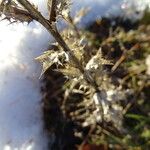
Carlina vulgaris
Carline thistle · Common carline thistle · Common carlina · Fireweed · Common Golden Thistle
Description
Source: leafsnapCarlina vulgaris, commonly known as the carline thistle, is a perennial herbaceous plant belonging to the Asteraceae family. Native to Europe, it thrives in dry grasslands, rocky slopes, and meadows. The plant can reach up to 60 cm in height and features a basal rosette of deeply lobed, spiny leaves. The flowers of Carlina vulgaris are large and striking, with yellow petals encircling a central cone-shaped structure composed of numerous small flowers. These flower heads are surrounded by spiny bracts, providing protection from herbivores. Historically, the carline thistle has been used for its medicinal properties, particularly for its anti-inflammatory benefits. Ancient cultures also attributed magical properties to the plant, using it as an amulet against evil spirits. In contemporary times, Carlina vulgaris is primarily cultivated as an ornamental plant due to its attractive flowers and foliage. It is also used in traditional medicine to treat various ailments, including digestive disorders, respiratory issues, skin conditions, and fever. Overall, Carlina vulgaris is a fascinating plant with both historical significance and practical uses in modern times.
Care Guide
💧 Water Every 7 days
Fireweed thrives with moderate moisture and should be watered weekly for optimal growth. During periods of active growth, its watering needs increase to support lush foliage and flowering. Although this herbaceous plant can tolerate occasional dry spells, it grows best in its native environment with consistent hydration.
☀️ Light Full sun
Fireweed does best in places that receive sunlight for most of the day, though it can tolerate locations with fewer sunlit hours. Coming from environments with abundant sunlight, too much shade may impede its growth, while excessive sun exposure can cause wilting or leaf scorch.
What are the sunlight requirements for Fireweed?
Fireweed, or Carlina vulgaris, flourishes under varying sunlight conditions but has specific needs to reach its full growth potential. It thrives best in locations where it can bask in full sun, which means the area should receive more than 6 hours of direct sunlight daily. However, it can also endure partial sun exposure, defined as about 3-6 hours of sunlight. When selecting a spot for your Fireweed, observing how sunlight moves through your garden is crucial. Finding the right balance between light and shade is key to ensuring the plant's health and vigor. Excessive shadow can inhibit its growth, while too much direct sunlight may cause wilting or leaf scorch.
How does artificial lighting affect Fireweed growth indoors?
Artificial lighting plays a vital role in the growth of indoor Fireweed plants, especially when natural sunlight is insufficient. For optimal growth, indoor plants may need specific artificial lighting conditions, especially during winter or in spaces that don't receive enough sunlight. LED lights are often chosen for indoor plant lighting as they can be tailored to provide specific wavelengths needed by plants. Full sun plants require 30-50W/sq ft of artificial light, partial sun plants need 20-30W/sq ft, and full shade plants should get 10-20W/sq ft. It's important to place the light source 12-36 inches above the plant, mimicking natural sunlight's distance. Furthermore, adjusting the duration to replicate natural daylight hours, typically 8-12 hours per day, can promote healthier, faster growth.
What are the symptoms of inadequate sunlight in Fireweed?
When Fireweed, or Carlina vulgaris, doesn't receive sufficient sunlight, it may exhibit several symptoms indicating light deficiency. These include smaller new leaves, leggy or sparse growth, faster leaf drop, slower or no new growth, and lighter-colored new leaves. Symptoms like chlorosis, where leaves lose their green color, sunscald, which causes pale or necrotic patches on plant tissue, leaf curling as a defense against excessive sunlight, wilting from too much water loss, and leaf scorching characterized by brown, crispy leaf edges, also signal issues with sunlight exposure. These signs help in identifying whether the plant is receiving too much or too little light.
How can I address sunlight-related issues for my Fireweed plant?
To optimize your Fireweed's growth and address sunlight-related issues, proper adjustments are necessary. For indoor plants, gradually increasing exposure to at least 6 hours of direct sunlight daily is crucial. Utilizing a south-facing window and keeping curtains open during daylight hours helps in maximizing sunlight and nutrient accumulation. If moving the plant isn't feasible, consider artificial lighting solutions such as keeping a lamp on for at least 8 hours a day or investing in professional plant grow lights. For outdoor plants, gradually adapting them to sunlight by moving them to sunnier spots weekly is advised to avoid sunburn. Additionally, for ground planting, start by identifying and reducing obstructions like overhanging branches, and consider transplanting smaller plants to sunnier locations during their dormant period for better light access and growth.
🌡️ Temperature 5–35°C
Fireweed is native to temperate climates and favors temperatures between 68 and 95°F (20 and 35°C). Depending on the season, adjustments may be necessary to replicate its natural temperature conditions for optimal growth.
What is the ideal temperature range for growing Fireweed?
Fireweed, known botanically as Carlina vulgaris, flourishes in temperate environments with an ideal temperature range of 68 to 95°F (20 to 35°C). To ensure optimal growth, it's crucial to adjust conditions to mimic its natural thermal habitat, especially considering the seasonal changes.
Does Fireweed need special protection during winter?
Fireweed possesses strong cold resistance, which means special frost protection measures aren't typically necessary during winter. However, should winter temperatures be expected to drop below -25°C, it becomes important to provide cold protection. This can be effectively done by covering the plant with soil or straw. Additionally, it is recommended to water the plant abundantly before the first freeze of autumn to ensure the soil remains moist and enters a frozen state, helping to prevent drought and water scarcity during winter and early spring.
How does Fireweed respond to low temperatures, and what are the recommended solutions?
Fireweed is notably cold-tolerant, thriving best when the temperature remains above 20°C and kept above 0°C during winter. In conditions where the temperature falls below -25°C, the plant may not show immediate changes but could experience a decrease in sprouting or may not sprout at all come springtime. The recommended solution in spring for parts of the plant that have failed to sprout is to remove them.
How does Fireweed react to high temperatures, and what should be done?
In the summer months, it's crucial to keep Fireweed's surroundings below 35°C. Exposure to temperatures above 38°C can lead to the plant's leaves becoming lighter in color, curling, becoming prone to sunburn, and, in severe cases, the entire plant may wilt and dry up. To manage this, trim away the sunburned and dried-up parts of the plant, relocate it to a shaded area away from the midday and afternoon sun, or use a shade cloth for protection. Additionally, watering the plant in the morning and evening will help keep the soil suitably moist.
💨 Humidity
🪴 Soil 6-7
🌱 Fertilizer
Fireweed needs regular fertilization to encourage flowering but does not tolerate too much. It requires light doses of fertilizer given frequently throughout its entire life cycle, especially during the peak period of active growth and while it is flowering. You will feed your Fireweed until they stop blooming.
🪴 Pot & Repot
✂️ Pruning
Fireweed, with its spiny foliage, thrives when regularly pruned to improve its shape and promote blooming. The best time to prune is from early to late spring. During this period, focus on removing dead stems and thinning crowded areas to improve airflow. This practice not only enhances the plant's appearance but also helps prevent disease and encourages vigorous growth, resulting in a healthier plant.
🌿 Propagating
🐛 Diseases & pets
☠️ Toxicity
Characteristics
- Plant Type
- Herb
- Life Cycle
- Biennial, Perennial
- Genus
- Carlina
- Family
- Asteraceae
- Hardiness Zone
- 5-9
- Mature Height
- 10 cm to 49 cm
- Mature Spread
- 20 cm to 40 cm
- Leaf Color
- Green, Dark Green
- Leaf Type
- Deciduous
- Flower Color
- Yellow
- Flower Size
- 2.03 cm to 3.56 cm
- Bloom Time
- Mid summer, Late summer, Early fall
- Planting Time
- Spring
- Harvest Time
- Early fall, Mid fall