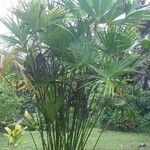
Carludovica palmata
Panama-hat-palm · Panama hat plant · Panama-hat palm · Chidra · Jipijapa
Description
Source: leafsnapCarludovica palmata, commonly known as the Panama hat plant or toquilla palm, is a tropical plant native to Central and South America. Belonging to the family Cyclanthaceae, it is closely related to the pineapple. The plant can grow up to 3 meters tall, and its large leaves may reach up to 2 meters in length. The Panama hat plant is renowned for its role in the production of traditional Panama hats, which are actually crafted from the fibers of its leaves. These fibers are harvested by hand, boiled in water for several hours, then dried and woven into hats. In addition to its economic significance as a source of fiber for hats, Carludovica palmata also possesses medicinal properties. Indigenous people have traditionally used its leaves to treat various ailments such as fever and inflammation. The plant thrives in moist soil with good drainage and prefers partial shade or filtered sunlight. It can be grown outdoors in tropical regions or indoors with proper care, including regular watering and fertilization. Overall, Carludovica palmata is a fascinating tropical plant. It holds cultural importance through its use in traditional hat-making techniques and offers medicinal benefits from its natural compounds.
🌳 Although commonly known for its part in producing the iconic Panama hat, the panama hat plant also has a range of lesser-known uses. Its young shoots and roots are edible, with the shoots eaten as a vegetable and the roots serving as a source of starch. This multipurpose plant is also being investigated for its potential to generate biomass energy, demonstrating its capacity to affect the renewable energy sector. Moreover, its fibers are not only used for textiles but are also being explored for papermaking, providing a sustainable alternative to traditional wood pulp sources.
Care Guide
💧 Water Every 7 days
The Panama hat plant thrives in conditions of high humidity and requires consistent moisture, preferring soil that remains evenly moist. To maintain its lush foliage, it is essential to water it weekly. As an evergreen plant, it benefits from being cultivated indoors, where humidity levels can be controlled. This helps ensure vibrant growth throughout the year.
How should I water my Panama hat plant?
To properly water the Panama hat plant, it's best to use filtered water at room temperature. Tap water may contain harmful particles, so filtered water is preferred. The rationale behind using room temperature or slightly warmer water is that the Panama hat plant is native to warm environments and cold water can shock it. It's also important to avoid overhead watering to prevent foliage complications. Instead, simply soak the soil with your filtered room temperature water until it is thoroughly moistened. This helps the plant by keeping the roots moist and allowing them to continue spreading through the soil to absorb the necessary nutrients.
What should I do if I give my Panama hat plant too much or too little water?
Overwatering is a common issue that can harm your Panama hat plant. When the plant receives too much water, its stems and leaves may wilt and turn yellow. Overwatering over time can also lead to diseases like root rot, mold, and mildew, which can be fatal for the plant. While underwatering is less common due to the plant's drought tolerance, it is still possible. Signs of underwatering include brittle and brown leaves. To care for your Panama hat plant, it is important to notice the signs of overwatering early. Some diseases caused by overwatering may not be fixable if left unaddressed. If you see early signs, reduce watering immediately and check the soil's drainage. Replace poorly draining soil with a loose, well-draining potting mix. If your plant shows signs of needing more water, simply water it more regularly until the signs improve.
How often do I need to water my Panama hat plant?
If your Panama hat plant is in a pot, the most accurate way to determine if it needs water is to check the soil by sticking your finger in. When the top two to three inches of soil feel dry, it's time to water it. If you have the plant outdoors in the ground, you can test the soil the same way. When the first few inches of soil are dry, watering is needed. In the spring and early fall, you'll usually need to water this plant about once a week using this method. However, during very hot weather, you might need to water it two or more times a week. Nevertheless, mature and well-established Panama hat plants are quite resilient and can tolerate drought conditions.
How much water does my Panama hat plant require?
When it's time to water your Panama hat plant, don't be afraid to give it a good amount of water. Wait until the first two to three inches of soil feel dry, then water the plant thoroughly. Make sure to pour enough water to fully soak the soil. You'll know you've added enough water when you start to see excess water draining from the bottom of the pot. If you don't see any water draining, it means you haven't watered enough. However, be careful not to let water accumulate in the soil, as this can harm the plant. On the other hand, if water isn't draining at all, it may mean that the soil doesn't drain well, which is bad for the plant's health. Lastly, if the plant is placed outdoors, one inch of rain per week should be enough.
How do I water my Panama hat plant at different stages of growth?
The water needs of the Panama hat plant can vary depending on its growth stages. In the first few years of its life or after being transplanted, more water than usual is necessary. This is because the plant focuses its energy on sprouting new roots that support future growth. These roots perform best with slightly higher moisture levels. As the plant matures, less water is required. Additionally, during the bloom period, the plant may need extra water due to the significant moisture used for flower development.
☀️ Light Full sun
The panama hat plant does best when bathed in ample sunlight. It can also tolerate patches of dappled light or times when its sun exposure is intermittent. However, too much or too little sun can negatively impact its growth, reflecting the consistent sunlight conditions of its native environment.
What are the sunlight requirements for the Panama hat plant?
The Panama hat plant, or Carludovica palmata, flourishes under full sun, requiring more than 6 hours of sunlight daily. It can also survive in partial sun, which consists of about 3-6 hours of sunlight. The native environment of this plant provides it with consistent sunlight conditions, but it's essential to ensure that it does not receive too much or too little exposure. An important tip is to observe the sunlight's movement through your garden to find spots that offer a good balance of light and shade, guaranteeing your plants' wellbeing.
How should indoor Panama hat plants be lit?
Indoor Panama hat plants need sufficient lighting to grow optimally, especially when natural sunlight is limited, such as in winter or less sunny spaces. Artificial lighting becomes crucial in these scenarios. LED lights are recommended because they can be adjusted to provide specific wavelengths needed by plants. For full sun plants, 30-50W per square foot is necessary; partial sun plants require 20-30W per square foot, and full shade plants need 10-20W per square foot. The light source should be placed 12-36 inches above the plant, mimicking natural sunlight as closely as possible, and it should remain on for 8-12 hours per day to simulate the length of natural daylight hours.
What are common symptoms of inadequate lighting in Panama hat plants?
Panama hat plants show several symptoms when they're not receiving enough light, including smaller new leaves, leggy or sparse growth, faster leaf drop, slower or no new growth, and leaves that are lighter in color or yellow, indicating chlorosis. Overexposure to sunlight can also cause problems such as sunscald, leaf curling, wilting, and leaf scorching. These symptoms signal that the plant's photosynthesis process is hindered, either by insufficient or excessive light, affecting its overall health and growth.
What solutions can help improve the growth of Panama hat plants with light issues?
To address light deficiency in Panama hat plants, gradually moving them to a location with at least 6 hours of direct sunlight daily is key, particularly for indoor plants. Using a south-facing window or supplementing with artificial light, such as desk lamps or grow lights for at least 8 hours a day, can significantly benefit the plants. Outdoors, it's important to transition plants to sunnier spots gradually to prevent sunburn. Pruning surrounding trees or transplanting the plant to a brighter location might be necessary to reduce obstructions to sunlight. Note that while damaged parts might not recover, new growth should be healthy following these adjustments.
🌡️ Temperature 20–37.8°C
Native to warm climates, the panama hat plant prefers conditions between 68 and 100 °F (20 and 38 ℃). Its temperature requirements change with the seasons—cooler in winter but never below freezing. Adaptable, try to mimic its natural environment for optimal growth.
What are the ideal temperature conditions for the Panama hat plant?
The Panama hat plant, or Carludovica palmata, thrives in warm climates and prefers temperatures ranging from 68 to 100 °F (20 to 38 °C). It demands cooler conditions during winter but should never be exposed to freezing temperatures. To ensure its optimal growth, it's imperative to replicate its natural warm environment as closely as possible. During colder months, especially in autumn, it's advisable to move the plant indoors and place it near a bright window, while being cautious to maintain a safe distance from heaters. Keeping the indoor temperature above 20°C can significantly benefit the plant's health during winter. However, temperatures nearing 5°C or colder can severely harm the plant.
How does low temperature affect the Panama hat plant, and what measures can be taken?
The Panama hat plant is sensitive to cold and flourishes when the temperature stays above 20°C, particularly struggling with anything below 5°C. Exposure to temperatures falling below 1°C can lighten the color of its leaves, gradually turning them brown or black after frost damage, ultimately causing wilting and drooping. To counteract frost damage, the affected parts should be trimmed off, and the plant must be relocated indoors to a warmer setting for protection against the cold. Placing the plant near a south-facing window assures sufficient sunlight, while it's important to avoid positioning it close to heaters or air conditioning vents, preventing air dryness.
How should the Panama hat plant be cared for in high temperature conditions?
In the summertime, the Panama hat plant should be kept in environments below 38°C to prevent heat stress. Temperatures exceeding 43°C may result in lighter leaf colors and increase susceptibility to sunburn. In case of high temperature or sunburn, it's recommended to trim the sunburned and dried parts of the plant. Relocating the plant to a shaded area, especially away from the harsh midday and afternoon sun, is beneficial. To maintain healthy moisture levels, watering the plant during cooler times of the day, such as morning and evening, is advisable.
💨 Humidity
🪴 Soil 5-7
🌱 Fertilizer
Proper fertilization is vital for the health and appearance of the Panama hat plant. Fertilize the Panama hat plant in summer, repeating the application monthly throughout the season. Nutrients fuel growth and help maintain the plant's structures. Fertilization also improves the Panama hat plant's flower display, ensuring the best blooms.
Why should I put fertilizer on my Panama hat plant?
Plants, including the Panama hat plant, need soil nutrients for their growth. However, it's not always certain that the soil will provide all the necessary nutrients. To ensure proper growth, fertilization and soil amendments are used. This not only provides basic nutrients but also the specific ones needed for the plants in your garden. For the Panama hat plant, fertilizer is important for healthy root and stem development throughout the growing season. Additionally, proper fertilization allows for beautiful foliage, which is a key characteristic of this plant.
When should I fertilize my Panama hat plant for optimal growth?
During the active growth phase of a Panama hat plant, which occurs mainly in spring, summer, and early fall, it requires the highest amount of fertilizer. Once winter is over, you should feed the plant every two to four weeks until the fall months. As fall approaches, gradually decrease the amount of fertilizer given until you stop completely in preparation for winter, when the plant's growth slows down significantly.
When is it not a good idea to fertilize my Panama hat plant?
For most of the year, including spring, summer, and most of fall, you should regularly feed your Panama hat plant. However, if you notice that your plant has received too much fertilizer or has been fertilized incorrectly, causing fertilizer burn or another issue, you should address and fix the problem before resuming the regular feeding schedule. The only time you should not fertilize a Panama hat plant is during winter. If you grow this plant indoors in a cold winter area, it will go dormant during this season. Feeding the plant during its dormant phase is unnecessary and unhelpful, and it is likely to cause fertilizer burn.
What kind of fertilizer does my Panama hat plant need?
When fertilizing a Panama hat plant, it is important to use a specific blend of nutrients, each present in small amounts. Ideally, the fertilizer should have an N-P-K ratio of 3-1-2. However, a general-purpose fertilizer with an even nutrient blend can also be effective. Regardless of the type of fertilizer used, the volume of each nutrient should be at 10 or lower. You can choose between granular or liquid-based fertilizer. If you opt for liquid fertilizer, it is recommended to dilute it by half. Granular fertilizer has few downsides, but using liquid fertilizer while watering your Panama hat plant is often the most sensible option.
How should I give nutrients to my Panama hat plant?
When purchasing fertilizer for your Panama hat plant, be sure to follow the provided application instructions. To prevent the fertilizer from damaging the plant's roots, it is best to fertilize just before or during watering. If using a slow-release granular fertilizer, sprinkle it on the soil and then water immediately after. For liquid-based fertilizer, dilute it with water, apply to the soil, and then provide additional water. It is especially important to dilute the fertilizer by at least half during the plant's growth periods in spring and fall.
🪴 Pot & Repot 2-3 years
Repot your Panama hat plant every 2 to 3 years during its active growth period, using a larger pot to support its bushy form. Ensure it receives indirect light, maintains adequate humidity, and avoid overwatering it after repotting to aid recovery. Keep in mind that the Panama hat plant thrives best when it has plenty of space to grow.
✂️ Pruning
The Panama hat plant benefits from occasional pruning, which is best done from early to late spring. Pruning promotes better air circulation and light penetration, fostering healthy growth. Use clean, sharp tools for precise cuts, and regularly inspect the plant to prevent pests and maintain its appearance.
🌿 Propagating
🐛 Diseases & pets
☠️ Toxicity
Characteristics
- Plant Type
- Herb
- Life Cycle
- Perennial
- Genus
- Carludovica
- Family
- Cyclanthaceae
- Hardiness Zone
- 10-12
- Mature Height
- 1.83 m to 3.66 m
- Mature Spread
- 1.22 m to 1.83 m
- Leaf Color
- Green
- Leaf Type
- Evergreen
- Flower Color
- Green
- Flower Size
- 2.54 cm to 5.08 cm
- Bloom Time
- Late spring, Early summer, Mid summer
- Planting Time
- Spring
- Harvest Time
- Mid summer, Late summer, Fall
- Native Area
- Colombia, Belize, Honduras, Mexico, Guatemala, Bolivia, Venezuela, Peru, Brazil, Nicaragua, Ecuador, Costa Rica, Panama