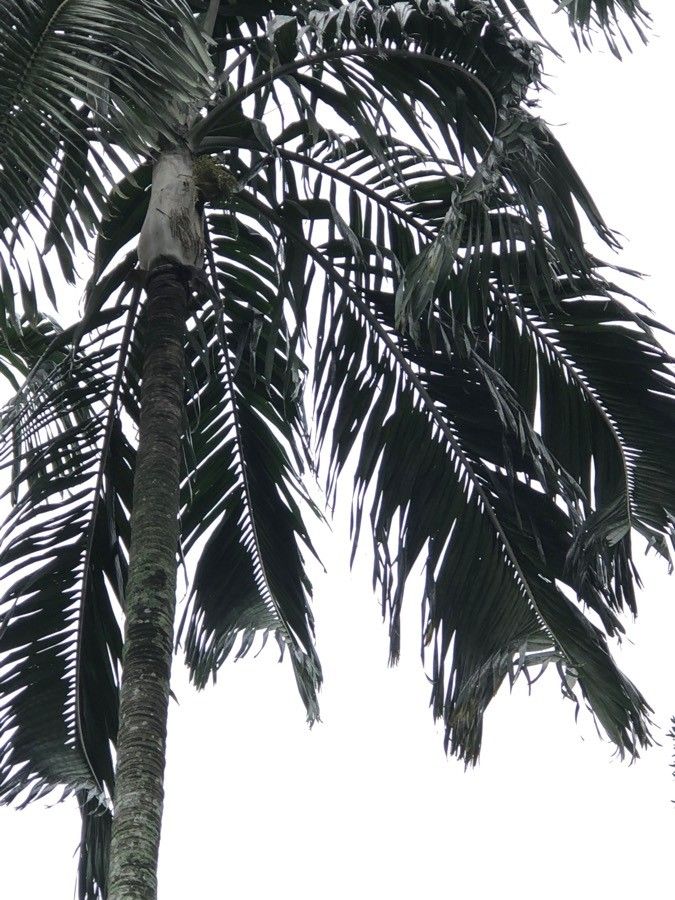
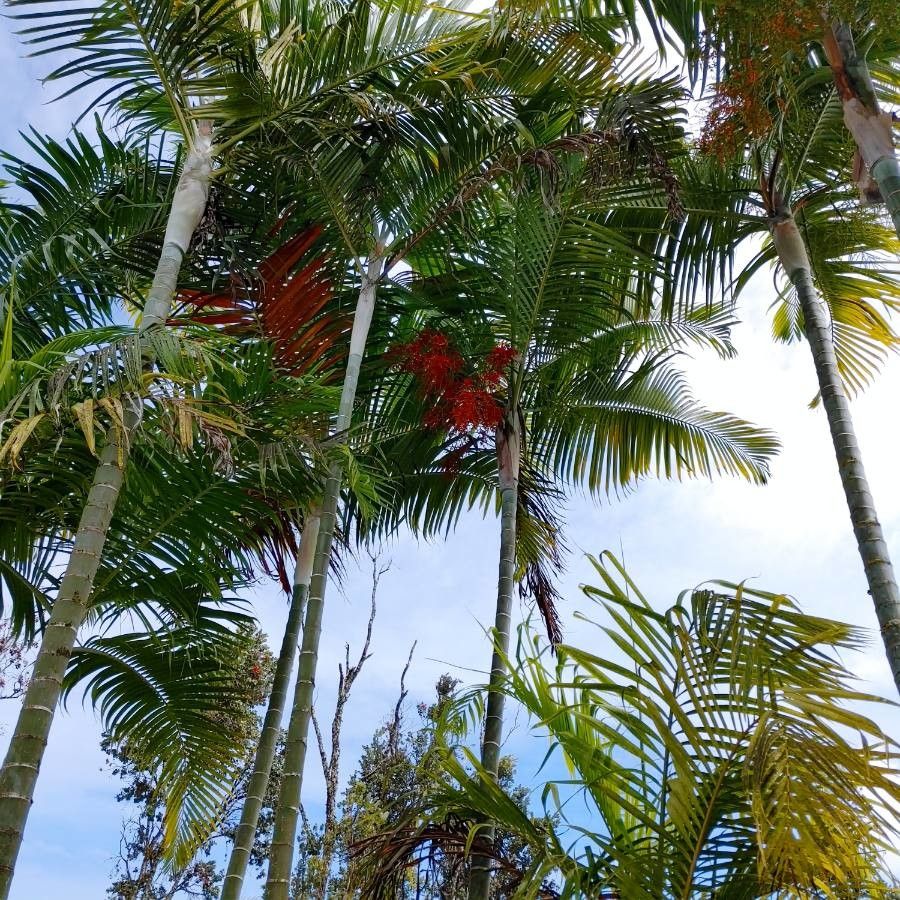
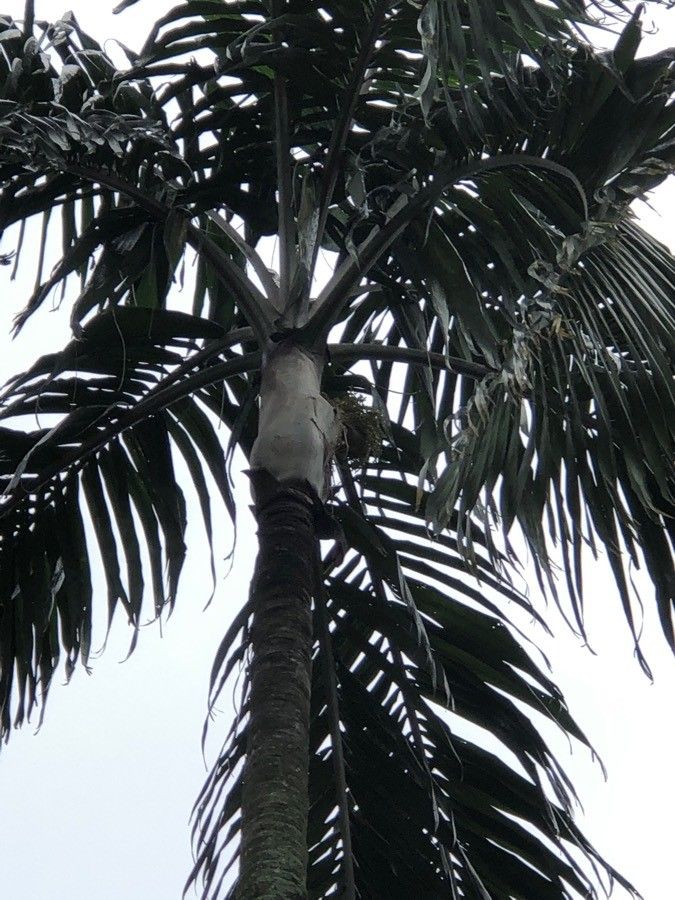
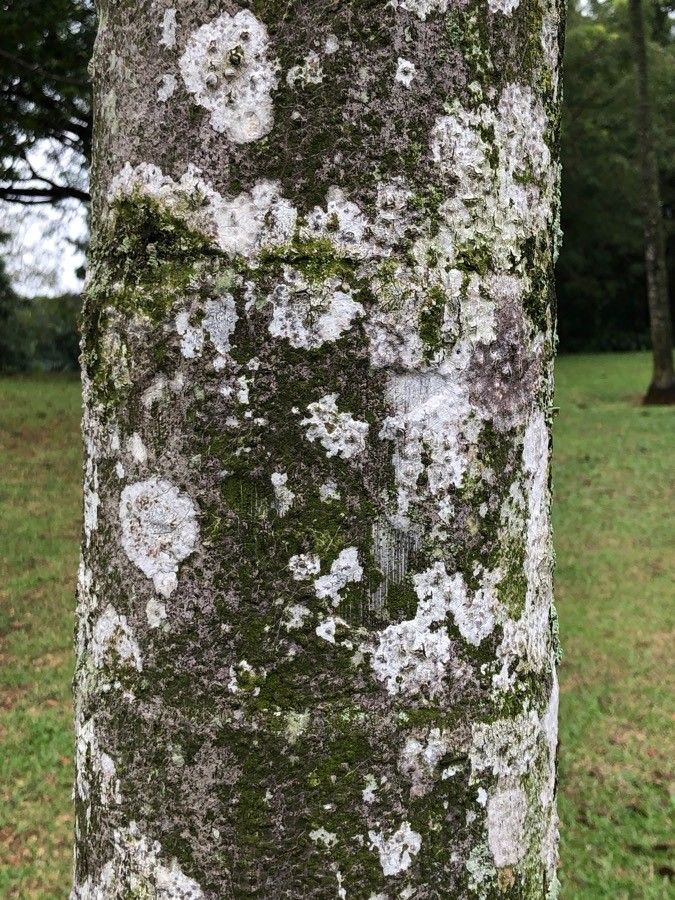
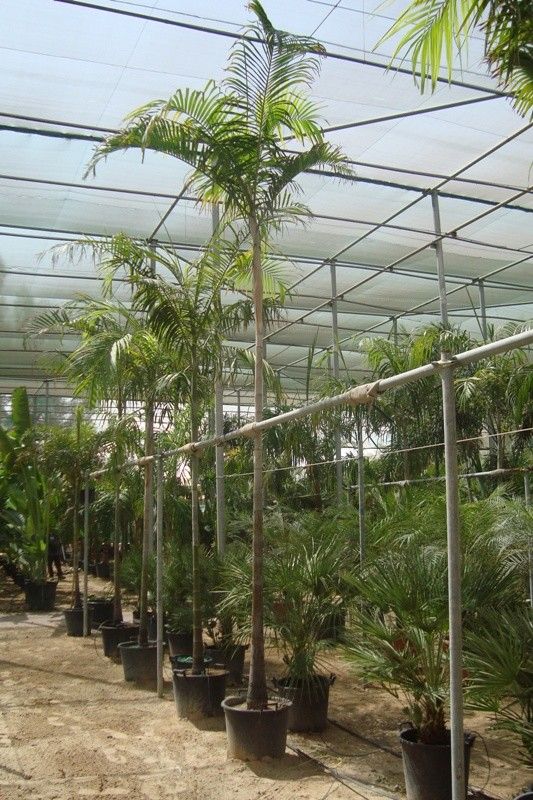
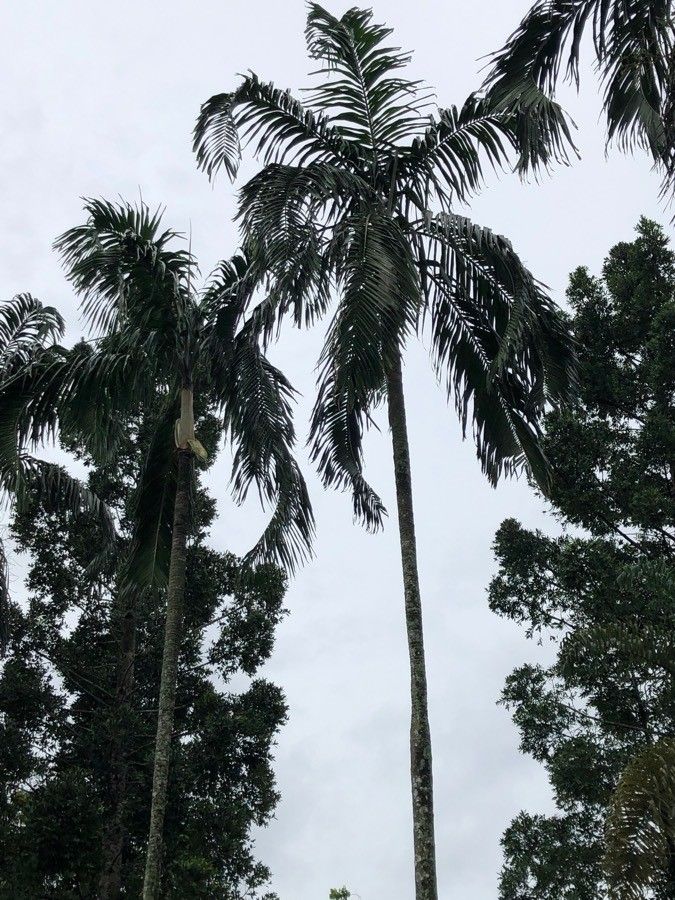
Carpentaria acuminata (carpentaria palm), the sole species in the genus Carpentaria, is a palm native to tropical coastal regions in the north of Northern Territory, Australia. It is a slender palm, growing to 20 m (65 ft) tall in the garden situation, with a trunk 12–15 cm (5–6 in) diameter. The leaves are pinnate, 3–4 m (10–15 ft) long. However, in its natural rainforest location such as at Fogg Dam Monsoon Forest 70 km (45 mi) east of Darwin, specimens often exceed 30 metres (100 ft) in height. It is a popular ornamental plant in northern Australia, valued for its rapid growth and very elegant foliage. In recent years, particularly in the capital of the Northern Territory, Darwin, the maturation of gardens after their destruction during Cyclone Tracy in 1974, has resulted in many thousands of specimens of these local palms reaching maturity and fruiting. This has led to many carpentaria palms being removed because of the high volumes of fruits they produce. The ripening fruits attract fruit bats and Torres Strait pigeons which can create a mess in smaller suburban gardens. It is however, a beautiful and very fast growing specimen tree in the right location. Note that Carpentaria should not be confused with the similarly spelled Carpenteria, a genus of shrubs in the family Hydrangeaceae native to California.
The Carpentaria palm is fairly resistant to disease and is generally not prone to illnesses. Regarding care, this plant is relatively low maintenance. When grown outdoors it needs minimal watering, and larger plants typically do not require pruning. Smaller plants, however, should be pruned after they have bloomed. Carpentaria palm is appropriate for anyone with an outdoor area, such as a garden or deck, and does not demand much prior plant-care experience.
How to keep Carpentaria Acuminata.
Light
Carpentaria palm, or carpentaria palm, does best when exposed to unobstructed sunlight. Having originated in habitats with abundant sunlight, the plant's growth and health are helped by generous light exposure. At every stage of its development it favors ample sunlight. Conversely, a lack of or too little sunlight may impede its optimal growth.
Water
The Carpentaria palm thrives in a humid, tropical climate with consistent moisture. To keep the soil evenly moist, water it every two weeks, but take care to avoid waterlogging. Generally, this palm is best grown outdoors where it can bask in full sunlight. Be sure to adjust your watering schedule based on rainfall and changes in the season.
Temperature
The Carpentaria palm comes from tropical areas where the climate is generally warm and humid. Consequently, it is well suited to high temperatures and humidity. It does not tolerate sudden temperature changes and prefers a steady thermal environment, so avoiding temperature swings indoors is important. It typically cannot withstand cold and needs higher temperatures to grow. If the surrounding temperature falls too low, the plant may stop growing or even perish.
Fertilizer
The best time to fertilize a Carpentaria palm is in early spring when it emerges from dormancy. Doing so stimulates overall growth and flower development. Fertilization improves the foliage, stems, and branches, and encourages flowers that are large, vibrant, and long-lasting. It helps transfer nutrients from the roots to the flowers and enhances the plant’s health and resistance to disease.
Pruning
The Carpentaria palm is a tropical plant with pinnate fronds that requires minimal pruning. To maintain its health and appearance, remove any damaged fronds in early spring, being careful not to over-prune. Proper pruning promotes better airflow and reduces the risk of pests. It also aligns with the plant's natural growth cycle, highlighting the importance of light maintenance rather than extensive pruning.
Botanical profile.
- Plant Type
- Tree
- Life Cycle
- Perennial
- Genus
- Carpentaria
- Family
- Arecaceae
- Hardiness Zone
- 10-12
- Mature Height
- 10.67 m to 12.19 m
- Mature Spread
- 2.44 m to 3.05 m
- Leaf Color
- Green
- Leaf Type
- Evergreen
- Flower Color
- White, Yellow, Cream
- Flower Size
- 2.54 cm
- Bloom Time
- Summer, Early fall, Mid fall
- Planting Time
- Spring, Summer, Autumn
- Harvest Time
- Fall, Early winter, Mid winter
Other names.
Reader questions.
What are the sunlight requirements for Carpentaria palm?
Carpentaria palm requires full sun, which means it needs to be exposed to more than 6 hours of sunlight daily to flourish. Originating from habitats abundant in sunlight, this plant's growth and health are significantly influenced by generous light exposure at each stage of its growth. However, it's crucial to watch how sunlight moves through your garden to choose spots that provide a perfect balance of light and shade, ensuring the plants' happiness.
Can artificial lighting be used for Carpentaria palm and how?
Yes, artificial lighting can be used for Carpentaria palm, especially when natural sunlight is insufficient, like in winter or less sunny spaces. It's important to choose the right type of artificial light, with LED lights being a popular choice because they can provide specific wavelengths needed by the plant. Full sun plants require 30-50W/sq ft of artificial light, partial sun plants need 20-30W/sq ft, and full shade plants need 10-20W/sq ft. The light source should be placed 12-36 inches above the plant, for 8-12 hours per day, to mimic natural daylight hours.
What symptoms indicate Carpentaria palm is not getting enough light?
Symptoms of insufficient light for Carpentaria palm include small leaves, leggy or sparse growth, faster leaf drop, slower or no new growth, lighter-colored new leaves, chlorosis, sunscald, leaf curling, wilting, and leaf scorching. These indicate the plant may be struggling due to suboptimal lighting conditions.
How can I address light deficiency in Carpentaria palm?
To address light deficiency in Carpentaria palm, for indoor plants, gradually move them to sunnier locations each week until they receive at least 6 hours of direct sunlight daily, and consider using artificial light if necessary. For outdoor plants, also move them gradually to avoid shock. Reduce obstructions like branches that may block sunlight, and consider transplanting to more suitable locations. It's crucial to note that parts of the plant damaged by insufficient sunlight might not recover, but new growth will be healthy after improving light exposure.