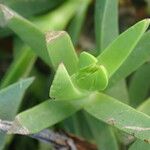
Carpobrotus acinaciformis
دم عقربی · Eland's Sour-fig · Sally-my-handsome · Red hottentot fig · Hottentot Fig
Description
Source: leafsnapCarpobrotus acinaciformis, commonly known as the Hottentot Fig or Sour Fig, is a succulent plant species in the Aizoaceae family. Native to South Africa, it has been introduced to many other regions due to its ornamental appeal and medicinal properties. This plant features thick, fleshy, triangular leaves that can grow up to 10 cm long. The leaves are green-grey and have a waxy coating that helps them retain moisture. Carpobrotus acinaciformis produces large, showy flowers with bright yellow petals that bloom from late spring through summer. The Hottentot Fig serves as an excellent ground cover because it spreads quickly through runners, or stolons, which can grow up to 2 meters long. It thrives in well-drained soil with full sun exposure but can also tolerate partial shade. Indigenous people of South Africa have used Carpobrotus acinaciformis for centuries for its medicinal benefits, treating ailments such as coughs, colds, stomach problems, and skin irritations. However, it is important to note that this plant species is considered invasive in some regions, such as Australia. In these areas, it poses a threat by outcompeting native vegetation, leading to a loss of biodiversity. Consequently, controlling its spread is crucial, especially when planting near natural areas or waterways where it might escape cultivation and cause ecological damage if not properly managed.
Care Guide
💧 Water Every 7 days
The Hottentot fig is well-suited for arid climates, demonstrating a high tolerance for drought. It thrives with minimal moisture and needs watering only every three weeks, making it an excellent choice for outdoor settings. As an evergreen plant, the Hottentot fig retains moisture during dry periods, allowing it to maintain its foliage throughout the year with little maintenance.
☀️ Light Full sun
Hottentot fig grows best in abundant sunshine, which is necessary for its healthy growth and development. Increased sunlight exposure speeds up the plant's growth rate. While it can tolerate reduced light, that is not ideal for its optimal growth. Very high or very low light levels can potentially harm the plant.
What are the sunlight requirements for Hottentot fig?
Hottentot fig, or Carpobrotus acinaciformis, flourishes best with above 6 hours of sunlight per day, thriving optimally in conditions of plentiful sunshine essential for its healthy growth and development. A suitable balance of light and shade is crucial, ensuring plants receive the perfect amount of light without harm. Watch how sunlight moves through your garden to choose spots fulfilling this balance for your plants. Although the Hottentot fig can endure lesser light, such conditions are not conducive to its ideal growth. Exposure to excessive or very low light levels can harm the plant.
How can artificial lighting be utilized for indoor Hottentot fig plants?
When natural sunlight is insufficient, particularly in winter or in less sunny spaces, artificial lighting becomes essential for the growth of indoor Hottentot fig plants. LED lights are highly recommended due to their ability to be customized to provide specific wavelengths required by the plant. For full sun plants, 30-50W per square foot is advised; partial sun plants need 20-30W per square foot, and full shade plants require 10-20W per square foot. The artificial light source should be placed 12-36 inches above the plant to mimic natural sunlight properly, and most plants benefit from 8-12 hours of artificial light per day to mimic natural daylight hours.
What symptoms indicate insufficient light for Hottentot fig plants?
Symptoms of insufficient light in Hottentot fig include the development of smaller new leaves, leggy or sparse growth, faster leaf drop, slower or no new growth, lighter-colored new leaves, and symptoms of overexposure like chlorosis, sunscald, leaf curling, wilting, and leaf scorching. These signs indicate that the plant is not getting the optimal light conditions it needs to thrive, with either too little or too much exposure causing different issues.
How can light conditions be improved for Hottentot fig plants?
To optimize growth for Hottentot fig plants, gradually move them to a location where they can receive at least 6 hours of direct sunlight daily. If indoors and not easily movable, consider using desk or ceiling lamps for at least 8 hours daily, or invest in professional plant grow lights. For outdoor plants, ensure gradual adjustment to sunlight to prevent sunburn. Reducing obstructions, such as pruning trees that block sunlight, and transplanting smaller plants during their dormant period to spots with ample sunlight and good drainage can significantly improve light conditions. It's important to note that parts of the plant affected by prior insufficient sunlight may not recover fully, but new growth can be healthy with improved light exposure.
🌡️ Temperature 15–37.8°C
Native to temperate regions, the hottentot fig grows best at temperatures between 59 and 100 °F (15 and 38 ℃). In its natural setting it experiences mild winters and warm, dry summers. Caring for it may require adjusting temperatures in response to seasonal changes.
What are the ideal temperature conditions for growing Hottentot fig?
Hottentot fig, or Carpobrotus acinaciformis, flourishes in temperate climates, preferring temperatures between 59 to 100°F (15 to 38°C). Native to regions with mild winters and warm, dry summers, it requires adjustments to maintenance with seasonal temperature changes. As a heat-loving plant, it slows growth and enters dormancy in winter. When temperatures dip below -5°C, it's advisable to move the plant indoors, ideally near a south-facing window for maximum sunlight exposure. In scenarios of inadequate natural lighting, supplementary lighting can be utilized. Additionally, when temperatures fall below 15°C, it's crucial to reduce or cease watering to avoid root rot. For outdoor plants, halt watering completely in low temperatures. To protect against cold, consider using a temporary greenhouse or wrapping with materials like plastic film or fabric.
How does low temperature affect Hottentot fig and what are the solutions?
Low temperatures pose a significant challenge to the Hottentot fig, which thrives best above 15°C and should stay above -5°C during winter months. Exposure to temperatures below -10°C can weaken the plant, causing it to wilt and become prone to root rot. In cases of mild frost damage, symptoms might not be immediate, but the plant may begin to wither after a week. To address frost damage, trim off the affected areas, check for and remove any rotted roots, and consider propagating the plant through cuttings. Moving the plant to a warmer indoor setting near a south-facing window will help ensure it receives sufficient sunlight. If natural light is lacking, supplemental lighting can be employed.
What should be done if a Hottentot fig is exposed to high temperatures?
During the peak of summer, it's crucial to ensure that the temperature surrounding a Hottentot fig does not exceed 38°C. Temperatures above 43°C halt the plant's growth, leading to water loss, wilting, and an increased risk of sunburn. To manage such conditions, remove any sunburned or rotten parts of the plant, and provide shade from the intense afternoon sun until it shows signs of recovery and resumed growth. In instances where root rot is present, cease watering the plant until new roots develop.
💨 Humidity dry (<40%)
This plant prefers dry conditions, so don't mist it. However, watering it less often can also thrive in higher humidity.
🪴 Soil 6-7
🌱 Fertilizer
For Hottentot fig, small amounts of fertilizer applied one to two times a year during the growing season are sufficient. Do not fertilize in winter or during the summer dormancy. Cut back on fertilizer for plants that have been repotted and wait a couple of months after repotting before fertilizing. Fertilizing supports healthy growth and promotes blooms.
🪴 Pot & Repot Every 3 years
✂️ Pruning
To maintain the shape of a Hottentot fig, prune any redundant or dense branches in the spring and autumn using tools such as a knife or scissors. For propagation, cut 5 to 6 leaf stems and apply sulfur powder to the wounds. Allow them to heal before planting, and slightly moisten the soil for the cutting.
🌿 Propagating
🐛 Diseases & pets
☠️ Toxicity
Characteristics
- Plant Type
- Succulent
- Life Cycle
- Perennial
- Genus
- Carpobrotus
- Family
- Aizoaceae
- Hardiness Zone
- 8-11
- Mature Height
- 49 cm
- Mature Spread
- 91 cm
- Leaf Color
- Green
- Leaf Type
- Evergreen
- Flower Color
- Pink
- Flower Size
- 5.08 cm to 7.62 cm
- Bloom Time
- Mid spring, Late spring, Early summer, Mid summer
- Planting Time
- Spring, Summer
- Harvest Time
- Mid summer, Late summer, Early fall, Mid fall
- Native Area
- South Africa