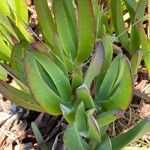
Carpobrotus chilensis
Sea fig
Description
Source: leafsnapCarpobrotus chilensis is a species of succulent plant known by the common name sea fig. It grows on coastal sand dunes and bluffs and is used as an ornamental plant, and it is also edible. However, along with its even more troublesome cousin, C. edulis, it has invaded sections of the California coast at the expense of native vegetation, and is subject to control efforts.
🎭 Fortune-telling, Fecundity, Affection
Care Guide
💧 Water
The sea fig is well-suited to coastal environments and is highly drought-tolerant. It only needs moderate watering once a week. This succulent thrives in well-draining sandy soils, making it an excellent choice for seaside gardens. Its evergreen, fleshy leaves help retain moisture, allowing it to adapt to various climates.
☀️ Light Full sun
Sea fig prospers with abundant sunlight and grows vigorously in such conditions. Its native environment has high solar radiation, which it tolerates readily. Neither too little nor too much light generally harms this plant.
What are the sunlight requirements for Sea fig (Carpobrotus chilensis)?
Sea fig requires full sun exposure, defined as more than 6 hours of sunlight daily, to thrive optimally. Its robust growth is attributed to its native habitat characterized by high solar irradiance, which it endures with ease. It is essential to observe how sunlight moves through your garden to ensure that your plants receive the perfect balance of light and shade, guaranteeing their health and happiness.
How can artificial lighting benefit Sea fig plants indoors?
Indoor Sea fig plants benefit significantly from artificial lighting, especially when natural sunlight is insufficient, such as during winter or in less sunny spaces. Artificial lighting solutions like LED lights can be customized to provide specific wavelengths needed for optimal growth. For proper growth, full sun plants require 30-50W/sq ft of artificial light, while the appropriate distance to place the light source ranges between 12-36 inches above the plant. It's also vital to mimic natural daylight hours, usually providing 8-12 hours of light per day.
What are the symptoms of inadequate lighting in Sea fig plants?
Symptoms of inadequate lighting in Sea fig plants manifest as small, newly grown leaves, leggy or sparse growth, faster leaf drop, slower or halted growth, and paler or chlorotic leaves. Moreover, symptoms like sunscald, leaf curling, wilting, and leaf scorching could indicate too much direct light. These symptoms signal that the plant is not receiving its ideal light conditions and hence cannot perform photosynthesis efficiently.
What solutions can help Sea fig plants achieve optimal light exposure?
To ensure optimal growth, gradually acclimate Sea fig plants to receive at least 6 hours of direct sunlight daily. For indoor plants that are large or not easily movable, consider supplemental artificial light, keeping a lamp on for at least 8 hours daily or investing in professional grow lights. Outdoors, gradually move plants to sunnier locations each week to avoid sunburn. If sunlight is blocked by obstructions like trees, consider pruning or transplanting smaller plants to locations with ample sunlight and good drainage. Note that parts of the plant affected by insufficient sunlight may not recover, but new, healthy growth can be achieved by adjusting light exposure.
🌡️ Temperature 20–37.8°C
Sea fig is native to regions with temperatures ranging from 68 to 100°F (20 to 38℃). Its temperature preferences align with warmer seasons. When grown in cooler climates, it is beneficial to adjust the temperature to replicate its native conditions.
What is the ideal temperature range for growing Sea fig?
Sea fig thrives in climates where temperatures are between 68 to 100°F (20 to 38°C), which aligns with warmer seasons. The plant is heat-loving and does not fare well in cold temperatures. Maintaining an environment that mimics its native temperature conditions is crucial, especially in cooler climates. During winter, it's beneficial to keep Sea fig plants indoors with temperatures above 20°C to ensure healthy growth, while making sure to avoid exposure to temperatures nearing 0°C as these are detrimental to the plant.
How should Sea fig be cared for in cooler temperatures?
In cooler temperatures or during winter, Sea fig requires special care to thrive. The plant prefers warm conditions and struggles with low temperatures. If the temperature drops below -5°C, the leaves may discolor, becoming lighter before turning brown or black from frost damage, accompanied by wilting and drooping. To protect Sea fig from cold damage, trim off frost-damaged parts and move the plant indoors to a warm environment, placing it near a south-facing window for ample sunlight. Ensure the plant is not too close to heaters or air conditioning vents to avoid excessive dryness.
What precautions should be taken for Sea fig during high temperatures?
During summer, when temperatures can soar, it’s important to keep Sea fig below 38°C to prevent stress and damage. Exposure to temperatures above 43°C may cause the leaves to lighten in color and increase susceptibility to sunburn. To mitigate high temperature and sunburn damage, trim away affected parts and relocate the plant to a shaded area, especially from midday and afternoon sun. Additionally, watering the plant in the morning and evening helps keep the soil moist and supports the plant’s health in high temperature conditions.
💨 Humidity
🪴 Soil 6-7
🌱 Fertilizer
For Sea fig, light applications of fertilizer once or twice a year during the growing season are sufficient. Avoid fertilizing in winter and in summer when the plant is dormant. Use less fertilizer for repotted plants and wait a couple of months after repotting before applying fertilizer. Fertilizing promotes healthy growth and encourages blooms.
🪴 Pot & Repot Every 3 years
✂️ Pruning
The sea fig is a succulent ground cover known for its fleshy leaves and vibrant flowers. To manage its growth and encourage more blooms, it's best to prune the plant from early to late spring. Make sure to sanitize your tools before pruning to prevent the spread of disease. This practice will also help promote denser foliage and maintain a compact, vigorous appearance.
🌿 Propagating
🐛 Diseases & pets
☠️ Toxicity
Characteristics
- Plant Type
- Herb
- Life Cycle
- Perennial
- Genus
- Carpobrotus
- Family
- Aizoaceae
- Hardiness Zone
- 9-11
- Mature Height
- 2.13 m
- Mature Spread
- 46 cm to 61 cm
- Leaf Color
- Green, Blue
- Leaf Type
- Semi-evergreen
- Flower Color
- Pink
- Flower Size
- 3.81 cm to 6.35 cm
- Bloom Time
- Late spring, Early summer, Mid summer
- Planting Time
- Spring, Summer
- Harvest Time
- Summer
- Native Area
- Argentina, Chile