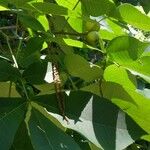
Carya alba
Mockernut hickory · Big-bud hickory
Description
Source: leafsnapCarya tomentosa, (mockernut hickory, mockernut, white hickory, whiteheart hickory, hognut, bullnut) is a tree in the Juglandaceae or walnut family. The most abundant of the hickories, common in the eastern half of the US, it is long lived, sometimes reaching the age of 500 years. A straight-growing hickory, a high percentage of its wood is used for products where strength, hardness, and flexibility are needed. The wood makes excellent fuel wood, as well. The leaves turn yellow in Autumn. The species' name comes from the Latin word tomentum, meaning "covered with dense, short hairs," referring to the underside of the leaves, which help identify the species. Also called the white hickory due to the light color of the wood, the common name mockernut likely refers to the would-be nut eater, who would struggle to crack the thick shell only to find a small, unrewarding nut inside.
🌳 Mockernut hickory not only has sturdy wood used for making tools and crafts, but it also provides an unexpected ecological benefit. It functions as an important food source for forest wildlife: its nuts give protein to squirrels, rabbits, and deer, while beavers eat its bark and twigs. Additionally, birds feed on the insects in its bark, helping with pest control.
🎭 Legal issues, clingy behavior
Care Guide
💧 Water Every 1-2 weeks
When Should I Water My Mockernut Hickory?
Proper watering is crucial for the health and growth of mockernut hickory. Dry, light, and crumbly soil indicates the need for watering. Leaf wilt and pale or yellowing leaves also suggest insufficient hydration, while drying, cracking, or shedding bark points to a hydration issue. It's essential to avoid both overwatering, which can cause root rot, and underwatering, which leads to drought stress, to keep your mockernut hickory healthy.
How Should I Water My Mockernut Hickory?
Watering mockernut hickory requires keeping the soil consistently moist, especially during hot, dry summer months, without over-watering to prevent root rot. Deep watering is recommended to ensure water reaches the root zone. Using a moisture meter can help monitor soil moisture levels accurately. Focus watering on the root zone while avoiding wetting the foliage to prevent fungal diseases. Bottom-watering and adjusting watering frequency based on the climate, pot size, and soil type are also effective strategies.
How Much Water Does Mockernut Hickory Really Need?
Mockernut hickory requires thorough soakings since its deep root system is accustomed to rich, well-drained soil conditions. The amount of water needed will depend on various factors such as pot size and plant size. A well-watered mockernut hickory exhibits deep green, sturdy leaves. Over or under watering can lead to issues such as yellowing leaves or root rot, with proper moisture balance being key for optimal growth.
What Kind of Water is Best for Mockernut Hickory?
Rainwater is the best option for watering mockernut hickory, followed by distilled or filtered water to avoid chlorine and fluoride, which can inhibit growth. This species is not overly sensitive to common minerals but excess can lead to toxicity. Dechlorinated water is beneficial, and water temperature should ideally be at room temperature to avoid shocking the plant's roots.
How Do Mockernut Hickory's Watering Needs Change with the Seasons?
Watering needs for mockernut hickory vary with the seasons. In spring, increased watering supports new growth, while in summer, consistent soil moisture is necessary to combat heat and evaporation. Autumn brings reduced watering requirements as growth slows, and in winter, mockernut hickory enters dormancy, significantly reducing its water needs. Monitoring soil moisture before watering helps avoid over or under-watering throughout the year.
☀️ Light Full sun
The mockernut hickory prefers plentiful sunlight for vigorous growth, though it tolerates moderate light. Excessive shade can impede its development. Native to sunny habitats, it can handle varying light levels at different growth stages and shows resilience in less well-lit areas.
What are the sunlight requirements for the Mockernut Hickory?
The Mockernut Hickory thrives in conditions of abundant sunlight, requiring above 6 hours of direct sunlight daily (full sun) for optimal growth. It can, however, tolerate moderate light conditions of about 3-6 hours of sunlight (partial sun). The plant is adaptable and shows resilience in varying light intensities through its different growth stages, but excessive shading should be avoided as it can hinder its development.
How does artificial lighting support Mockernut Hickory's growth indoor?
Artificial lighting plays a crucial role for indoor Mockernut Hickory plants, especially when natural sunlight is insufficient. LED lights are recommended for their ability to provide specific wavelengths needed by plants. For plants accustomed to full sun, an artificial light intensity of 30-50W/sq ft is needed; for those needing partial sun, 20-30W/sq ft; and for full shade plants, 10-20W/sq ft. The artificial light source should be placed 12-36 inches above the plant to mimic natural sunlight, and the duration should match the plant species' natural daylight requirements, typically 8-12 hours daily.
What are the symptoms of insufficient light in Mockernut Hickory?
Mockernut Hickory exhibits several symptoms when subjected to inadequate light, including smaller new leaves, leggy or sparse growth, faster leaf drop, halted growth or lack of new growth, lighter-colored new leaves, and symptoms of excessive sunlight like chlorosis, sunscald, leaf curling, wilting, and leaf scorching. These symptoms indicate either a deficiency of light or damage caused by too much direct sunlight.
What are the solutions to improve light exposure for Mockernut Hickory?
To improve light exposure for Mockernut Hickory, indoor solutions include gradually moving plants to a sunnier location until they receive at least 6 hours of direct sunlight daily, using a south-facing window, or supplementing with artificial lights for at least 8 hours daily. For outdoor plants, gradual relocation to sunnier spots is recommended to prevent sunburn. Reducing obstructions like pruning trees or transplanting to a sunnier location with good drainage can also help. It's important to note that parts of the plant damaged by insufficient light may not recover, but new growth will be healthy post-adjustment.
🌡️ Temperature 5–35°C
Native to North America, the mockernut hickory does well across a broad temperature range of 5 to 35 ℃ (41 to 95 ℉). During winter it can tolerate lows down to -20 ℃ (-4 ℉), and in summer it favors temperatures of 25 to 30 ℃ (77 to 86 ℉). Adjusting watering frequency and providing shade in hot summer months can help keep the mockernut hickory within its ideal temperature range.
What is the native region of the Mockernut Hickory and its preferred growing temperatures?
The Mockernut Hickory, botanically known as Carya alba, is a native tree to North America. It thrives in a wide range of temperatures, preferring the warmth between 5 to 35 °C (41 to 95 °F) throughout the year. Though this tree can endure cold winter temperatures down to -20 °C (-4 °F), it shows an inclination for warmer summer conditions, favoring temperatures between 25 to 30 °C (77 to 86 °F). To ensure the mockernut hickory remains healthy during hot summers, adjusting its watering frequency and providing shade can be beneficial for maintaining an optimal growing environment.
How can I protect Mockernut Hickory in extreme winter conditions?
Mockernut Hickory exhibits significant resistance to cold, typically foregoing the need for special frost protection measures during winter. However, if temperatures are anticipated to plummet beyond its cold tolerance threshold, protecting the tree becomes essential. Wrapping the trunk and branches with insulating materials like non-woven fabric or cloth can offer the needed protection against extreme cold. Moreover, it's advisable to water the plant generously before the onset of the first freeze in autumn. Keeping the soil moist allows it to enter a frozen state, which helps in preventing drought and water scarcity, ensuring the plant stays hydrated throughout the winter and into early spring.
What are the symptoms of low and high temperature stress in Mockernut Hickory and how can they be managed?
Mockernut Hickory handles cold quite well but its best growth is observed when the temperature remains above its cold tolerance limit. During the colder months, keeping the temperature above its minimum tolerance level is crucial. Falling below this temperature might not show immediate adverse effects during winter, but come spring, the branches might become brittle and dry, failing to produce new shoots. To manage this, pruning dead branches that don't sprout new leaves in spring is recommended. In contrast, during summer, it's important to ensure the temperature stays below the max tolerance level to prevent overheating stress. Excessive heat can cause the foliage to lighten, dry tips, and increased susceptibility to sunburn. Managing high temperature stress involves trimming sunburned and dry sections, relocating the plant to a shaded area or using a shade cloth, and maintaining soil moisture through watering during cooler parts of the day.
💨 Humidity
🪴 Soil 6-6
🌱 Fertilizer
Fertilize your Mockernut hickory in early spring to encourage healthy growth. Regular fertilization boosts overall health, producing vigorous growth, increased tolerance of harsh conditions, and improved resistance to diseases and pests. Keep a specific fertilization schedule for your Mockernut hickory to maintain foliage that is richly colored and lush in appearance.
🪴 Pot & Repot
✂️ Pruning
Mockernut hickory trees, known for their robust structure and edible nuts, benefit from pruning in early spring before they begin to grow. To maintain healthy trees, remove any dead or crossing branches to improve airflow and allow sunlight to penetrate the canopy. Be careful to avoid heavy pruning, as it can stress the tree. Instead, regular light pruning promotes healthy and attractive growth, boosting the tree's vigor at the start of the growing season.
🌿 Propagating
🐛 Diseases & pets
☠️ Toxicity
Characteristics
- Plant Type
- Tree
- Life Cycle
- Perennial
- Genus
- Carya
- Family
- Juglandaceae
- Hardiness Zone
- 4-9
- Mature Height
- 18.29 m to 24.38 m
- Mature Spread
- 11.89 m to 17.98 m
- Leaf Color
- Green, Blue, Yellow
- Leaf Type
- Deciduous
- Flower Color
- Yellow, Green
- Flower Size
- 10.16 cm to 12.70 cm
- Bloom Time
- Late spring, Early summer
- Planting Time
- Autumn, Winter
- Harvest Time
- Mid summer