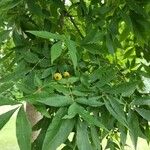
Carya cordiformis
Bitternut · Bitternut Hickory · Noyer Amer · Pignut · Pignut Hickory
Description
Source: leafsnapCarya cordiformis, the bitternut hickory, also called bitternut or swamp hickory, is a large pecan hickory with commercial stands located mostly north of the other pecan hickories. Bitternut hickory is cut and sold in mixture with the true hickories. It is the shortest-lived of the hickories, living to about 200 years.
💡 Bitternut hickory, also known as Carya cordiformis, is a durable hardwood commonly used for lumber. Its strength makes it ideal for crafting furniture, tools, and ladders. Additionally, it is popular for smoking meat due to its distinct flavor. While it is related to the pecan tree, its nuts are not edible for humans. However, the seeds are often eaten by rabbits.
🌳 Though widely recognized for its nuts and timber, bitternut hickory bark is also an industrial source of tannins, which are crucial for leather production. Its durable hardwood is highly prized in fine woodworking, cabinetry, and flooring, providing a material that is both attractive and functional.
🎭 Clinging to things that ought to be let go
Care Guide
💧 Water
The bitternut hickory is native to temperate woodlands and thrives in areas with moderate moisture levels. It grows best when watered every 1 to 2 weeks, as it prefers well-drained soil and should not be waterlogged. Outdoor cultivation is ideal for this tree. During the colder months, its water needs decrease as it enters dormancy, which helps conserve resources.
When Should I Water My Bitternut Hickory?
Watering your Bitternut Hickory is essential for its health and development, impacting its growth, nutrient absorption, and stress prevention. To determine the right time to water, check the soil's moisture level by inserting your finger up to the second knuckle; if dry, it's time to water. Drooping or wilting, dull or yellow leaves, and dry or brittle leaf texture indicate the need for watering. Environmental factors such as high temperatures and low humidity, along with periods of fruit development, may require increased watering frequency. Avoid watering too early or too late to prevent risks like root rot or growth stunting.
How Should I Water My Bitternut Hickory?
To effectively water your Bitternut Hickory, consider using the bottom-watering technique by placing the plant pot in a tray filled with water, allowing absorption from the bottom. Choose a watering can with a narrow spout for precise watering at the plant's base, minimizing foliage wetness and disease risk. Employing a moisture meter can aid in determining the right watering times, ensuring the plant is neither under nor overwatered. Focus watering on the base of the plant, avoiding wetting the foliage excessively.
How Much Water Does Bitternut Hickory Really Need?
Bitternut Hickory requires moderate hydration due to its native habitat conditions. Its deep root system suggests that a considerable amount of water, around 3-4 liters for large pots and 1-2 liters for smaller pots per session, is optimal to reach the roots effectively. Proper hydration is indicated by glossy and green leaves, sturdy stems, and overall vigor. Overwatering or underwatering can lead to yellow leaves, root rot, or wilting. Ensuring good drainage and avoiding standing water are vital for the plant's health.
What Kind of Water is Best for Bitternut Hickory?
Bitternut Hickory thrives with various water types, including rainwater, tap water, and filtered water, but may not benefit as much from distilled water due to the lack of nutrients. While it has no extreme sensitivities to common water contaminants, like chlorine or fluoride, excessive amounts might harm the plant. If using tap water, letting it sit out before watering can dissipate excess chlorine, potentially benefiting the plant's health. Room temperature or tepid water is generally preferred.
How Do Bitternut Hickory's Watering Needs Change with the Seasons?
Bitternut Hickory's watering requirements vary throughout the year. In spring, during active growth, maintain consistent soil moisture. Reduce watering frequency in summer to accommodate natural dormancy. In autumn, prepare for winter dormancy by gradually decreasing watering while keeping the soil lightly moist. During winter's dormant period, water sparingly, allowing the topsoil to dry out between sessions. Seasonal changes significantly influence watering routines to support the plant's lifecycle.
☀️ Light Full sun
The Bitternut hickory flourishes when exposed to abundant daily sunshine, which bolsters its healthy development. Nonetheless, it can still proliferate in environments that do not receive consistent strong sunlight. Excessive or insufficient sunlight can stifle its growth, mirroring the plant’s origins in areas rich in sunlight.
What are the sunlight requirements for Bitternut Hickory?
Bitternut Hickory requires full sun exposure, benefiting from more than 6 hours of direct sunlight daily for optimal growth. It can also tolerate partial sun conditions, receiving about 3-6 hours of sunlight. It's important to observe your garden's sun patterns to choose the best location for your plants, ensuring they receive the right balance of light and shade. Despite thriving in ample sunlight, the Bitternut Hickory can grow in less sunny locations, but its development might be slower as it reflects the plant's adaptation to its native, sun-drenched habitats.
Can Bitternut Hickory be grown with artificial lighting?
Yes, Bitternut Hickory can be grown with artificial lighting, especially when natural sunlight is insufficient. Adequate lighting is crucial for indoor growth, particularly during winter or in less sunny spaces. LED lights are recommended for their ability to provide specific wavelengths needed by plants. For full sun plants, 30-50W/sq ft of artificial light is recommended, whereas partial sun plants need 20-30W/sq ft, and full shade plants require 10-20W/sq ft. The light source should be placed 12-36 inches above the plant to mimic natural sunlight, and the plants usually need 8-12 hours of light per day.
What symptoms indicate a Bitternut Hickory is receiving insufficient sunlight?
Symptoms of insufficient sunlight in Bitternut Hickory include smaller new leaves, leggy or sparse growth, earlier leaf dropping, slower or stopped new growth, and paler new leaves. Additionally, chlorosis (yellowing leaves), sunscald, leaf curling, wilting, and leaf scorching can occur due to excessive sunlight or poor light conditions. These symptoms are vital indicators that your plant either needs more sunlight or is getting too much direct exposure.
What are some solutions for Bitternut Hickory that isn't receiving enough sunlight?
To address insufficient sunlight for Bitternut Hickory, gradually move the plant to a sunnier location, aiming for at least 6 hours of direct sunlight daily. Utilize south-facing windows for indoor plants and keep curtains open during daylight hours. If the plant is large or not easily movable, supplement with artificial light, keeping a lamp on for at least 8 hours daily or considering professional grow lights. For outdoor plants, ensure a gradual adaptation to sunnier spots to prevent sunburn. It's also advisable to identify and minimize obstructions like overhanging branches. Transplanting smaller plants during their dormant period to areas with more sunlight and good drainage can significantly improve their sunlight intake. Note that while affected parts of the plant might not recover, new growth should be healthy following these adjustments.
🌡️ Temperature 5–35°C
The bitternut hickory thrives in a temperature spectrum of 41 to 95 ℉ (5 to 35 ℃) and has the capacity to endure extreme cold conditions down to -30 ℉ (-34 ℃). It originates from temperate areas and requires a cold spell to emerge from dormancy during spring.
What are the essential care requirements for Bitternut hickory?
The Bitternut hickory (Carya cordiformis) thrives in a temperature range of 41 to 95°F (5 to 35°C) and possesses a strong tolerance against extreme cold temperatures, down to -30°F (-34°C). Native to temperate regions, it requires a period of cold to break dormancy in spring. Despite its cold resistance, if winter temperatures are expected to fall below the extreme cold tolerance, protective measures should be taken by wrapping the plant's trunk and branches with insulating materials like non-woven fabric. Additionally, it's advisable to water the plant abundantly before the first freeze of autumn to ensure the soil remains moist throughout the winter, aiding in drought prevention.
How does low temperature affect Bitternut hickory and what are the recommended solutions?
Bitternut hickory showcases strong cold tolerance, flourishing best when temperatures remain above a certain minimum suitable growth temperature. During the winter, it's important to maintain temperatures above the minimum tolerable growth threshold. If temperatures dip below the plant's growth limit, there may not be visible damage during winter, but come spring, branches can become brittle and dry, with no new shoots emerging. The solution for this scenario includes pruning away any dead branches in spring to encourage healthy new growth.
How should Bitternut hickory be managed under high temperature conditions?
During the hotter months, it's crucial to keep the Bitternut hickory below the maximum suitable growth temperature. Exceeding the maximum tolerable growth temperature may result in the plant's leaves lightening in color, tips drying or withering, and an increased susceptibility to sunburn. To manage these conditions, trim away affected parts, relocate the plant to a shaded area or use a shade cloth to protect it from the midday and afternoon sun. Additionally, water the plant during the cooler parts of the day, like morning and evening, to maintain soil moisture.
💨 Humidity
🪴 Soil 6-6
🌱 Fertilizer
For the benefit of healthy development, apply fertilizer to your Bitternut hickory at the onset of spring. Steady fertilizing bolsters overall wellbeing, promoting robust growth, tolerance to adverse conditions, and heightened resistance to diseases and pests. Stick to a particular fertilizing routine for your Bitternut hickory to guarantee vibrant leaves with rich color and a full-bodied look.
Why do I have to add fertilizer to my Bitternut hickory?
No matter which type of Bitternut hickory you have, regular fertilization is important for overall plant health. Providing the right nutrients helps the tree grow stronger and better withstand harsh growing conditions, diseases, and pests. Since the foliage is a key feature of the Bitternut hickory, it's important to maintain it. This involves following a specific fertilization schedule to encourage the growth of vibrant, lush leaves.
When should I put fertilizer on my Bitternut hickory tree?
To ensure healthy growth, it is recommended to fertilize your Bitternut hickory in late winter or early spring. This provides the necessary nutrients for the tree to thrive once the weather warms up. If you live in a warm climate, it is also beneficial to give an additional round of fertilizer in early fall. This not only provides nutrients for the following growing season but also helps the tree withstand the winter cold and prevent foliage damage. Fertilizing earlier in the season allows new branches to develop and prepare for the cold winter.
When is not a good time to fertilize my Bitternut hickory tree?
Avoid fertilizing your Bitternut hickory during certain times of the year. During early and mid-winter when the tree is dormant, it doesn't need feeding. It's also not recommended to fertilize during late spring and summer when the weather is hotter and drier. Fertilizing during these times can have a negative effect on the tree. To avoid problems, stick to a schedule of fertilizing only in early spring and early fall.
What kind of fertilizer does my Bitternut hickory tree require?
Bitternut hickory trees rely heavily on nitrogen as their main nutrient, but this does not mean that phosphorus and potassium are unimportant. In fact, a good amount of all three nutrients is necessary for optimal growth. Using a balanced fertilizer like 10-10-10 can be effective, but a more nuanced ratio often leads to better results. Fertilizers with slightly higher nitrogen content, such as 10-6-4, often work well. Both granular and liquid-based fertilizers can be used for this purpose.
How can I make my Bitternut hickory tree grow better?
To fertilize your Bitternut hickory tree, you have a few options. One way is to use granular fertilizer. Simply sprinkle the fertilizer on the soil at the right time. The slow-release feature of granular fertilizer will gradually release nutrients into the soil. Before applying the granular fertilizer, it's usually best to lightly water the tree. Another option is liquid fertilizer, although it's not as common. To use this method, mix the fertilizer with water and pour it around the base of the tree. It can also be helpful to perform a soil test before fertilizing to determine if any adjustments to the pH are needed.
🪴 Pot & Repot
✂️ Pruning
The Bitternut Hickory is known for its smooth gray bark and rapid growth. To maintain its health and appearance, it's best to prune the tree in early spring. Focus on removing any dead or crossing branches to improve air circulation and light penetration. Regular annual pruning also helps the tree become more resistant to pests and diseases, ensuring it remains well-shaped and healthy.
🌿 Propagating
🐛 Diseases & pets
☠️ Toxicity
Characteristics
- Plant Type
- Tree
- Life Cycle
- Perennial
- Genus
- Carya
- Family
- Juglandaceae
- Hardiness Zone
- 4-9
- Mature Height
- 35.05 m to 46.94 m
- Mature Spread
- 9.14 m to 14.94 m
- Leaf Color
- Green, Yellow, Gold
- Leaf Type
- Deciduous
- Flower Color
- Green, Yellow
- Flower Size
- 2.54 cm
- Bloom Time
- Late spring, Early summer
- Planting Time
- Spring, Autumn
- Harvest Time
- Mid summer