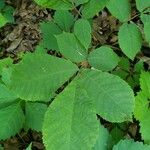
Carya glabra
Pignut hickory · Bitternut hickory · Red hickory · False shagbark hickory · Sweet pignut
Description
Source: leafsnapCarya glabra, commonly known as the pignut hickory, is a deciduous tree native to the eastern United States. It can grow up to 100 feet tall, with a straight trunk and a narrow crown. The bark is gray and smooth when young but becomes rough and shaggy as the tree ages. The leaves of Carya glabra are pinnately compound, meaning they consist of several leaflets arranged along a central stem. The leaflets are dark green with serrated edges. The tree produces edible nuts with thick shells and sweet kernels. These nuts were an important food source for Native Americans and early settlers. Carya glabra prefers moist soils in bottomlands or along streams but can also thrive in drier upland areas. It plays a significant role in supporting wildlife, providing food for many animals including squirrels, deer, bears, and birds. In addition to its ecological importance, Carya glabra is valued for its wood, which is strong yet flexible, making it ideal for tool handles and furniture. Overall, Carya glabra is an important species both ecologically and culturally in the eastern United States.
💡 Hickory tree nuts are an important food source for various wildlife species. Animals such as squirrels, wild hogs, wild turkeys, black bears, foxes, chipmunks, and raccoons all consume these nutritious nuts. Additionally, white-tailed deer may feed on the leaves and twigs of hickory trees. Due to their high fat content, hickory nuts can constitute a significant part of an animal's diet. Furthermore, the hardwood from hickory trees is commonly used as firewood.
🌳 Although bitter, pignut hickory nuts were an important food source for the Potawatomi and Abenaki, demonstrating human ingenuity in using foods that are hard to work with. In addition, pignut hickory wood is ideal for making high-quality industrial charcoal, and because it is strong and resists impact, it is well suited for producing long-lasting tool handles and furniture — a characteristic that is often overlooked.
🎭 Legal matters, clinging to things that ought to be let go
Care Guide
💧 Water Every 7 days
Pignut hickory, which originates from dry woodlands, flourishes in well-drained soils with moderate moisture. It is best to water this tree every 1-2 weeks, although it requires less water during dormancy as it conserves its resources. This species strikes a balance between drought resistance and the need for consistent hydration.
When Should I Water My Pignut Hickory?
Determining when to water a pignut hickory involves observing the soil moisture and the plant's appearance. If the top inch of soil feels dry, it's time to water. Pay attention to the leaves, as a dull appearance may indicate thirst. Keep an eye out for stunted growth or undersized leaves, which could signify the need for more water. Avoid overwatering to prevent root rot and make sure to adjust your watering frequency with the changing seasons, watering more during the growth periods of spring and summer, and reducing during cooler seasons.
How Should I Water My Pignut Hickory?
Pignut hickory benefits from deep-soak watering to reach its deep and extensive root system. Use a garden hose with a pressure regulator or a drip irrigation system to allow for deep penetration. Employ tools like a soil moisture meter or a deep watering stake for effective watering. Focus on watering the root zone within the tree's dripline and avoid the foliage to prevent diseases. Even though the tree requires deep watering, be cautious of overwatering, especially during dry conditions when increased frequency may be necessary.
How Much Water Does Pignut Hickory Really Need?
The water needs for a pignut hickory can vary based on factors like pot size, root depth, and plant size, with a standard suggestion of providing about 1-2 liters of water per session for a tree in a medium-sized pot. Proper hydration manifests as green, healthy leaves, and strong growth. Balance is key, as both under and over-watering can harm the tree. Utilize well-draining soil and pots with drainage holes, and always check the soil's moisture level to ensure optimal watering.
What Kind of Water is Best for Pignut Hickory?
Distilled water is ideal for pignut hickory due to its purity. Rainwater represents another excellent choice, being natural and free of harmful chemicals. Filtered water serves as a suitable alternative, whereas tap water should be last resort due to potential chlorine and fluoride content which the tree may be sensitive to. For tap water, consider dechlorination or using a filtration system that removes contaminants and minerals to prevent leaf burn and stress.
How Do Pignut Hickory's Watering Needs Change with the Seasons?
Seasonal changes significantly affect pignut hickory's watering needs. In spring, maintain consistent soil moisture to support new growth, adjusting for heavy rains. Summer demands vigilant adjustment of watering to prevent stress from dry conditions, ensuring deep hydration. Autumn's goal is to prepare the tree for winter, requiring deep, infrequent watering that reduces as dormancy approaches. Winter watering is minimal, focusing on preventing dehydration without causing root damage from freezing water.
☀️ Light Full sun
The pignut hickory flourishes when exposed to lots of sunlight, which contributes to its prosperous growth and maturity. It is capable of surviving under moderate light conditions, though this is not the best scenario for its peak growth. Too much or too little light could potentially compromise its health. In its usual environment, it thrives under widespread, direct sunlight.
What are the sunlight requirements for plants?
Plants typically require different amounts of sunlight to thrive, classified into full sun, needing above 6 hours of sunlight, and partial sun, needing about 3-6 hours of sunlight daily. It's crucial to observe the movement of sunlight in your garden to choose optimal spots that balance light and shade, ensuring the well-being of your plants.
How does sunlight affect the growth of the pignut hickory?
The pignut hickory thrives under abundant sunshine, which is essential for its healthy growth and development. It can manage moderate light but performs best under full, unfiltered sunlight. Both excessive and insufficient light conditions can hinder its well-being, indicating the necessity of an ideal light environment for optimal growth.
What role does artificial lighting play for indoor plants?
Indoor plants require adequate lighting for optimal growth, especially when natural sunlight is insufficient, like in winter or less sunny spaces. Artificial lights, such as LEDs, which can be customized for specific plant needs, offer a solution by promoting faster, healthier growth. The amount of artificial light needed varies based on the plant type: full sun plants need 30-50W/sq ft, partial sun plants need 20-30W/sq ft, and full shade plants need 10-20W/sq ft. The light source should be placed 12-36 inches above the plant and turned on for 8-12 hours a day, mimicking natural daylight hours.
What symptoms indicate a pignut hickory is receiving inappropriate amounts of sunlight?
Symptoms of inadequate sunlight in pignut hickory include smaller new leaves, leggy or sparse growth, faster leaf drop, slower or no new growth, and lighter-colored or yellow leaves indicating chlorophyll loss. Excessive sunlight can lead to chlorosis, sunscald, leaf curling, wilting, and leaf scorching, highlighting the importance of balanced light exposure for plant health.
How can I address light deficiency or excess in pignut hickory?
To improve light conditions for your pignut hickory, gradually increase sunlight exposure for outdoor plants or use artificial lighting for indoor ones. For insufficient light, gradually move plants to sunnier locations or utilize artificial lights for at least 8 hours a day. For excessive light, ensure a gradual adaptation to sunlight changes to avoid sunburn. Transplanting or reducing obstructions like overhanging branches can also help achieve better sunlight exposure. Note that parts of the plant damaged by improper light may not recover, but new growth will be healthier with corrected light conditions.
🌡️ Temperature 5–35°C
The pignut hickory is accustomed to temperatures between 41 and 95℉ (5 to 35℃) and is originally from areas with a moderate climate. It copes with the chill of winter by entering a dormant state. During the summer months, it can manage high temperatures by decelerating its growth and decreasing its water loss through transpiration.
What is the preferred temperature range for Pignut hickory?
Pignut hickory prefers a temperature range of 41 to 95°F (5 to 35°C) and is native to temperate climate regions. It becomes dormant during the winter to adjust to lower temperatures and can withstand heat stress in the summer by slowing its growth and reducing transpiration. The tree has strong cold resistance, often eliminating the need for special frost protection. However, in winters expected to drop below -25°C, cold protection should be provided by wrapping the trunk and branches with materials like non-woven fabric. Additionally, watering the plant abundantly before the first freeze in autumn, to keep the soil moist and prevent drought and water scarcity during winter and early spring, is recommended.
How does Pignut hickory respond to low temperatures?
Pignut hickory is cold-tolerant, thriving best when temperatures remain above 5°C and should be kept above -20°C during winter. If temperatures fall below -25°C, there might not be noticeable changes during winter, but during spring, the branches may become brittle and dry, with no new shoots emerging. In such cases, it is advisable to prune away any dead branches that have failed to produce new leaves in the spring.
What are the effects of high temperatures on Pignut hickory and how can they be mitigated?
During summer, Pignut hickory should be kept below 35°C. Temperatures exceeding 38°C can cause the leaves to lighten in color, the tips to become dry and withered, and increase susceptibility to sunburn. To combat these effects, it is recommended to trim away the sunburned and dried parts, move the plant to a location that is protected from the midday and afternoon sun, or use a shade cloth for protection. Moreover, the plant should be watered in the morning and evening to keep the soil moist and reduce stress.
💨 Humidity
🪴 Soil 6-7
🌱 Fertilizer
Foster the strong development of your Pignut hickory by providing fertilizer in the early part of spring. Consistent fertilization boosts overall wellness, contributing to robust growth, durability under difficult circumstances, and, increased resistance to diseases and pests. Stick to a certain program of fertilization for your Pignut hickory to ensure lively leaves with a rich hue and a thriving exterior.
Why should I fertilize my Pignut hickory tree?
No matter which type of Pignut hickory you have, regular fertilization is important for its overall health. Providing the right nutrients will promote stronger growth and make the tree more resilient to difficult growing conditions, as well as better equipped to fight off diseases and pests. Maintaining the foliage of your Pignut hickory is essential because it is one of its most attractive features. To achieve this, it is important to follow a specific fertilization schedule tailored to your Pignut hickory. By doing so, you will encourage the tree to develop vibrant, lush leaves.
When should I fertilize my Pignut hickory tree?
To ensure the healthy growth of your Pignut hickory, it is recommended to fertilize it during the late winter or early spring. This provides the necessary nutrients for your tree to thrive once the weather becomes warmer. Additionally, if you live in a warm climate region, it is beneficial to give your Pignut hickory another round of fertilizer in early fall. This not only adds more nutrients to the soil for the following growing season but also helps the tree withstand the winter cold without damage to its foliage. Fertilizing earlier in the fall allows new branches to grow and become sturdy enough to tolerate the cold winter.
When is the wrong time to add fertilizer to my Pignut hickory tree?
There are specific times when fertilizing your Pignut hickory should be avoided. Firstly, during the early and mid-winter months when the tree is dormant and does not require feeding. Additionally, it is unwise to fertilize in late spring and throughout the summer due to the hotter and drier weather, which can negatively affect the tree's response to fertilization. To prevent any problems, it is best to stick to a fertilization schedule that focuses on feeding only during early spring and early fall.
What kind of fertilizer does my Pignut hickory tree need?
For a Pignut hickory tree, nitrogen is usually the most important nutrient, but that doesn't mean phosphorus and potassium are not important. In fact, your Pignut hickory needs a good amount of all three nutrients, so a balanced fertilizer like a 10-10-10 can be effective. However, a more precise nutrient ratio often leads to optimal growth. Fertilizers with slightly higher nitrogen content, like a 10-6-4 ratio, tend to work well. When fertilizing, you can choose between using granular or liquid-based fertilizers.
How do I make my Pignut hickory tree grow better?
To fertilize your Pignut hickory tree, there are two options: using granular or liquid fertilizer. With granular fertilizer, simply sprinkle it onto the soil at the right time. The slow-release nature will gradually provide nutrients. It's recommended to lightly water the tree before applying fertilizer. Less commonly used, liquid fertilizer can be mixed with water and poured around the tree's base. Sometimes it's helpful to perform a soil test beforehand to determine if any pH adjustments are necessary.
🪴 Pot & Repot
✂️ Pruning
Pruning pignut hickory trees in early spring offers several benefits. By removing dead or damaged branches and thinning out crowded areas, you improve sunlight access, which enhances growth. It is also important to focus on improving the tree's structure to prevent limb breakage. Pruning at this time of year minimizes sap loss and stress, ensuring the tree recovers well and maintains optimal vigor.
🌿 Propagating
🐛 Diseases & pets
☠️ Toxicity
Carya glabra has no toxic effects reported.
Characteristics
- Plant Type
- Tree
- Life Cycle
- Perennial
- Genus
- Carya
- Family
- Juglandaceae
- Hardiness Zone
- 5-9
- Mature Height
- 20.12 m to 29.87 m
- Mature Spread
- 9.14 m to 14.94 m
- Leaf Color
- Green
- Leaf Type
- Deciduous
- Flower Color
- Yellow, Green
- Flower Size
- 2.54 cm
- Bloom Time
- Mid spring, Late spring
- Planting Time
- Spring, Autumn
- Harvest Time
- Mid summer