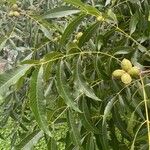
Carya illinoinensis
Pecan · Nogal morado · Nuez encarcelada · Pecan-nut · Pecanier
Description
Source: leafsnapCarya illinoinensis, commonly known as the pecan, is a large deciduous tree native to North America. It belongs to the Juglandaceae family and can grow up to 130 feet tall with a spread of up to 75 feet. The tree features a straight trunk with gray-brown bark and large compound leaves that can reach up to 20 inches in length. Pecan trees are renowned for their delicious nuts, which are used in various culinary dishes such as pies, cakes, and candies. The nuts have a rich, buttery flavor and are high in healthy fats, protein, fiber, and vitamins B1 and E. Pecan trees thrive in well-drained soil with moderate moisture levels. They prefer full sun exposure but can tolerate partial shade. Pecan trees have both male (catkins) and female (pistillate) flowers on the same tree, which allows for self-pollination. The pecan is an important economic crop in the United States, where it is primarily grown commercially in southern states such as Texas, Georgia, and Oklahoma. The wood of pecan trees is highly valued for its strength, durability, and attractive grain pattern, making it ideal for furniture making, flooring, and other decorative purposes. Overall, Carya illinoinensis, or pecans, play a significant role in North American culture due to their culinary significance, economic value, and ecological importance. They provide food, housing materials, and habitat, support biodiversity, and are aesthetically pleasing, making them an essential part of our natural environment.
Care Guide
💧 Water Every 7 days
Pecan trees thrive in conditions with moderate moisture and require watering every 1-2 weeks. Although they are not drought-tolerant, pecans do well with balanced humidity levels. When grown outdoors, seasonal rainfall can be beneficial, as it helps to maintain optimal water levels for healthy growth.
☀️ Light
What are the sunlight requirements for Pecan (Carya illinoinensis)?
Pecan trees, scientifically known as Carya illinoinensis, thrive under specific sunlight conditions to ensure their health and productivity. They require full sun exposure, which means they should receive above 6 hours of direct sunlight daily to flourish. Alternatively, they can grow in partial sun areas, where they receive about 3 to 6 hours of sunlight each day. It's important to observe your garden's sunlight patterns to choose the best spots that offer an optimal balance of light and shade, ensuring your pecan trees grow happily and healthily.
🌡️ Temperature 5–32°C
Warm and humid weather is best for pecans. The fact that the tree requires warm nights significantly reduces its geographic range. Pecan trees may thrive in lower climates, but if the nighttime temperature drops too low, they won't yield pecans. The pecan tree thrives best in warm areas or USDA Hardiness Zones 5-9. It is the official state tree of Texas.
💨 Humidity
🪴 Soil
🌱 Fertilizer
When transplanting pecans, use a slow-release fertilizer to help establish roots and support early growth. For established trees, base the amount of fertilizer on the trunk diameter, measured at 1.3 meters above the ground. Apply the fertilizer evenly under the tree's canopy once or twice a year, either in early spring or fall.
🪴 Pot & Repot Every 12 months
✂️ Pruning
Pecan trees thrive when they are strategically pruned in early spring. During this time, it is beneficial to remove any dead or crowded branches to improve light penetration and airflow. Young trees, in particular, benefit from shaping to establish a strong structure. Be sure to use sharp, sterile tools to minimize the risk of disease, which in turn enhances nut production and promotes overall tree health.
🌿 Propagating
🐛 Diseases & pets
☠️ Toxicity
Although it provides them with a magnificent meal, this also begins a process that results in the kernels turning black, falling from the tree, and becoming inedible to humans. A group of hazardous compounds that are closely related are produced by both pecans and walnuts. The parent substance is known as juglone, or to be more specific, 5-hydroxy-1,4-naphthoquinone.
Characteristics
- Plant Type
- Tree
- Life Cycle
- Perennial
- Genus
- Carya
- Family
- Juglandaceae
- Hardiness Zone
- 6-9
- Mature Spread
- 12 m to 23 m
- Bloom Time
- Spring
- Planting Time
- Spring, Fall
- Native Area
- North America